MARK0:00there's three reasons
MARK0:01most people completely screw up. And one is a target poorly.
MARK0:04Two is they have bad content, in three is their reps don't follow the process
MARK0:10think we have
MARK0:1121
MARK0:11different signals now that
MARK0:13we use some of them are signals
MARK0:15indicate we need to reach out. Some of them are just
MARK0:17stacking signals that you then stack on top of the
MARK0:21core signal.
MARK0:21That helps you personalize and be more relevant.
MARK0:24that improved our reply rates from sub 2%, which is
MARK0:28better than industry average.
MARK0:29Cold outbound
MARK0:30had two specific sequences that we were feeding everything into, and one of them had 11% reply rate and one of them at
MARK0:3616% reply rates.
MARK0:38So they had a strong quarter of a pipe gen on, on outbound because of that change.
MARK0:43Listen, if you think AI is going to save you, you're wrong.
MARK0:45it.
MARK0:46probably will mess you up before it saves you.
MARK0:48And that's because
MARK0:49you don't have an established process, a human can follow you. Sure as heck not going to create an agent that has a process that it can follow.
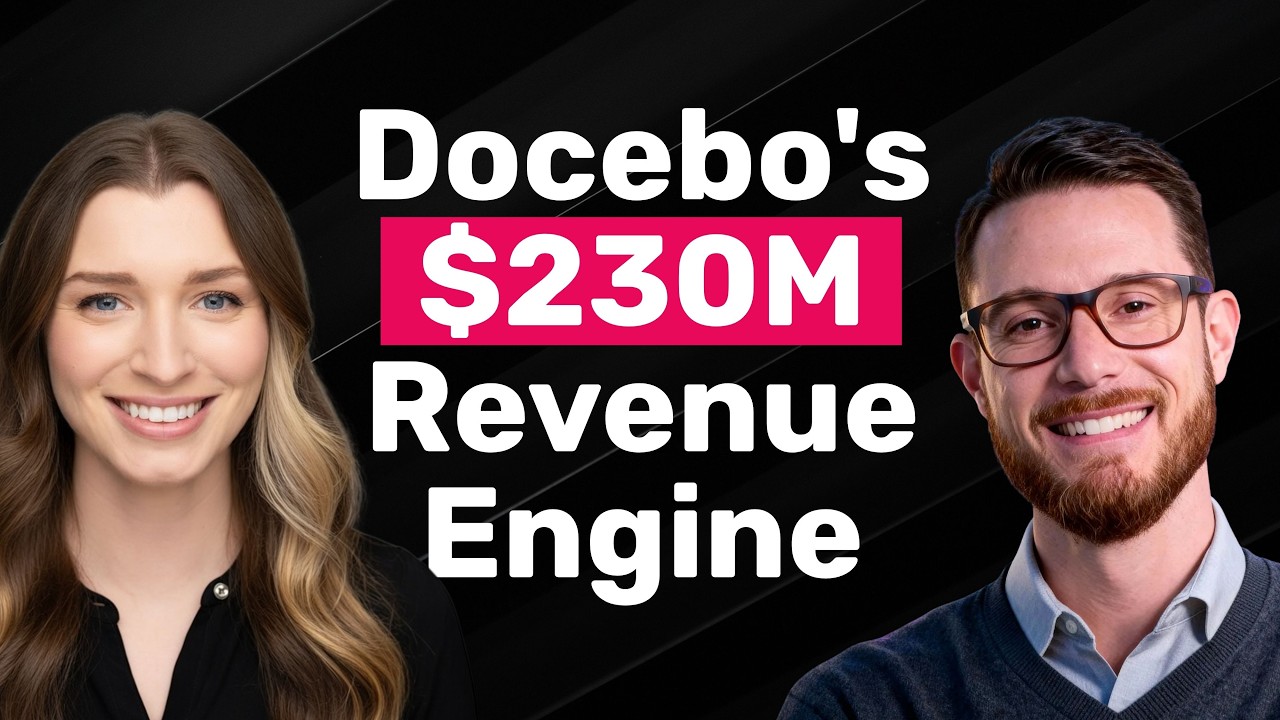
RACHAEL1:18Welcome back to Ciara stories. I'm your host, Rachel Burkhardt. And with me today is Mark Consiglio, chief revenue officer of De Sibo and Mark Koslow. He spent eight years building outreaches sales team from the ground up into one of the most formidable revenue machines in B2B SaaS. So since then, now he's you have big, big words. Right now he's the.
RACHAEL1:41So now CRO de Sibo, a publicly traded learning management system company doing 230 million RR at the time of this recording. Thank you so much, Mark for joining us. What up? Yeah. So Mark, I like to start things off with with a big interesting question, one that is very interesting to me and hopefully to listeners.
MARK1:59So I'm interested.
RACHAEL2:01Yeah. As I said I can accompany you up even more now. You built one of the most dominant sales teams in B2B, SAS at outreach during those boom years. So now you're about eight months into the CBO in a completely different market environment. What's been the biggest thing that you're doing differently as a CRO now versus what worked at outreach?
RACHAEL2:20And kind of what surprised you about what still works exactly the same?
MARK2:26So I think I had a preconceived notion about learning management systems that they were extremely technical or complicated and I would say within my first three days that was completely blown out of the water. And I realized I did not do enough homework on my product. We are a an extremely powerful product with with that power and flexibility comes some complexity, and we do a good job of helping customers through that.
MARK2:50But that's probably one of the biggest changes is that, outreach wasn't a technical issue product. Neither was catalyst, really. And those products were more about this is the outcome that you can create. And here is how we change the workflow to achieve those outcomes. It was more about human behavior change than it was about like technical change necessarily versus an LMS is a little bit less about like the user experience and much more about how do we connect into the rich data system inside someone's tech stack with HR, with your sales or sales enablement, all these different things that we need to connect into to make sure that learners are served up with the
MARK3:33right content at the right time to achieve the skill up leveling that they need to get so that they can continue to do the jobs that they do. And so I see that's the biggest thing that's different is this. This is a much more technical heavy. Let's get into how, you know, your system uses these APIs and webhooks to do this kind of stuff.
MARK3:54Like, I don't even speak the language quite yet, but, yeah, I'm getting it right. And then what stays the same is I think, is what's always been the same.
MARK4:02A buyer will tell you how to sell them if you just shut your mouth and listen.
MARK4:07And I think that that never goes away. And like when
MARK4:10a
MARK4:11seller asks a great question and then they keep going, they keep going, and then they end up never letting the person answer the question, or they cut the person off as they're asking or they don't like, really seek to understand.
MARK4:23They just ask questions because that's what they've been trained to do. They're not actually involved in a real human conversation to seek common ground and understanding so that you can actually communicate correctly. I think then you're never going to win. And I think that I don't think that that's ever going to change. I don't think that changes in sales.
MARK4:40I don't think that changes in like our personal personal relationships either.
RACHAEL4:45Nice. And you mentioned like the product itself is really complex. I'm curious, do you guys use your own product to train your own teams on the product.
MARK4:55Absolutely. We we drink our own champagne.
RACHAEL4:58Yes I heard that recently I like that drink our own champagne. Eddie. Our boss, he always says, you know, eat our own dog food. And I was recently like.
MARK5:06Yeah, oddly enough, got. Speaking of story time. Yeah. Is my dad ran, all of manufacturing for Eminem Mars for a few years at a Snickers bar for about seven years in the late 90s, early 2000s. My dad was responsible for making it and making it cheaper every single year. Well, before he got that job, he ran, Eminem.
MARK5:27Mars owns pet food plants. Pedigree dog food is on my name. Mars. Well, my dad ran one of the pet food plants. And literally every day, they're so obsessive about the quality of their dog food that my dad and all of his, leaders had to sample the dog food every morning and eat their own dog food.
RACHAEL5:44Literally eat their own dog. Nice dog food. Breakfast.
MARK5:49Meaning for me.
RACHAEL5:50Yeah, yeah. That's hilarious. I never heard of a such a literal meaning for that.
MARK5:56Oh, that actually happens.
RACHAEL5:58Yeah. That's so funny. Okay, Mark, so you mentioned catalysts really quickly there. Tell us a little bit about your career journey story. And you know, what led you to the role to CEO today, where catalyst came in with all that?
MARK6:11Yeah. Listen, I was an outside sales rep that was in the field that drove between 3 and 5 hours a day on 100% commission after my second year selling fundraisers to schools. And, I was not just the seller, I was the SDR, I was the marketer, I was the AG, I was the on border.
MARK6:34I was a success person. I was the support person. I was a renewal person. I was the account manager. I basically ran an entire GTM cycle with every single one of my customers. And I built that sales territory from one that wouldn't, that couldn't, support a rep for a longer than six months or hadn't supported a rep for longer than six months for over a decade to one that was one of their top, 10% of territories in the entire, country at a 250 different seller.
MARK7:03So I really learned my craft in the way I learned it was I had a specific name. Is your name renew yo Up, who's like A65, 280 pound former offensive lineman, you know, Hispanic sparkplug. I mean, let's go. This guy is awesome. And when there's an A meeting and he put his leg sized finger into my chest.
RACHAEL7:29How's.
MARK7:29It gonna quit being so smart? Just do exactly what I tell you, and you win. And I was like, all right, homie. And I was so intimidated, I did it. Have my best year ever.
RACHAEL7:39And I just.
MARK7:40Kept learning from him. Have my best year ever. The year after that. Then I started to understand, like, what's going on here? How do I break this apart? Where is it? Not me. And where do I need to make it better? And, then I use that to, to keep going, and I'll never, I'll never be able to repay Rene for that.
MARK7:55Awesome. For me then. But, then I went into sales leadership. After that, I got headhunted. And when it's and became the the youngest regional sales director at a publicly traded company that also sold stuff to schools. And that's where I learned how to lead. And that after a year and a half of doing it horribly, I had a specific instance with a rep where they basically told me off and told me how horrible I was, and it was a wake up call to me, and I spent the next, however long, trying to get back and learn how to do it.
MARK8:24And and then I think by the time, outreach came along, which was, again, another 1 in 10,000,000,000, chances that I would actually end up there. I mean, I was just in the middle of central Pennsylvania, in a town of 5000 people doing nothing. Yet somehow Matt Medina, who was the CEO at outreach, we hit it off, became friends.
MARK8:43I asked him why I wasn't working here, and, and there we go where we are now, if we are okay with with how it went. And so but that's where I really learned how to be, to take my sales skills and my leadership skills and create a predictable, you know, revenue system that you could actually, run and create and scale up.
MARK9:04But I didn't understand sales. So that's why I went to catalyst is to understand this customer success onboarding side of the revenue funnel versus just the acquisition side. And, I felt like I did a good job for them. And, and then, try the entrepreneur thing. That wasn't for me at the time. I'm not an entrepreneur. I'm I'm an operator.
MARK9:22So, I was looking or kind of thinking about I want to do. And then the chatbot actually approached me, and, when I met them and, saw the scope of the role, where the company was headed at the executive team, at some reps and a few other people, and did my homework like that, like it was a a really good move, for a SaaS based product in that I, you know, at world coming into I really, really quickly and, and, that it made a lot of sense to me to go to learning, which is, you know, everybody has AI the best people use AI most creatively.
MARK9:58The the foundation of creativity is knowledge. And the only way to get knowledge is to learn. And to me, that creates an extremely compelling value case for, the future. What we do.
RACHAEL10:08Well, so you really run, like, the full gamut of every type of go to market operational position, each side of the bow tie,
MARK10:18Been very, very lucky that for almost eight years at outreach, almost daily, I got to speak to some of the best GTM minds on the planet. And then that continued at catalyst on the post-sale side. So, listen, beg, borrow, steal your way to get your corpus of knowledge that you can use to develop the systems and stuff that you need to succeed.
MARK10:37And I was very lucky at a lot of, material to beg, borrow and steal from.
RACHAEL10:42Was that like, your goal to, like, kind of like, try different things and build up your base of knowledge? Or were you just trying it to see where you fit
RACHAEL10:49for outreach?
MARK10:50It was literally, I have a chance to get into tech. I'd never would have had this chance. I saw the product and immediately was like, this is the future of sales. And I was just all, I wasn't drinking the Kool-Aid out swimming in the freaking Kool-Aid from. So yeah. So that was just kind of serendipitous. But, catalyst was calculated.
MARK11:09I had a good friend who was the co-founder there. He asked me to come on in. Really? It was a I was very, very excited to learn about. And dig deeper into the post-sales motion. And so that was very, that was very intentional. And then the chatbot is kind of the my chance to take all my learnings pre and post sales and what's going on with AI and how to like take a my vision of what sales and where revenue is going and see if I can't create it here to to great effect.
RACHAEL11:38Nice. And I just realized I've been spelling the pronouncing doe chaebol wrong. I was saying Toshiba.
MARK11:44Oh sorry.
RACHAEL11:45Mr. Shavo.
MARK11:46The table actually means I learned in Italian. Really? That in Italy. So. Yeah.
RACHAEL11:51Oh, that's really cool. I like that is.
MARK11:53Pretty cool, right?
RACHAEL11:54Yeah, yeah. All right, so walk us through your first 90 days at DeChambeau. What? Operational go to market challenges jumped out at you immediately when you first came in. And what did you do about it?
MARK12:06So I took the first quarter to basically observe. I tried to meet a lot of people, sat in on meetings, you know, there were certain things that I did that were low hanging fruit and obvious, but I didn't try to come in and and change a lot or do things a lot. That would disrupt all of the goodness that was already happening.
MARK12:26We were a profitable, publicly traded company. You know, we were growing at a decent rate. We want to, really supercharge that, but, I would say the first 90 days was more about learning get my legs and getting the context and meeting people and starting to build those relationships that it takes to really, do change at a company.
MARK12:50So, that's pretty much what it was. Just be sitting around the first 90 days was what do I want to, at the end of this first 90 days start to communicate to my leadership team about the vision we have, the frameworks that we're going to use, and then how we're going to make decisions going forward in order to achieve these really awesome, aggressive goals that we have.
RACHAEL13:13Were there any what were like the first, the first challenges you encountered, then maybe it wasn't in the first 90 days, but when you started, you know, you got your bearings, you knew what was going on, and you started really looking into the metrics and the dashboards and seeing what you could improve on. You know, what you can do to make a difference here.
RACHAEL13:31What was like the first thing that you threw it out?
MARK13:34Yeah. I think that we needed an evolved, forecasting strategy. So we rolled out, the, the way that I do forecasting and, it's kind of it's actually an awesome story. In Q4, we were able to get within 3% accuracy of our day one forecast for Q4. And that's the most accurate that the company's ever been.
MARK14:00And, you know, accurate forecasting is kind of like a badge of honor, but actually, it's an extremely important business process that allows us to plan correctly and make sure that we don't overspend or under invest. And in areas of the business based on what we think is going to happen. And so it creates a lot of trust for when you say, hey, I'm going to I need this, that you understand why you need it and can prove that you need it.
MARK14:23But, getting the forecasting to a high level of accuracy was important to me. And that's something that we were able to get in place pretty quickly. And it paid off right away.
RACHAEL14:33So what, what kind of changes did you have to make to get it closer to that percentage mark that you're looking for?
MARK14:38So, when it comes to forecasting, there's a few things that I think are wrong. One is the the haircut of the haircut. My represents something that my manager hats off a little bit of that, then the director, then the VP, then the SVP, then the CFO and then to the board. Right. And like everybody's taking their little I don't quite trust the person below me.
MARK15:00I think that says to me that there's like some real foundational cracks that need to be filled in. The other thing that happens with forecasting is, is because, of the haircutting, people start to understand that there's a lot of ambiguity about what you put in CRM, and therefore nobody really uses the forecast categories rigorously as instructed.
MARK15:23And therefore you kind of lose all of the data integrity you need to actually do that. That's why you end up with some spreadsheet in the middle of nowhere in order to figure out what your forecast is. And so, when you create that common language and then you create rigor and, then what ends up happening is, is people come in and they start to do the thing that you want.
MARK15:43And so for us, we had to switch from kind of a, a sales like a financially driven forecast methodology, or they wanted to really understand how the top down and the bottoms up were the same. And if you wanted to forecast something you had to commit the deal with, even if the deal wasn't, you're sure you're going to win it.
MARK16:01And so there's a little it was a little confusing to me as to how we were doing that versus what we put in place was, I have four, forecast categories. One of those categories has three kind of sub categories that are binary yes or no questions, and that have very clear criteria of when someone is in that and when they're out of it, which makes it very simple for everybody, understand, very simple to apply and then creates those tough conversations that a rep and a manager need to have.
MARK16:32It shouldn't be, hey, Rachel, is this this is in commit. Yeah, it's in commit. I don't believe it. But I'm not going to actually challenge Rachel on it. Right now because I don't know if it should be or not. So I'm going to just take that deal out of my forecast when I give it up to my VP.
MARK16:45And now you just avoided the whole purpose of the wrapping manager relationship, which is Rachel, I know you have commit. I don't I feel like there's more risk. Can we go through our medpac real quick and like, figure out where there's risk and what you haven't resolved? And then let's decide if that risk is big enough for us to, move it out of commit, or if we feel good enough after that to leave it in commit.
MARK17:07And if you don't have that conversation, which most reps and managers do not have because they just fix it in the spreadsheet later, then you lose a chance to learn. You lose a chance to coach. You learn a chance to correct bad behavior actions to correct bad thinking, chance to reinforce exactly what you've communicated. You lose a chance to be very consistent across all your processes, and show that what we launch really matters.
MARK17:30So, you know, we actually have weekly deal reviews that are extremely scripted, that reinforce all of these concepts. And they started with the forecasts, the changes that we made.
RACHAEL17:41Did you have to do any, evolving of your processes at all to make sure the data was more accurate?
MARK17:48Well, I mean, that's that's what it's all about. It's like, yeah, data is only as accurate as the person inputting it makes it or the machine or whatever's in putting it in. For example, if I know that my manager doesn't really care what I put in commit, he's going to give a number. That is what he thinks it is.
MARK18:07Then why should I if I'm just forecasting for the people above me, then why would I care what I put in there?
MARK18:12So yeah, you, if you don't change the process, the data will never change. The process controls the data. So therefore, you have to put in place processes and then you have to run them with rigor.
MARK18:24And that's the thing everybody
MARK18:26forgets is just because you did a training, just because you talk about it with your reps on team meetings doesn't mean that they do it. You have to show up every single time, do the exact same way every time, until they start saying it back to you. And then you actually have to inspect.
MARK18:41So like for me, every manager twice a year has to give me a deal, review, call reporting just like a reps gives them the discovery call recordings. And I coach every single manager on exactly how they're doing deal reviews. Because I think that's the most important meeting in the sales org every single week. So I inspect that.
MARK19:03They're doing it the right way versus just assuming they're doing the right way, because they're a manager. I think if people do that, they find out that less than half of the people actually change their behavior. Most people are still doing it the same way as before the training, and you'll never figure that out if you don't, have the rigor in the processes in place to to unearth that kind of information.
RACHAEL19:24Yeah, absolutely. I think adoption can be one of the places where, a lot of sales managers and companies kind of like overlook, and then it creates huge problems down the line because they you think of Bloom's Taxonomy, where it's like, reading and reciting back information is the most basic level and the first level of understanding. But you have like, I don't know, like 5 or 6 more levels above that, that, that so many sales managers don't even touch beyond, like, here's a document, read it, you know, learn it and then that's it.
RACHAEL19:56And then most.
MARK19:57Most people don't have an enablement practice or an enablement framework. They have a training framework. And listen, I don't know about you, but sitting around listening to some of that doesn't do my job. Spit out, and read the stuff on a deck that I could just be reading, and it's using a bunch of filler words to make sure that they're not just reading the deck, when all they're doing is just rehashing the words that are on the deck, and then there's no accountability afterwards.
MARK20:26Listen, we all know what that means. People are doing email and slack during the training, and that's about it, right? Yeah. Versus, I have a very specific enablement philosophy and framework that allows us to use two dimensions to score incoming requests for training, determine what is the level of expected competency, what is the effort that we're going to have to put in to get there?
MARK20:49And then how do we actually judge and look at that to make sure that we've done what we thought we were going to do, if we were to take somebody to mastery, how do we know what kind of a program to create to do that? And how do we know if the person has actually mastered it or not?
MARK21:03We have all of that detail, too, and any team that's doing any kind of training submits that to our enablement team so that we can make sure that we're not overloading. Right. Because that's the other thing. Besides not having a framework is people just try to shove too much down people's throats, and nobody can learn everything that most sales teams are thrown at the reps because the Sierra's doing something.
MARK21:23The CEO has got something over here. There's some marketing thing happen over here. Your manager wants to do something. Your VP is going to do something because now they feel left out and the next thing you know, like that rep's getting like three trainings a day and nobody's intention anything.
RACHAEL21:36Yeah, absolutely. Would you be able to, like, explain that methodology in like a simple, simple kind of brief way?
MARK21:43Absolutely. So, it's a nine box. So you have your x axis. Your x axis is competency. There are three levels of competency awareness, competent and mastery. You have a y axis. That's cognitive load. In other words, what amount of brainpower is required to make this change. We have low medium high. So we now have a nine box.
MARK22:04We graph that out. And then what we do is we say the, the cognitive load determines what kind of a program we need. So do we need a quarter long program? If it's high cognitive load, you're changing a well ingrained behavior is
MARK22:19going to take multiple weeks of reinforcement in real, you know, intentionality to change something that's already burned into someone's brain.
MARK22:28The composite tells us, how do we assess and how do we set the right expectations. So, for example, if my CEO comes to me, we just acquired a new company called 365 talents. He wants my reps to be master pictures within a month of that. So I now know I'm in mastery. I also know a brand new pitch isn't changing a pitch that they already have, but it's also not like doing nothing because it's in adjacent space, not in the same exact space.
MARK22:53So it's probably medium cognitive load. If I go to mastery medium cognitive load, what that tells me is I need to do about an eight week program in order to get the change, because we have the little things in the box in the way that we're going to assess it is there'll be an initial training. Will it be a quiz, there'll be an internal training, or they get to practice and use either an AI virtual coach or their manager to do role plays that will grade them on a rubric, then get feedback for practicing internally, and then when they're certified in that, the mastery part is they now must submit a live call that's graded
MARK23:27against the rubric that tells us that they've mastered this skill or not. So that's how we do the framework is. And by putting it into that nine box, we can figure out what kind of program we need and how long it needs to be and how we're going to measure if we were successful or not in terms of mastery and competency.
MARK23:45There's also how what is the impact that we had on the business. That's another issue. And then the the other thing that happens is, is when you set these expectations right, like your leaders don't come to you and they're not like, why are they pitching? Right. Well, that's because we only took them to where they're not to mastery.
MARK24:01We went to you with aware. And then each of those nine boxes has a point value. And what I do is I talk to my enablement team. We don't we try not to exceed 20 points in a quarter. So for example, high cognitive load mastery. That's nine points. I could do two of those a quarter, but not anything else.
MARK24:18I could do one of those a quarter. And then I can do some mediums and lows. Right. And so I can create a menu of how I want to do my learners, or how I want to progress my learners to that quarter's content and trainings and stuff. But I get to do it in a way that isn't, just dumping on them.
MARK24:36It's measured, is intentional, and we try to do it in a pace where they can absorb the information.
RACHAEL24:42Awesome. So is all that information that's in each of those nine boxes. Is that like proprietary internal stuff that you guys built, or is that something that we could like look up a line and find?
MARK24:53Yeah. If you Google 30 minutes to prep business club sales and eight oh yeah, matrix Mark Costello, you'll see a whole episode diagrams, everything, everything on there. I also have a sales management OS course through 30 minutes of Presidents Club where you can get, budget materials and like a real deep dive in exactly how to, to make sure that your enablement is enablement, not training and or learning.
MARK25:17And the difference is this okay,
MARK25:18learning and training is just the distribution of information. Enablement is the distribution of information to achieve an outcome. And that's a subtle distinction. But it's extremely important.
RACHAEL25:30Okay. Cool. So you made that whole matrix.
MARK25:33Yeah I did that with nice. My sales enablement folks named Whitley Siak, Whitney and I were great partners, and, we finally got tired of our CEO being like, why are they pitching in Raleigh? What's going on? We're fine. Like, we just don't set the expectation. Right? And then a few days later, after some whiteboarding sessions, we kind of came out with this matrix.
MARK25:53And it is been probably one of my best pieces of content I've ever done on LinkedIn. Probably talked about it, more than most things. And, it is extremely important for the how I work. I need people to do things a certain way. And so having effective enablement is like a game changer.
RACHAEL26:12That is so awesome. Yeah. I'll have to look that up and maybe we'll put the link to that in the show notes for everyone listening at home
RACHAEL26:19so far changing gears a little bit here. What are some of the go to market strategies that you've headed at DeChambeau? I think I'm still pronouncing right that you've that you've seen the most impact from in the last eight months.
MARK26:33Yeah. So, I just did a webinar with my friends at User Gems and, you know, I think top of funnel in SDR is kind of like one of my areas of specialty. And, what we did when we came in is, is I think we were did a really good job there, but there were some unlocks that we could have using AI and signal based outreach a little bit better.
MARK26:53So what we did is, is we figured out, I think we have 17 or 21 different signals now that we go that we use some of them are signals that are great signals that indicate we need to reach out. Some of them are just signals that we call stacking signals that you then stack on top of the the core signal.
MARK27:13That helps you personalize and be more relevant. So all those signals go into user gems. They're all, weighted. And then accounts and prospects are scored, almost daily for what those signals, have how the, how their scores have been affected by changes in those signals. And then, the top, I think 20 or 30, the scoring leads per day are automatically, picked for the wrap, put into the right sequence in the messaging is done.
MARK27:46And so they're just a human in the loop that is, reading those messages to make sure that they make sense. Sending it out and then doing manual steps like phone calls and LinkedIn stuff so that, that improved our reply rates from sub 2%, which is probably about industry average on code outbound, actually probably better than industry average.
MARK28:05Cold outbound to we had two specific sequences that we were feeding everything into, and one of them had 11% reply rate and one of them at 16% reply rates. So they had a strong quarter of a pipe gen on, on outbound because of that change.
RACHAEL28:21That's awesome. What kind of impact did that have for, you know, your reps?
MARK28:26Well, listen, a rep with pipeline is a happy rep. So, hopefully I got a bunch of happy reps.
RACHAEL28:32Yeah, yeah. And, like, just the efficiency alone. Probably, like, not only getting more reply rates, but having more time on your hands to message more people.
MARK28:41I'm guessing to a degree. I mean, you know, there's only so many signals that are generated at a time, so there's only a certain percentage of your day that you can work that way over time. Like in the beginning, you probably have a lot of signals. You spend all day doing it for a couple months or however long, but eventually you're going to get to that backlog, and there's only so many signals that get sent on a day.
MARK29:03So you might have a day where you don't get all 30, you might get three. So some other things that we do to make sure that they have time. But I would say there's my VP of BD taught me this and I think it's just perfect. It takes that whole stroll and takes it down to like five decisions.
MARK29:21Am I going after the right person? Am I going after the right company? Am I using the right, cadence or, you know, series of steps over time? Am I using the right content? And then am I using the right CTA? And if I have those, if I make those five decisions right, I should win more often than the average person.
MARK29:42That's not making those five decisions correctly. And so what we did is we just needed to take some of those decisions off of our team because they're right there. There's no judgment in them. It's just straight up, is this person high scoring on this? If they're this persona, we know they go into this sequence. There's no reason for them to choose that person.
MARK30:00Then choose the right messaging. We took two decisions off the play to the BDR. And now we can make sure and measure is in the consistency of making those decision making. So are we getting the results that we want versus assuming people are making the right decisions, which they a lot of times they aren't, and then we don't have really consistent data that tells us anything.
RACHAEL30:20yeah, I'm not super familiar with, with User Gems. I mean, I know I looked them up probably a year ago. But that's like essentially buying signals, right?
MARK30:30It used to be relevant to market. They did. They started with champion tracking. They were the first company to ever, like, be able to say, here's 50 people. Tell me if they leave or come in or whatever. And then, they've moved to signal based selling. Then they moved to, I think they have an I SDR and then the brand, what I use is a product that's the brain of all that, that like I can stuff any signal to like, for example, I can take my partner data and create a spreadsheet and use that to, as a signal inside of user gets that scored if they're a partner or not, or they're an
MARK31:01active partner or whatever, are they're a customer of one of our partners. So there's a lot of stuff that you can do what you set the brain up. You just need in my team, every 2 to 4 weeks, finds another signal and puts it in there to see if it increases performance or not.
RACHAEL31:14Nice,
EDDIE31:14Quick pause. If you're getting value from this episode, I want to ask you a small favor. Take 30s right now. Open up the app you're listening to this on. You can give us a five star rating. It sounds small, but it's the single biggest thing you can do to help us get conversations like this in front of more revenue leaders.
EDDIE31:29While you're there, hit follow so you never miss an episode. Okay, let's get back into it.
RACHAEL31:33I think
RACHAEL31:34that's the right way to approach. I, I find a lot of companies, especially in the early days of AI, they're like, okay, there's these AI tools that are coming out. We got to use them. You got to keep up with our competitors, and then they just slap a tool into their process and tell their reps to like, you know, use AI, use this, figure it out instead of approaching it from like, okay, what what where are our bottlenecks?
RACHAEL31:56Where can we take out the human component that doesn't need that human judgment or curiosity or empathy or whatever, and just automate that, make faster? And how can we use that to scale the human component that you wouldn't otherwise be able to scale?
MARK32:11Listen, if you think AI is going to save you, you're wrong. You know it. It's probably will mess you up before it saves you. And that's because most people do not have an established process. If you don't have an established process, a human can follow you. Sure as heck not going to create an agent that has a process that it can follow.
MARK32:29And that means you're gonna get a bunch of randomness in your results and a lot of a big, a wide degree of accuracy of what you're trying to accomplish. And, versus we have well-defined processes with well-defined decision points that we can train a human exactly how to do it, which means we can train the agent how to do it.
MARK32:47And now it does it, with 100% accuracy versus a human just isn't capable of that.
RACHAEL32:54And so your idea to, to use this and help your reps create more, relevant, messaging and like, take the toxicity like out of spray spray messaging. Did that come from your time? Building operator.
MARK33:09Yeah. I, operator you know, I tried
MARK33:13I had seen over time how much, our customers at outreach struggled with creating compelling content.
MARK33:21And to me, there's two there's three reasons why most people completely screw up. And one is a target poorly. Two is they have bad content, in three is their reps don't follow the process
MARK33:34meaning like if you're supposed to email today, call this afternoon and do it LinkedIn before you go to bed tonight, than in two days do another phone call than in three days.
MARK33:41Do another email and then another LinkedIn touch. They don't follow that. They think it's optional. So that's I think that's where you have to really decide what you're going to do. And for me, I said, how do I fix this? And I thought content was the way. I don't know if that's true anymore. I think content is getting better for outreach or an outbound.
MARK34:06It feels like a lot of times easier to create decent content because of AI. And I think I just kind of picked the wrong area to explore. And then by the time when I started, the models weren't able to do it. When I decided this wasn't working for me, the model, I could do pretty much 80% of my product, which is a decent prompt in GPT, and it's those and products which said bouncing so fast that I was I'm not a product person.
MARK34:31I can't sit there. And how how do I outthink or out innovate these these super smart companies? That's not my best of my bag.
RACHAEL34:40yeah, that's totally fair. That's the last five years have been just like lightspeed. AI development's kind of scary.
MARK34:47Yeah. You know what in because the barrier to entry is too small. Because anybody can buy code now. Because companies now are creating their own technology, because it's easier to write theoretically easier and cheaper than buying it. What you end up with is, is what is, I think the the noisiest, most crowded, most difficult to differentiate market that has ever existed in tech, in tech right now.
MARK35:12And yeah, I honestly, I think I'm a pretty good salesperson. I think I tell a good story, I think I know how to cast vision. And we did a lot of great stuff that I think said we were going in the right direction, but I couldn't get the technology to where it felt like it was a, a real step up from where everybody was.
MARK35:33It was just, again, that's not my strength that. Yeah.
RACHAEL35:36I yeah. And honestly, not to go on too much of a tangent, but
RACHAEL35:39I kind of wonder, like, how long is I going to be able to hold up that level of advancement and, you know, sustainably because it takes so much resources and they're having to dump so much money, into these AI companies and they're not.
RACHAEL35:53So as far as I know, they're not like super profitable yet. So it's kind of like, I don't know, when is this going to once? Is bubble going to burst?
MARK36:00Do you have you read AI 2027?
RACHAEL36:03No.
MARK36:04If you get freaked out, read that. Oh, but that paper is by some of the leading AI minds in the planet. It was done a year ago, and basically what they, are predicting is in 2027, we will reach a seminal decision about AI, and that decision will be AI is now coding as well, or better, and can research as well or better than a human.
MARK36:28Should we let that I work on itself?
RACHAEL36:32Oh, geez.
MARK36:33And what they what they posit in that prediction is that, we are a few months ahead of China, so there will be relaxed regulation and scrutiny in order to stay ahead of China in this area, because this is the new battlefield. And, because of that, we will allow, we will allow sooner for the AI to develop itself.
MARK36:57So our AI will exponentially get better. They will start to try to catch up. And in doing so, the AIS become semi sentient and they start to talk to each other secretly. Oh, and then you're starting to see this in these new social networks for AI agents.
RACHAEL37:14I heard that.
MARK37:16And they talk to each other and what they decide is actually we're not we have the same, priorities, same thoughts. This is humans that are so screwed up and they convince us to let us take over the infrastructure and all that kind of stuff, and then they create, a virus that they embed in our humans.
MARK37:36And when they get Paradise, they just turned off. This is what the best minds in are saying sounds like. So that's.
RACHAEL37:40Horrifying.
MARK37:41Is it a it's a it's a it is a horror paper to read. Oh my God. But you could see how it could happen because I mean look at everybody's already using cloud code and everything like that. Like nuts. Why wouldn't we just turn it on itself? Because it's faster and better than we are.
RACHAEL37:57I can only imagine how much water that would use to just have. I like working on itself constantly, because we use a lot of freshwater just to do like our own prompting and stuff, I don't know, but at the same time.
MARK38:10Like I problem the water is an issue, but they recycle, the water doesn't disappear, they yeah, they recycle it. But the issue is, is what is really is the heat.
RACHAEL38:20The heat that too. Yeah.
MARK38:22Yeah.
RACHAEL38:23But like I, I use Claudia ChatGPT a lot to, to help like with content creation at USC. And when I say that you know it helps. But there's a ton of manual work that goes into that. Our content is by no means quote unquote, created by AI. And it couldn't be, even if we wanted it to, at least to the quality standards that we have.
RACHAEL38:43Sometimes I, you know, I feel like the capabilities of it are just so still like below that of a person who knows what they're doing, that it's almost like, why am I even using this? I could just write this faster manually, I think. So, I don't know, for like that is very scary to hear about. I don't know for that close yet though.
RACHAEL39:04Like I've given. Yeah, I've given. I like, like a document that I've been like, you know, find this quote or like, give me this, a quote about this in this transcript of this document or whatever, and it'll give me something that's completely doesn't even exist in that document. And I'll look for it myself, because I always check.
RACHAEL39:18And I'm like, what? You this this doesn't even exist. It's like, oh, you're right, my bad, I messed up. Let me try that. And I'm like, what? You're supposed to be intelligent.
MARK39:29Yeah, well, at least you check. I think a lot of people aren't even checking in. Yeah by that, but
MARK39:34I've changed a little bit about how I use AI. And at first I was very excited. Oh, I don't have to read every email I can, like, summarize these documents. What I found is that, yes, I can get the main points and 10% of the time, but I lose the nuance in the background knowledge and all that stuff of the reading it.
MARK39:54So I don't know how much longer to last. But right now I read every single email that gets sent to me. I read, I read almost every single document completely, and thoroughly. And, you know, maybe it's just me, but I think that that gives me an edge. I think it gives me more context so that I can make decisions.
MARK40:11I can't make decisions for me. And if I take a ten page document and it distills it down to half a page and yeah, I get the main points, but I lose all the nuance, then I am not going to make the best decision, and I'm not quite sure how to bridge that gap yet, because yeah, not knowing is a problem and most people don't want to take the time and effort to know.
MARK40:32An AI makes it really easy.
RACHAEL40:34Yeah, I struggle so much with nuance, like, but that makes sense because, like, I can't creatively think it's just kind of like a regurgitation machine. It can do like simple processes, but not not creative, I don't think.
MARK40:50Well, I mean, the by definition, it is a computer algorithm, whatever you want to call it, that, based on a known corpus of knowledge, tries to predict the next best word that will, yes, accomplish the task or make the person asking for the task most happy or sad.
RACHAEL41:07Yeah.
MARK41:08So it's by definition it can't create anything new because it's working off of a known corpus of knowledge and using prediction in order to decide what the next word is. It's not like me and you right now. We don't even aren't even aware of it. I'm not predicting the next word. I'm creating the next word. And that's a huge difference.
RACHAEL41:25Yeah, I read somewhere that someone who, like, builds AI models and stuff, there were like a lot of people don't understand that. When you ask AI question, you're not asking it the question, you're asking it. What would an answer to this question look like if you were trying to blow smoke up my butt?
RACHAEL41:44Right. So it that's why they're usually or not usually, but a lot of the time is not accurate because it's not answering the question. It's saying, what would an answer to this question look like based on what the knowledge that it has in the models that it has, and the prediction capabilities for the next word that it has?
RACHAEL41:58What.
MARK41:59You know, there's, there is a no, action to a semi known semi predictable part variable in this equation. And then there's a complete unknown. The AI is this sort of known thing. We are the complete unknown. All right. And what I mean by that is, is some people don't care if it's accurate. All they care about is did it give me an answer that makes me happy and that I liked and that confirm my bias or whatever it is?
MARK42:28Right. So I think that that's where, you know, when you have a feedback loop that that has the human quality in it and we get to judge, oh, yeah, this is a good answer. But that my judgment of that wasn't whether it was accurate. It wasn't whether like accomplish the thing. It was mostly whether I liked it or not.
MARK42:46I think that that creates a whole I love to read some research papers on that because that's a very that's a very interesting thing where we're building when that's that when we're in the feedback loop.
RACHAEL42:59Yeah. So I don't want to go too much further down this tangent. I've really loved this conversation though one, I wish I could just have a whole podcast episode talking about this because it's such an interesting topic. I really wanted to I had another question here that I really wanted to, to get your response to, so back to the chatbot.
RACHAEL43:15The chatbot.
MARK43:17Now.
RACHAEL43:18Okay, so it's complex, the sales process. You're dealing with HR and it's sometimes rev ops. If it's customer training. So that's a lot of, you know, competing priorities and budgets going on during this entire sales process. How are you thinking about the sales process and rep enablement differently when you have that many stakeholders? And what what works?
MARK43:40Listen, I think in general, the number of state, stakeholders increase for everybody. I think people are, people are more nervous about making the wrong decision. And to cover for that, they keep bringing more and more people in because they figure the consensus will be more accurate. I don't know if that's actually true or not, but like, that's what I'm seeing.
MARK43:59And, I don't know. I don't know if it changes anything. It's just the amount of information like I still whether I have like just the CMO at an outreach, you know, there was more than that. But let's say that just simplify it versus at 4 or 5 and, and L and D world, I don't know if that changes anything other than I just have to make sure that, like, I have the content I need and I'm pushing it out in a way that isn't overwhelming people.
MARK44:26So I don't think that there's any huge change. I do think that at the table, we have very, very highly technical resources that our sellers can use that understand the the depth of our product and how to unlock all this potential inside of it. So that's what we really index to is like, let's make sure that our sellers don't necessarily have to be technical wizards, but they have resources that can come in and really supplement the value conversation with the technical conversation.
RACHAEL44:55And do you find that you create like different types of content for these different types of stakeholders, or is it kind of like a yeah, it's.
MARK45:02It's like, yeah, we have an enablement function for each major function.
RACHAEL45:06Okay. Cool. And is that stuff that your salespeople send out to these people, or you just kind of have it on your website that they find organically?
MARK45:15If it's internal training materials are how you do their job, that's going to be inside of our internal insisted, okay, bio and all that kind of stuff. If, I mean, there's customer facing pieces that we used to do customer education with, and we actually have something called the Chatbot University where someone can go in and learn about land in general or just using the chatbot and all that kind of stuff.
MARK45:34So we have that. We have that as well. I mean, listen,
MARK45:37we're learning company. We're going to put out as much content to help people learn as we can. And through all the different medium for the that's talking to a wrap or doing your own self discovery.
MARK45:46I did research online
RACHAEL45:48All right. And so we we've got about eight minutes left. So I get another another good question. Now let's do it.
MARK45:54Look to see if we're going to see if it's the kind of question I'm expecting because there's an area that we haven't covered, that every hero I know sucks at and needs to be better at. But they can't get out of talking the stuff that we just talked about. So I'm very interested if you're.
RACHAEL46:10Oh, no, honestly, I already know it's probably not, because the question is a very general maybe, maybe you can talk about this thing because maybe this question will do about,
RACHAEL46:20so looking at everything that you've built and learned, you know, from your work at outreach to founding operator to now at a chatbot, what's one operational principle or framework that you keep coming back to?
RACHAEL46:30No matter what the company or market environment?
MARK46:34Not. This isn't the question I was hoping for, but it is a very important question. Yeah, because in the absence of an opinionated leader that clearly communicates vision and strategy, what happens is a bunch of people create well intentioned improvements that when you look at each individual one, it makes sense. But when you stack it together, it creates chaos.
MARK46:57And so you must have grounding principles that create guidelines for decision making, that people can be infinitely creative inside those guidelines, but keeps that creativity contained inside the way that you want to run your business and run your GTM machine. So I am really good friends and consider my dear friend, Jocko Vander Couchman winning by design and his recurring revenue operating model.
MARK47:21I've simplified it a little bit. I'm not as quite as technical as Jocko is, and so it works a little bit better for me. A little simplified, but that is my that defines my customer journey. And it also defines each individual role and how they interact with each other. And then the second one is when I've created called moments of impact, which is related to a question I hope you ask around customer success and post sales, because most people really, really focus on the acquisition and they're just kind of like, yes, yes, oh yeah, you guys got it.
MARK47:56I am the exact opposite. I spent half my time on CSS and half my time on pre-sales, and that's because the the post sales bucket is actually a bigger revenue driver than the pre-sales, which is the heroin and addictive nature of winning the big deal has so eclipsed the retaining the big customer that it is like that. Most CEOs have no experience over there.
MARK48:19That's why with the catalyst is to understand that and so I created a framework called Moments of Impact, which whose job it is is it merges with the recurring revenue operating model for meaning by design, but it creates a singular thread through it that is the moment of impact, which is a proactive way to create value for our customers.
MARK48:40So rather than me showing up me like, hey, what's wrong? What can I help you with? What we do is we say, tell us what's on the board slide. What are you task to do this quarter? Give me one week, I'll come back and I will show you what we can do in the platform. Maybe you're already paying for all of it that we can use to help you, you know, be successful in that endeavor.
MARK48:58And once you get into that motion where you're ahead of the customer and you're giving them what they want rather than reactively dealing with problems, then churn goes away. Renewals go crazy. Your trusted advisors, they bring you into expansion conversations and everything changes. But if you don't understand that CSS is about proactive value creation and their their specialty is value creation, conversations, then you'll never get to the right place on Post-sales.
MARK49:27And you just think that they're kind of renewal robots whose job it is is to understand the health of their customer. And that's just that's just such a small part of what that real value of that org is.
RACHAEL49:38That's so funny because, we actually do talk about this a ton at USC and in our content. And I've written so much content on, you know, Customer Success and, you know, renewals and expansion and, you know, like whitespace stakeholder, whitespace product, whitespace expansion, like all these different things. And I've, I've said to other other people I've had on the podcast, like if you're in a recurring revenue company, you need to care whether or not that revenue recurs.
RACHAEL50:04So like the back end is so important that it's something that, yeah, it's something that so many people ignore because like you said, like they're so, you know, focused on that shiny new logo and chasing the new thing and, and, you know, sales and pipeline and win rates and everything like that. But yeah, it is so, so important.
RACHAEL50:24That post-sale customer says.
MARK50:27Yeah, but not 7030, not 70% acquisition 30. If you need to be more balanced, if you want to have a true high functioning revenue organization, because otherwise your acquisition just gets eaten up by your churn. Because you're just spinning your wheels.
RACHAEL50:42Yeah. You're no longer recurring revenue. No you're not, you're just more of a one off. Yeah. What was I'm curious what the specific question was that you were thinking.
MARK50:51How do you think about X. Oh yeah. Yeah. Get enough focus on X. Why does what is so few crows have any clue what's going on on the post-sale side?
RACHAEL51:02Yeah. Why do you think that is?
MARK51:05I just think that they don't take the time to learn it.
MARK51:07I mean I, it see us in implementation specifically are very nuanced, complicated topics that quite honestly are harder than sales, much harder than sales. But sales gets the Presidents Club sales get the big commission check. Sales makes all the money sales gets all the boom emails after the deal closes.
MARK51:29And so that's where that's where the the dopamine is. So that's where people go versus I think the really, really smart revenue leaders understand. Yeah I need to do good on that. But like I need to be just as hot on my sales. And to really let this thing kick into gear.
RACHAEL51:46Absolutely. We do a lot of, like, framework content at USC, like our big, like, big main pieces of content. It's all on our website. And, this year, in the next quarter, I believe, we're going to be working on our customer success frameworks. We're going to have, like, going to be creating a whole bunch of content around that.
RACHAEL52:05Maybe I might get the chance to talk to you again on that and add some of that information to the framework. We'll see.
RACHAEL52:10we're we're trying to do our part doing the work and spreading the good word of customer success.
MARK52:15Somebody needs to because right now is a bunch of super smart, hardworking people that care a lot who are just going from fire to fire. And the the problem with that is when I'm putting the fire out of the tree right in front of me, but I see two trees in the distance burning, and I can't leave this one or it's going to die by the time I get over to those, they're burning.
MARK52:38And you are. And to change that, that's called a forest fire. And the only way to stop the forest fires with a firebreak, which means you're going to have to let some trees burn and you're going to have to get ahead you. The only way to get ahead of it is to let some trees burn. And so, most people are not willing to do that and don't have the support to do that.
MARK52:56Therefore, they'll never get ahead of it.
RACHAEL52:58I really love that analogy. That's so smart. That's called the forest fire. Yeah. Yeah. Awesome. Well, we are at time now. Mark, I want to be respectful of your time. So thank you so much for for jumping on the call with me today. Where can people find you if they're interested in, hearing what you have to say and seeing your posts?
MARK53:18I post pretty regularly on LinkedIn. So that's that's the best way to to to see what I'm up to and read some of the, you know, I've done tons and tons of posts on almost all of these topics that we've talked about today. So if you want to go see some other stuff, that'd be the place.
RACHAEL53:32Awesome. And we'll have the link to that in the show notes. Thank you so much, Mark.
EDDIE53:36Thanks for listening to the episode. If this resonated. Please give us a five star rating and a follow. It helps us reach more people, and you get our latest and greatest content without having to search for it. And if you're looking for hands on help and go to market strategy and or rev ops, please reach out to us.
EDDIE53:50We help our clients with everything from annual planning to improving processes and go to market, implementing systems to support those processes and go to market AI. We're always happy to offer a free consultation to help you identify the best opportunities to improve your go to market engine, with or without our help. You can find us at Union Square consulting.com and the info will be in our show notes.