EDDIE REYNOLDSSo if I were to pull up a pipeline report right now and we were to look at the pipeline for your sales team right this second, I wouldn't see any deals that you would feel like, oh, those aren't actually really good deals. Like those should be moved out of our pipeline. I wouldn't see any of that. Is that right? And oftentimes I'll hear, well, no, no, no, I'm not saying that. Like our pipeline's pretty good, but like, yeah, we've got a lot of deals in there that we probably shouldn't be chasing. And this is within the first few minutes of a conversation with a new revenue leader that we're talking to. And it's like, okay, I don't want to press too hard, but if I did, how much more might I uncover?
SPEAKER_01Welcome to go-to-market science. There's an art and there's a science to go-to-market. And in this podcast, we talk about the science by interviewing CROs, private equity investors, and other sales and marketing experts, as well as talking about what we learn every day in the trenches helping to build go-to-market engines.
RACHAEL BUECKERTWelcome back to go-to-market science. My name is Rachel Buchert. I'm the marketing manager here at Union Square Consulting, and I'm here with Eddie Reynolds, our CEO and founder.
RACHAEL BUECKERTHey, Eddie.
SPEAKER_03How's it going? It's good.
RACHAEL BUECKERTIt's good. So today we're going to be talking about our pipeline management framework. And I think this is one of my favorite frameworks. It was one of my favorite infographics to make, that's for sure, because it just had so many moving parts. I think it was one of the first really complex infographics that we made.
SPEAKER_05So yeah, I'm excited to get into it.
SPEAKER_06Cool. Me too.
EDDIE REYNOLDSWithout skipping ahead, like, I think pipeline management, and it's not just pipeline management. What we're talking about today is everything from closing deals to forecasting accurately is the most important thing in go-to-market because it influences our ability to close new business. It also influences our ability to close expansion business. It can touch on renewals. And it also influences everything that we do to generate pipeline in the first place. And we'll get into that. But I normally, when I'm on a first call with a CRO or any revenue team, I'm oftentimes talking about this concept within the first, like, 10 minutes.
RACHAEL BUECKERTAnd I think that's what inspired the creation of this framework, too, right? Just the prevalence of it and how much of a common problem it is.
SPEAKER_10Absolutely. So I'm excited to get into it with you, as always.
RACHAEL BUECKERTYeah. So in the framework, we're talking about how most revenue leaders, they prioritize lead and pipeline generation. It's a pretty big deal for creating new business. But we say that it's a poor investment when the pipeline management process is broken. So why is fixing the process so critical first?
SPEAKER_10Sure. Well, let me first say, like, it's always difficult for me to say something is a poor investment or this is the right thing or the wrong thing to do.
EDDIE REYNOLDSAnd, like, paint a broad brush and say that's always the case for all organizations. What I will say is that these are general rules, but, like, revenue is just basic math. It's, like, the number of leads you generate times your conversion rate times your average deal size, whatever, ends up being your revenue. And I think a lot of revenue leaders and especially non-revenue leaders like CEOs will operate under the assumption, like, if we can just get more leads into the top of the funnel, like, hey, we're closing deals. We know how to close deals. Let's just get more leads and we'll close more deals. And sure, that is true. It can be true. You can add more leads and those can be lesser quality leads. And then now you close an even lower percentage of those leads into business. But I think the bigger issue is it's really hard to get quality leads and quality pipeline, whether it's inbound, outbound, whatever. It's increasingly expensive to do so. And so when we go into an organization and we're looking at what they're doing, so oftentimes we'll hear, like, oh, our pipeline's great. Like, we need more leads. And I'll ask a simple question. I'm like, so if I were to pull up a pipeline report right now and we were to look at the pipeline for your sales team right this second, I wouldn't see any deals that you would feel like, oh, those aren't actually really good deals. Like, those should be moved out of our pipeline. I wouldn't see any of that. Is that right? And oftentimes I'll hear, well, no, no, no. I'm not saying that. Like, our pipeline's pretty good, but like, yeah, we've got a lot of deals in there that we probably shouldn't be chasing. And this is within the first few minutes of a conversation with a new revenue leader that we're talking to. And it's like, okay, I don't want to press too hard, but if I did, how much more might I uncover? And what we're ultimately talking about is we have a number of problems associated with this. Number one, we are spending a fortune having salespeople chase deals that they're not going to close. Number two, we are running a poor sales process. So what that means is, is that we're going to go and chase deals that we can't close and we're going to lose those deals. And we're going to waste all this time and money doing that. We're also going to lose deals that we should otherwise win because we're running the wrong process. One of the things that happens when you don't have a good sales process is you're too afraid to push back on the customer. Like if you're a sales rep and you're not hitting quota and you don't know how to get the quota, the last thing that you want to do is push back on a customer and say no. And I'm not advocating that we create a friction-filled sales process, but I'm talking about like challenging customers. I'm talking about like challenging their thinking in the same ways that I'm talking about doing as we do on our sales calls. When somebody comes to me and they say, I want more leads, I don't say, okay, well, great. Let me help you generate more leads. I say, well, let me, let's think about this. Let's talk through this. Is that really what you need? And people value that kind of approach to sales. It's what results in bigger, more strategic deals. It's what results in higher close rates, faster sales cycles. And if reps don't know how to do that and or are afraid to do that, then they are also losing deals. And they're also like closing smaller deals or they're afraid to push to get to the decision maker. And so they close these small transactional deals instead of these big strategic deals. And also it takes them longer to close deals and deals that they might've closed will slip. And so you have this recipe for like, we're spending a fortune on salespeople to chase a bunch of deals they can't close and to also lose deals that they can close. And so it's just like an exponential decaying return on our investment in sales.
RACHAEL BUECKERTSo it's not just about having, you know, a better pipeline management, but about creating guardrails for your salespeople to create more value for the prospects and sell and close better.
EDDIE REYNOLDSThat's a great way to put it. And I could also dumb it down and just say it's about closing more and bigger deals faster.
SPEAKER_05Yeah. So what are the benefits that people listening to this can get from this pipeline management framework?
EDDIE REYNOLDSI think to dumb this down, like more revenue. First and foremost, we want to increase the close rate. We want to close larger deals.
EDDIE REYNOLDSWe want to close deals faster. We also want to have reps not chasing deals they can't close. So that frees up their time to do more prospecting, to generate more pipeline. Also, by having a better pipeline management process, we can more accurately forecast and we can more accurately manage the business. And take the money that we have and make more informed decisions on where to invest that capital to generate more pipeline. I could even take it a step further and say, like, one of the core elements of having good pipeline management means that you know what a real qualified sales opportunity is. That then dramatically benefits all of our inbound and outbound or all-bound pipeline generation, because it's really hard to achieve something if you don't have it defined. If marketing is saying, well, we generated this much pipeline and sales is saying, yeah, but we're not closing any of those deals and we're pointing fingers at each other. This is a recipe for disaster. When we go into organizations, this is oftentimes the first thing that we want to fix, because not only can we take the most valuable asset a company has, their open pipeline, and try to improve our ability to close that into revenue, but we also give great insight to help improve inbound, outbound, all-bound pipeline generation by identifying what real pipeline is and what's working to generate real pipeline. It's so incredible how many organizations we talk to where it's like, well, hey, like, how's outbound going? How's inbound going? How much pipeline are you generating? And no one really knows, because no one trusts their pipeline.
RACHAEL BUECKERTWhat are some of the common signs that revenue leaders might be able to see to indicate that they need something like this?
EDDIE REYNOLDSLet's talk about just, like, really quick and easy metrics. Let's create a pipeline report, and let's really quickly look at the sales cycle for closed one deals in a specific segment, right? Let's say you have an SMB team, mid-market team, enterprise team. Those are obviously going to have different sales cycles. Okay. So let's say SMB is 45 days, and mid-market is 90 days, and enterprise is six months. Okay. How many deals do we have in our pipeline today that are more than 1.5x or 2x that time? Meaning, so I think I said SMB was 45 days. How many deals do we have in our SMB pipeline right now that are more than 90 days old? I can tell you right now, like, your chance of closing those deals is almost zero. How many deals do we have that are more than 45 times 1.5x? Whatever that is. I can't do the math in my head. Let's just call it 60. 60 days. You're probably not going to close those deals, especially if they're in an early stage. So you've now got your sales reps that are chasing these deals, and you can very quickly, and I've been in this exact situation, you can very quickly say, okay, what do we need to do to close this deal out? First, let's talk to the rep. Do you see any chance of closing this deal? Well, yeah, like, I'm talking to my person, and we're trying to get the deal, you know, yada, yada, yada. Okay, cool. Let's formulate a plan to, like, move this up or out quickly in the next week or two. It's probably, like I said, you're not closing that deal. So you quickly clear out your pipeline, which can be a really negative thing for sales leaders, revenue leaders, CEOs, because all of a sudden your pipeline went from, like, 20 million down to 10 million. And this is like, oh, my God, the world is, the sky is falling. This is terrible. But it's like, it was never 20 million to begin with. So let's stop kidding ourselves. Now your reps all of a sudden have all this time free. Hey, let's do some outbound prospecting. Or let's spend more time on the deals that we have and increase our chances of closing them or get bigger deals by being more strategic instead of just running around like a chicken with their head cut off chasing a bunch of deals. This is really, really a problem as this problem extends. And you have a rep with, like, full pipeline with deals that are 2x, 3x, 4x, 5x, the average sales cycle. It's just like they never close deals out. And so they're always busy chasing these deals down, but they're never actually closing any pipeline and never creating any pipeline. Another thing that we could look at is just, like, slit pipeline. Like, how often are these close dates changing? Another thing that you could look at, and it's kind of like an extra order, is, like, you look at, like, MedPIC fields, for example, right? I'm a huge believer that every single organization should have fields on their opportunity that display to management, to the rep, to anybody that's co-selling the summary of the deal. What's going on? Who's making the decision? What's their decision criteria, et cetera? And if we don't have any of that, then we're stuck in, like, the 1980s, Glenn Gary, Glenn Ross type of sales coaching where we're just like, okay, Bob, tell me what's going on with this deal. Tell me what's going on with this deal. Like, it's so incredibly inefficient. But the first two things I would look at is just, like, how many zombie, how many deals do we have, like, zombie pipeline deals do we have that have been sitting around for far too long and they're just not going to close? I could even simplify this if, like, an organization is not ready for MedPIC yet or MedPIC fields yet. Just what are the next steps? Do we even have next steps for all of our open opportunities? If we don't, that's the first place I'd start. Yeah.
RACHAEL BUECKERTAnother thing I want to ask before we get into the framework itself, what are some of the very quick wins that people might expect to see once they start implementing this framework?
SPEAKER_21To answer the question on quick wins, let's dive back into this example, okay?
EDDIE REYNOLDSLet's say that we have a sales team and they have a super messy pipeline. No one trusts the pipeline. We know we have deals in there. We'll never close. We don't trust the close dates. We don't trust the dollar amounts. We can't forecast accurately. We're just sitting here like, what do we do? This just seems like such a common scenario that I run into. How do we get a quick win? The quick win is that we have a clean pipeline where we know that every single deal in that pipeline is qualified. We have that deal in the right stage. We have the right next steps. And our rep and our manager is clear on what we need to do to try to close that deal. And we at least have like the beginnings of the ability to forecast accurately. How long does it take to do that, right? Now, we've kind of skipped over explaining this pipeline efficiency pyramid, which I'd like to do. But to summarize it, we have our fundamentals where we have outlined our ICP and our personas. And we've sat down and mapped out our methodology and sales process. And we've implemented that into the CRM. And we have reports. And we have a review process for managers to help review that and coach reps. I can go into that in a little bit slower, more detail in a bit. But we now have a place where like to dumb this down, we have an accurate and clean pipeline report. What that means is one of two things. Either we have this big pipeline that we can actually close and we should crush our number and life is great. And now everyone's energy is focused on making the most amount of money or revenue off of that pipeline. Or more likely, we have a really small pipeline. And now we actually know what we need to do. And reps can start prospecting and building pipeline. In a way, this feels like a quick loss because we've gone from like 20 million to 10 million in pipeline. Now we've admitted to ourselves the hard truth that we don't have the pipeline we need. But the quick win is like within a matter of, if we're talking about just one team here, in a matter of weeks or I mean literally like gun to your head, you could do this all in like one day. If you knew what your sales process and methodology was and you had a team to implement it into Salesforce and build the reports and you had your whole sales team there to like, you know, cleanse the pipeline. Like you could do this in a day in theory. And now all of a sudden, like your entire sales team is focused on the most important activities. That to me is a super quick win. There are longer stage wins where like now that we have accurate data, we can start to like reverse engineer what's working and what's not working. And you think about like MedPick, like what is MedPick? MedPick is literally just saying like, why do we lose deals? And how do we get ahead of that earlier in the sales cycle? It's like, what's the decision making criteria? Why are we asking that? Because 8 million reps have lost 8 billion deals by presenting a proposal that doesn't align with their decision making criteria, right? Like that's why things like MedPick were invented. And so all we're trying to do is like get some insight into like what's working and what's not so we can reverse engineer our sales process to fit what our customers need and to spend time with folks that are most likely to become customers. So let's get into that pyramid that you mentioned before, the pipeline management pyramid.
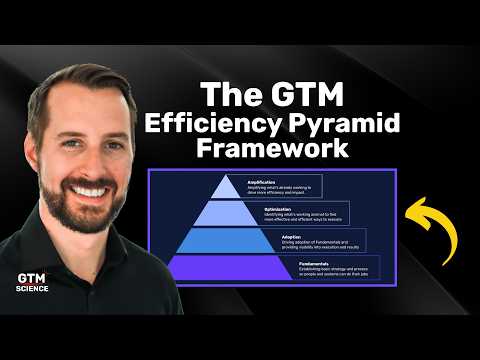
RACHAEL BUECKERTAnd this is kind of a derivative of the go-to-market efficiency pyramid, which starts with fundamentals, then goes adoption, optimization and acceleration. I almost forgot it for a second. But this is the pipeline efficiency pyramid. So it basically is our go-to-market efficiency pyramid, but specifically for pipeline management. So Eddie, I'll let you take it away on that one.
EDDIE REYNOLDSI am impressed that you had that committed to memory, Rachel. I have this slide sitting in front of me on my computer, even though I talk about this incessantly every day. So the idea here with the go-to-market efficiency pyramid, for anybody listening that's not familiar with it is we're just thinking about like what are the first things that we need to fix in go-to-market operations, right? So one of the problems that we oftentimes run into is somebody will come and like it used to be like, hey, we need to implement sales loft. And now it's like, hey, we need to implement like an AISDR, which we've been talking about and writing about recently. And then, okay, we go slap an AISDR on top of like a completely broken foundation. And it just, all it results in is sending out a bunch of like really crappy messages that nobody responds to. With pipeline management, a good example of this would be like AI forecasting. Okay, so I just gave you this example of this like terrible pipeline report, and then we try to layer AI onto it. And maybe there's some magic. It can like pull data from email and do some things that are really interesting. But like, by and large, like it's not going to work with this like really junk data.
RACHAEL BUECKERTYeah, like the AI might be doing what it needs to be doing. Like the AI is probably working the way it should be. But, I mean, you could have the best AI in the world, and it's not going to give you what you need if your fundamentals are messed up. And you're not actually collecting accurate data because you have no consistent process.
EDDIE REYNOLDSExactly. And so, when we think about the pyramid, it would be first and foremost, think of the fundamentals. And another way of the fundamentals is to just call it the process. Like, what is the like the definitions and process for people to do their jobs, in this case, for sales reps to manage their pipeline? Well, first and foremost, we need to know who our ICP and our personas are for each product we're selling. If we have a deal open and we are selling into a company that's not in our ICP, or we are not engaged with the right buyer personas, we're probably not going to win that deal. Why is that? Well, because the ICP and the personas are reverse engineered from the people that become customers. So, the whole point of having the right ICP and personas is to say, like, who are the people that we win business from? Who are the people that we consistently don't get business from, that we lose deals? And we are defining that, and then we're saying, like, don't go chase deals with those companies, right? That's like the base foundation of everything that we talk about in go-to-market, obviously. The next piece is the sales methodology and sales process. So, you take a methodology like Medic or MedPic. As an example, we don't try to pitch any particular methodology. Like, I don't care. Use whatever you feel is best. And then you have to translate that into a process. So, if you go to the official website for Medic, it literally says, like, this is not a sales process. This is a methodology. A sales process is, what do we do in step one? What do we do in step two? What do we do in step three? As an example, like, what has to be true before we want our sales rep investing time to present a proposal? And the reason this is so important is that in most complex sales cycles, and we're talking to companies that have sales cycles of 30 days, 90 days, 6 months, 12 months, whatever, somewhere in the middle where, like, it's not a transactional deal that closes in a day and it's not, like, a $10 million deal that takes, like, five years to close. Like, we're looking for, like, complex but repeatable process. When you're in that situation, because this is my experience, I haven't sold any, like, $10 million deals outside of, like, when I worked in private equity and I haven't sold any $1,000 deals outside of when I sold cell phones in college. The more time you spend on a deal, you spend exponentially more time. So, you get into the first call, it's 30 minutes. The second call is maybe another 30 minutes, plus you had to prep for 15 minutes, plus you got next steps for 15 minutes, plus you had to follow up multiple times. Like, maybe you're an hour in, an hour and a half, two hours on step two. Then step three, you got to follow up, you got to do some research, you have to do all this other stuff, you pull in another resource, now that's, like, a five-man-hour commitment. It just gets exponentially larger and larger and larger as you go through the sales process. So, from a purely, like, resource management perspective, financial perspective for the company, you don't want your reps going into these later stages in the sales process if they are not likely to win the deal, right? Each stage in the sales process should have a significantly increasing close rate. If you have reps, and this is oftentimes the case, that are saying, like, okay, like, we win 30% of our deals, and every single deal goes from stage one to stage six, we present the proposal, we haggle over legal contracts, and then we lose the deal 70% of the time. It's like, that's a massive waste of resources. You could have gotten ahead of that and preserved time to do something else. The next piece is to have the sales process implemented into the CRM. So, this is where a lot of companies fall off. It's like, okay, so we got our sales process, and we paid for training, and we sent our reps to two days of training, and we gave them a booklet or a file on their computer, and it gets stuffed in the desk or whatever, and then they forget about it. We need to see that process right inside of the opportunity on Salesforce, and it can be pretty basic. I mean, you can literally just, like, take, like, the MedPIC fields and put it on the opportunity. This is what I experienced at Salesforce. Like, I think this might have been pre-Medic. We didn't use Medic, but what we used was pretty close to it, and you just see these fields right in Salesforce, and then you have your pipeline report, and you create a report of the pipeline, and, like, our report was really simple. It was, like, what's the close date? What's the dollar amount? Like, what's the next steps? And so, if you didn't have those three things filled in, and the stage, of course, if you didn't have those four things filled in and accurate, like, you'd get called out on it by anyone and everyone. That's the pipeline review process that's next, right? So, I kind of skipped ahead. And sorry for anybody listening to this. I know it might be kind of hard to follow if you're listening. We also wrote a framework that you can find right on our website. That's why we're doing this. And you can look that up, and the link will be in the show notes. But this is the real power. Like, I see a lot of organizations that, like, they have a decent ICP, decent sales process. They even have some stuff built into their CRM. They even have reports. But nobody is following that process, because there's no point where management is holding them accountable. And I saw the opposite when I was in AE at Salesforce. If we ever had any deal, other than, like, you know, we had some small transactional deals, like, you know, somebody wants one extra license. Like, nobody's looking at that. That's fine. But, you know, the bulk of my pipeline in terms of dollars, I would have my manager and his manager and his manager and his manager. Sorry, all my, like, chain of command were men. Not to be sexist here. It's just that was the case. They would all be looking at the pipeline. Like, consistently, I would get messages from my EVP or people on my team would get messages from my EVP. Like, hey, like, why are your next steps out of today? It's like, why is someone who is sitting in San Francisco? I was in New York with, like, hundreds and hundreds of sales reps underneath them at an executive level at a Fortune 500 company, like, manually reviewing sales pipeline. Like, I talk to people that are in, like, companies in, like, low tens of millions in revenue, and they feel like, oh, like, that's something for my sales manager to do. Meanwhile, I'm at Salesforce at $5 billion, $10 billion in revenue, and we have executives reviewing the pipeline. It's because this is really, really important, and this makes or breaks this effort. Because without that, your reps just end up doing whatever it is they feel comfortable doing. With this, you get every single rep on your entire team to follow the same process, a process that has been carefully designed to reverse engineer how we win deals and how we avoid losing deals or wasting time losing deals that we're going to lose anyway, right? So we have this pipeline review process where each layer of management has a regular cadence of looking at specific things consistently and calling reps out and saying, like, what's going on with this? And this doesn't have to be a negative thing. Like, this can be really helpful coaching for reps. Like, why does Medic ask what the decision criteria is? Because this is one of the most important things for a sales rep to know. How are you going to create a presentation or a demo if you don't know how your buyer is going to decide, yes or no, I want to buy this thing, right? Like, you are going to miss the mark. That's why this is important. But how would I, as a manager, expect a rep to do that if they have gone to one day of training and then they forgot about it and then they just default back to whatever it is they have been doing previously? You need reminders. Like, every human being needs consistent reminders to learn a new skill. So, then, like, the next bullet in adoption is one-to-one sales coaching. So, we talked about the fundamentals, just to recap, ICP, sales methodology and process, and that process built into the CRM. That's the fundamental. That's like, here's the process we need people to execute. And then we go into adoption. It's like, here's how we get people to adopt that process. We build pipeline reporting. We have a pipeline review process. And we use that information in one-to-one sales coaching. How powerful is it if you can walk in to a one-on-one with a sales rep and say, like, hey, Bob, this is why you're winning or losing deals. If I benchmark you against other reps, your close rate is higher or lower or the same as other reps. Your sales cycle is better or worse. Your average deal size is better or worse. And when I dig into your deals and I look at the criteria, who you're talking to, what the decision criteria is, et cetera, et cetera, this is what I can see is working well for you. And this is what I can see you could work to improve upon. Now, not all of this is possible just strictly with data. Like, I think ride-alongs and all these other things are important. But as an operations firm, we're just focused on, like, how do we build a system that enables both reps and managers to perform better? And in this case, to close more and bigger deals faster and more reliably. Once we have that in place, like, what I'm talking about right there, you could implement all of that for one small team, like, in days or weeks. The next stage is optimization. And this is what can take significantly more time. But this is, like, where the gold lies, right? We've got pipeline insights. I'll make these next few sections quick because I think what's so important is the fundamentals in adoption. Optimization, we talk about pipeline insights. Everybody wants this. It's like, tell me, like, what's working? What's not working to close deals? Which customers are we closing the most of? Well, how do you know which customers you're closing the most of if I open up the pipeline and we don't even know what industry your customers are in, what size they are, et cetera? Like, this is where we need to get accurate data. And some of that can be done by operations. This isn't all just, like, on sales reps. We get into regular forecasting. We talk about pipeline council meetings, which we've talked about extensively, where we have leaders of every revenue department, sales marketing, and CS come together and look at what's working and not working and make core decisions. And that's optimization. Then we move into acceleration, and that's when we finally get to, like, AI-driven forecasting, a lot of AI-driven everything, but also automation. Anything we can do to take what's working, what we've already optimized, and accelerate it further. This is what everybody wants. People want, like, the shiny objects are the acceleration at the top of the pyramid. But you can't get that if you don't have a fundamental process for your reps to follow and adoption of that process. You don't have accurate data to analyze.
EDDIE REYNOLDSYou can't get insights. You can't forecast accurately. You go to a pipeline council meeting, and it's just like, first of all, you probably wouldn't have a pipeline council meeting without this. But if you did, you'd just be sitting around the table like, well, how can we generate more
EDDIE REYNOLDSpipeline? How can we close more pipeline? And it's all gut feel. There's no data to back it up. So that's the pipeline efficiency pyramid, and I'm happy to answer more questions on it. But to give our audience an overview, that's what it is. And we have all this detail spelled out on our website. Yeah, and another important note on the last part of the pyramid, acceleration.
RACHAEL BUECKERTAcceleration doesn't mean all AI. So all AI doesn't have to happen after you do all these other steps. You can use AI to help you with the fundamentals or the adoption process or the optimization process. The point is that you're not accelerating anything with AI. You're not multiplying anything with AI until the other levels have been built out first.
EDDIE REYNOLDSYeah, and I think this is a tricky one for all of us. I think when we first did this pyramid a few years ago, like we just had AI at the top, and it's like, hey, hold off on AI.
RACHAEL BUECKERTYeah, it was just automation instead of acceleration, right?
EDDIE REYNOLDSYeah, and to be fair, like AI has obviously evolved a lot in the last few years. But I think also our thoughts on it have evolved in that like, well, of course you can use AI to improve your ICP and your buyer personas or your definition of those, right? I think what we're trying to say here is you can't just jump straight to AI-driven forecasting if you just have like a completely messy pipeline and no data to feed that engine.
EDDIE REYNOLDSJust like you can't layer an AI SDR on top of a broken outbound process.
RACHAEL BUECKERTYeah, you use AI messaging on the wrong ICP and you're not going to close any deals. You'll do a lot of it and very fast, but none of it's going to do anything for you.
SPEAKER_37Exactly.
RACHAEL BUECKERTAll right, so let's go back down the pyramid now and look at that first point, ICP, buyer personas, and product set defined. So why is it so critical to make sure that we have all of these set up? And I think people kind of know why ICP and buyer personas are important. But what about product sets and making sure that we have a distinct product set for each of these categories?
EDDIE REYNOLDSWell, I think there's two things here. One, it's critical that we have a defined product set in the sense that like our sales team knows what we're selling, what each product is. And it sounds crazy to think about it, at least for me, like I worked at Salesforce. They had this completely dialed in to an extent, though I was just joking with Jerry who runs our delivery team. I'm like, what is the difference between sales cloud and service cloud? Like there's a very little difference. And when I was an AE at Salesforce, it was like confusing, but we fundamentally understood that like, even though those two different products at Salesforce have very similar features, you have one team, the sales team using one product and one team, the service team using the other product. And each team could use the other, but the pricing is also very similar. So it doesn't really matter. But it's very clear that like we have an offering to sell to a service team. A lot of companies don't have that. Like they're confused on what their products are. Their salespeople are confused. They're constantly updating things. And it's like, wait, what exactly are we selling? And more importantly, who are we selling it to? Who is our ICP and our personas for each product? So at Salesforce, the ICP, at least from what I saw was everybody, which isn't great, but Salesforce was a really mature company when I worked there. But the personas, it's like, we were very clear about who the personas were. The persona for sales cloud was obviously sales leaders. The persona for service cloud, you would think would be service leaders. But what we found oftentimes is that they weren't able to make decisions. They oftentimes did not have the authority and the access to capital in the organization that like a sales leader would have. And we were having more success selling into like COOs, for example. This was a long time ago, by the way. I was at Salesforce like 11 years ago. But this is why it's so important to understand personas because it's like, we get the message across the whole team. Like, hey, stop calling like heads of customer service because like, you're just going to have a really hard time getting deals done. Just call the COO.
RACHAEL BUECKERTYeah. And we found that for ourselves as well.
EDDIE REYNOLDSYeah. I mean, it's really unfortunate, but like different departments and companies have different levels of power, right? I mean, I think that's obvious to anybody listening to this. Maybe it's less obvious is how important it is to articulate that to your sales team so that you have them focused on the right people. And then as this translates into pipeline, it's like, well, all right, let's say that we have a deal to sell Salesforce service cloud to a customer service manager. How do we feel about that deal? What is our path to get to the COO or someone else knowing that most of the time if we, and again, like I'm dating myself, this is a long time ago. So anybody listening to this that works at Salesforce, like maybe it doesn't work that way anymore. But at that time, it's like, well, if we don't have a path to the ultimate decision maker and we were not clear on who that is, like, what are our chances of closing this deal? And if we don't ask those questions early on and we just wait until the very end, two things happen. One, we lose the deal and we've wasted all this time. Two, maybe we could have won that deal if we would have gotten in front of the right person earlier on. And now we've like, we've lost our chance to do that. We have given our prospect everything they've asked for. They want nothing more of us. We gave them the demo. We gave them the proposal. We went to management and got special pricing concessions. We presented all of this to them. And they're just like, now I have everything that I want. By the way, can I ask you for something? And they're like, no, they just stop responding to you. Right. Whereas when you're in the beginning and they're like, well, I want the demo. I want the presentation. I want the pricing. Okay. Before we can do that, we need this. There's an exchange in the sales process. Right. And I don't mean to go too deep into this because I think everybody listening already knows it. But you give up that leverage if you run your sales process all the way to the end without asking for those things. And now you've lost your chance to possibly close a deal you could have otherwise closed. And so that then translates into our sales methodology and sales process, which should be reverse engineered to say like, what do we need to do when to maximize our chances of winning and minimize our chances of wasting time chasing deals we're going to lose.
RACHAEL BUECKERTAnd so ICP and buyer's personas, I visualize them as like one of these really big domino pieces that if you get it wrong, it's going to cause a chain reaction throughout the entire rest of your funnel, essentially from like pipeline to messaging to customer support tickets later on down the line. So super, super important. What are some practical ways that companies can really deeply analyze their customer data to pinpoint their true ideal profile for each product or just their ICP as opposed to just broadly defining an ICP or just like picking an industry out of the water and saying, let's go for this. How do we really find out what our ICP and our buyer persona is?
EDDIE REYNOLDSSo I think, like I said, you reverse engineer the deals that you close or ideally like the customers that you have renewed and expanded. So like we first and foremost look at who are our most valuable customers. Actually, I'll even take a step back and I'll say like, there's two ways to do this. One way is to analyze the data that we have on our own customers. Another way is to do market research. And I won't pretend that like Union Square Consulting is the end-all be-all experts on how to define ICP. I look at us like a doctor, like a general practitioner, and you ask us a really difficult question on like the heart. And we're like, you need to see a specialist for that, right? I don't want to pretend that like we know everything there is to know about ICP. But based on my limited knowledge, I think a lot of organizations have too broad a definition of ICP, which causes two problems. Number one, like we're not targeting the right people. And number two, we're just casting too wide a net. So we say, all right, like we target these 15 industries and it's this revenue range and it's anybody in North America. It's like, okay, cool. Does that fit with your most valuable customers? If we look at our most valuable customers, can we narrow in and say like, well, actually the deals we've won, deals we've won quickly, the customers that have renewed and expanded that have not given our customer support team a hard time, that have not been expensive to serve, the people that like sing our praises from the rooftops. What industry are they in? What subsector are they in? What revenue range are they in? What personas in those organizations? What technology are they using? So I talked about firmographic and technographic data. What intent signals did they have? What are their like unique characteristics? What are things that reps can identify that we can't necessarily identify with data? Like I'll give you an example. When I was selling marketing tools at Salesforce, one of the things that we would do is we would go onto their website and we'd have these like plugins for Chrome that would tell us what kind of software they had installed on their website. Like did they already have Marketo or HubSpot? Did they have other kind of trackers? Also, what did the website look like? If the website looked like crap, then I asked this question, how much does this company care
EDDIE REYNOLDSabout marketing? How much do they care about investing in marketing technology if they haven't even invested money
EDDIE REYNOLDSin keeping their website up to date and making it look good? So we look at that right there and it's like, how badly do I want to try to sell marketing technology to these folks? Whereas I go onto that website and I see like a bunch of tools and I see a really slick website and I see like the CEO or executives of the company are putting out content on the website.
EDDIE REYNOLDSIt's like, wow, these people care about marketing. Maybe this is a good prospect.
SPEAKER_14And what do you do if some of your clients, you know, they're really good clients.
RACHAEL BUECKERTYou've made a lot of money from them. It was easy working for them or with them, but they aren't the ICP that you expect to have. I know we've had clients like that in the past where they're not really our ICP, but they've been really good clients. So like, how does that fit in with defining this?
EDDIE REYNOLDSI actually don't know the answer to that. I'll say, I think this is really tough, right?
EDDIE REYNOLDSI'll tell you one challenge that I was going to touch on. I didn't get to is customer stories and references. This is a problem that I see you run into. So we'll take that client that you mentioned, right? And they're just like a fantastic customer and we love working with them. And then we run into our ICP and the ICP is like, hey, can I get a reference call? Can you give me a case study? Can you give me a testimonial, et cetera? And we're like, ah, but we have all these other clients and all these other industries. Like, can I introduce you to this person? It's like a much different size company, somebody that's in a completely different role, completely different industry, completely different use case. It's like the more that you can narrow in and just say like, this is our niche. This is who we own. Like the more that you can compete because you actually, you don't have anybody to compete with because nobody else is competing for that tiny niche. But I think it's really hard to like turn money down. But I can tell you for me, like we've made that decision where we're just like, look, like we're only going to focus on this tiny niche and we've had to turn people away because it's just like, I don't care how much money you give us. We have to devote a certain amount of resources to make this work. And then what do we get for it in return? Like we get a testimonial or a story or a reference from a customer that doesn't fit our ICP and doesn't help us to grow our company in the way we want to grow that company. So sometimes we let folks like grandfather in and we just say like, let's not sell anybody further from here because, you know, we want the revenue. But it becomes a really hard decision on like how much money we want to walk away from. And every company is trying to keep revenue up. Thankfully, we don't have any investors to answer to. I have seen personally in my own business, the more that we have focused on a really core ICP and even more specifically personas, the more our messaging and our marketing and our testimonials have fit and resonated with folks and the more that we win bigger deals.
SPEAKER_12Yeah, absolutely. Like you said, if you're designating all these resources towards providing a service for a very specific ICP, then you're kind of just wasting resources if you're devoting too
RACHAEL BUECKERTmuch time to customers outside of that. We're not really here talking about customer success, but just to touch on it briefly, like I think
EDDIE REYNOLDSthe problem is, is like every single customer comes with a set of problems. And the question I would have is, do you want to solve that problem for one customer or do you want to solve that problem for a thousand customers? So when we had customers that like weren't part of our ICP, especially once we realized it, you get presented with this problem and you just look at it and you're like, oh, I can like put a bandaid on this, but I can't afford to go and like completely fix this whole process. Whereas when we see a problem with a customer in our ICP, it's like, okay, all hands on deck. Like maybe we need to go back to our, our delivery process, our fundamentals on like the client delivery side. What is our onboarding process? What's our implementation process? Like how do we do QBRs? How do we do all these things? And that's a massive investment. And the more that we do that, the more we build a moat around our business where nobody can compete with us in our niche. But when you take customers outside of your ICP, you can't really do that because you're too diluted and they have different problems. And then you're just basically underserving them. And then worst thing that happens is, is because of that, then they have a bad experience and they tell everybody that you're terrible. Right. Which sucks. Which sucks.
SPEAKER_12Yeah.
EDDIE REYNOLDSAnd it's just because like, well, you're not our ICP and we haven't invested in, in perfecting solutions to the problems that you have.
SPEAKER_12Exactly. So how often should we be revisiting these definitions and refining them?
EDDIE REYNOLDSOh, I saw this question. I'm like, oh, this is not a tough one. I would say like, at least once a year, a company should be asking themselves, like, do we have the right ICP? Do we have the right personas? Things are shifting so fast with what's going on. Like the economic and political environment right now with AI. I think that we need to be revisiting this frequently. Another way to look at this is like, well, when we are losing deals or when we are churning customers or failing to expand customers or having CSAT NPS problems, we might want to ask ourselves, like, what's going on here? I will say, I think about our ICP constantly.
SPEAKER_29Same. In marketing, you kind of have to.
EDDIE REYNOLDSI mean, I think we just, we keep going deeper and deeper and deeper. And it's like, what are we doing right now? We are creating a piece of content that is specifically targeted, ideally at B2B SaaS companies that are pretty mature companies. And so we're trying to talk about use cases that are relevant to them. We're not talking about startups. We do get companies from other industries and we can serve those companies. But the more that I find that, like, we just focus in on B2B SaaS and we're like, hey, if you're in another industry and you have problems we can solve, great. But like, I don't know, we'll use like law firms as an example. Like, I don't think that applies to a law firm. So if you raise your hand, you're like, I run a law firm. I want help with like our sales process. I'm just like, I'm sorry, that's too different. I don't even want to try to figure out how to solve your problems because it's just going to dilute all of our energy. And I don't want to go create marketing content on how law firms can land more clients because
EDDIE REYNOLDSit's just not relevant to what we do.
SPEAKER_12Yeah. And like, if we were just getting bombarded by law firm prospects that want to throw money
RACHAEL BUECKERTat us, then maybe we'd change our business plan. But for right now.
EDDIE REYNOLDSWell, I think that that presents a really interesting problem, right? Let's say that that happens. You have to take a step back and you have to say, like, how do we want to invest money as a company? Do we want to invest in solving problems for law firms or do we want to invest in solving problems for B2B SaaS companies? And I'm not saying one answer is right or wrong, but it's just you have a finite amount of resources. So you have to ask yourself which investment is going to pay off more. And there are companies that focus on solving problems over law firms that are incredibly successful and that's great for them. But you've got to pick your horse.
RACHAEL BUECKERTSo moving on to sales methodology and sales process, we talked about this quite a bit in the beginning already. So I won't have too many questions on this one, but in the framework, we're mentioning clear entry criteria for each stage of the sales process. Or would be some examples you could give of strong entry criteria for a specific sales
SPEAKER_21stage?
SPEAKER_01Well, let's just start with like the first stage, right? So just sometimes it's not always the first stage.
EDDIE REYNOLDSIt can be stage one, stage two, what have you. Like when you actually enter qualified pipeline. This is obviously most important, right? I love like looking at each stage in the pipeline, but first and foremost, like, do we actually have an accurate measurement of how much pipeline we have generated and what percentage of that pipeline we're closing? And so everybody like who's all over Bant, I personally still use it. Again, I'm not trying to pretend to be an expert in sales methodologies, but like, do they have at least some parts of budget authority need and timeline? Most specifically, like, do they have a need that we can solve for? And are we at some point going to get access to the right people to ask questions and present this solution? If we have that, then we might be able to get budget. Although I really love just telling people, here's the price or here's the price range on the first call. How does that fit with you? And like, when do you want to have a solution in place? That's an example of like, okay, if we've got a good amount of that stuff, we probably have a qualified deal that we can have a good chance at closing 20%, 25%, 30% close rate kind of thing. That's an example of an entry criteria. And depending on the organization and what they're selling and how often they run into problems like this, they might say, like, if you don't know who is ultimately making the decision, or if you can't even articulate the need, then it's not a qualified sales opportunity. Doesn't necessarily mean you walk away. It means you have more work to do before you put that into your pipeline. And then you go through each stage. And I kind of tend to think about stages like generically as like, you have your qualification, discovery, presentation, proposal, negotiation, closed one, like, these are really generic stages. So let's talk about like presentation, for example, you just ask yourself, like, how time consuming is it to do a presentation the right way? And what do we need to be true before we do that? And you know, there's a lot of chatter around like, well, we shouldn't be forcing customers to wait until the fifth phone call to see a demo. I totally agree with that. But dating myself way back to my Salesforce days, that's the methodology or the mindset they had. And part of the reason is because a custom demo, I'm not talking about like a preliminary demo, but a custom demo would take us so much time and energy and investment. Like you're literally like configuring Salesforce and uploading data to fit like a custom demo. Do we have the right people there? And do we know what they need to see? Because if we're just like all of a sudden, all of our decision makers are showing up and they've never spoken to us before. And we give the demo and we just completely missed the mark. Not only have we wasted time, we've lost that sales opportunity that we might have otherwise been able to win. So those are a couple of examples.
RACHAEL BUECKERTAnd from a pipeline management perspective, why is it so important that we have all of this really implemented in our CRM and having everyone following it?
EDDIE REYNOLDSSo let's use that presentation as an example. So I'm at Salesforce. I'm going to do a custom demonstration of Salesforce.
EDDIE REYNOLDSAnd let's say that we've already given them like the pre-recorded demo and we give them the quick intro on the fly demo. And we're trying our best to like be buyer centric and do everything like that they want within reason. But this is where we roll up our sleeves and we invest hours and hours and hours, possibly days or weeks to build out this like robust custom demo and do the big reveal to the entire buying committee, right? If we do that well, we should have an extremely high close rate from here. I don't know what the exact number is, but let's call it 50, 60, 70% because we have already, we already know who the decision makers are. They have a timeline. They know what this thing is going to cost and they're okay with it. We know what their decision criteria is. We know who we're competing against. We've like, we've done all the pre-work. And now we go into this presentation and we give a 10 out of 10 presentation that hits all the highlights, all the important points, and we should win a high percentage of these deals. If we don't do that, a number of things happen. Number one, we are wasting a lot of resources on our sales team in order to give that presentation. Number two, we're going to have a lower close rate. Number three, we can't forecast accurately because we have a deal in a presentation stage, but we don't actually trust it. Maybe we're giving a presentation, but we haven't done any of the pre-work. So that like the stage is not really relevant, right? It doesn't tell us anything. And so we don't have the ability to forecast accurately because we just have a bunch of deals all over the place. All we can do is say, okay, well, we closed one out of three deals and we have X amount of pipeline. Maybe we know for sure that we actually do have qualified deals because we did a good job in step one. We don't have any assurance that because it's in a presentation stage, it's more likely to close. We just have our reps just take everything through. So it's just like inaccurate forecasting, losing deals we shouldn't lose. When we win deals, we lose in smaller, more transactional deals. And we waste a lot of resources chasing these deals we can't win. And we don't build as much pipeline because we don't have time to prospect.
SPEAKER_12That was going to be my next question. Well, how does this affect reporting and forecasting? It affects everything.
RACHAEL BUECKERTYou can't do either of those.
EDDIE REYNOLDSThat's how it affects it. I mean, like, I'm not a big fan of like weighted average forecasting. And like, if anybody's listening to this, they don't know what that means. It's just like, we just say, okay, like, well, presentation stage closes at 60%. So we take all of our deals in presentation stage and we multiply by 60% and there's our forecast. And then we look at stage one, two, three, four, five, whatever. And we do the math and then boom, there's your forecast. Obviously, you can't do that if you don't have this stuff in place. If you do have this stuff in place, I still think the forecasting should go much further. And we should start to ask reps questions and have them call their shots and really be thoughtful about what we're forecasting. But like just the base, like, inch level one-on-one forecasting of just like stage weighted forecasting. We can't do that if we don't have good, like, reliable stages. Yeah, absolutely.
SPEAKER_14Moving on to the next section, sales process implemented into the CRM.
RACHAEL BUECKERTWhy isn't great process and training enough for reps?
RACHAEL BUECKERTWhy does it need to be implemented into the CRM right there in front of them?
EDDIE REYNOLDSBecause human beings need to be constantly reminded of things. Like, it's just really that simple. Like, let's use that example, like that presentation stage, right? So, Rachel, you're my sales rep and I teach you, like, these are all the things that you have to have in place before you give a presentation. And then I put you in two days worth of training and you learn all about it. You take diligent notes and you go back to your desk and you do it. Are you going to do that perfectly the first time? Probably not. Probably not the second or third or fourth or fifth time. What happens if I just, like, let you loose and you go do that? And, like, three months later, I'm checking in with you and I'm doing, like, one of these, like, go-round-the-table things. I'm like, Rachel, what's going on with your deal? You got a presentation coming up. And I'm like, hey, what's their decision-making criteria? You know, like, well, okay. So then, like, what do I do here? If I'm a nice guy, I'm like, okay, like, Rachel, let's get into a one-on-one. Let's talk about that. If I'm not such a nice guy, I just shit all over you in front of the whole sales team, right? Are either of those things productive? Like, wouldn't it just be so much, like, more helpful to have a checklist sitting right in front of you inside of the CRM that's like, have you done all these things? Yeah, and then I wouldn't miss it. Exactly. Well, you might still miss it. You'd be surprised. But if I'm constantly reminding you, if I'm saying, like, hey, before you move a deal into presentation, you need these things in order. Maybe we make those fields required, or maybe we just have a report and we look at every deal that's in that stage. And we analyze that, especially for newer reps. What happens is this becomes muscle memory. I mean, I literally was at Salesforce 11, 10, nine years ago. Whenever I left, I left in 2016. What was that? Nine years ago. And I can still, like, remember our stages and what our entry criteria was, because it was just, like, ingrained into me every single day, consistently the exact same thing. The job I had before that, which was selling Salesforce for a partner as, like, their first AE. Like, I honestly, we didn't even have a sales process, but, like, I can't remember any reports. I can't remember anything that we did. I remember that, like, I called people and I presented our solution and they said yes or no.
SPEAKER_14Yeah, that sounds a lot easier.
EDDIE REYNOLDSIt's not, because, like, it's a lot harder, actually. Like, we lost deals, because at the time, I wasn't doing things the right way.
RACHAEL BUECKERTYeah, that makes sense. It seems like it'll be easier, but in the end, it's actually like, oh, no, you're actually just screwing yourself over. Well, it's ironic, because I came back into that organization later as a consultant with USC, and I opened up their pipeline.
EDDIE REYNOLDSAnd by this point in time, they had had a VP of sales that they had just fired. They had multiple sales reps, and I opened up their pipeline. And these guys are the people that taught me Salesforce, right? Like, their solution is built on Salesforce. Like, they know Salesforce as well as anybody. They literally taught me, like, how to, like, configure Salesforce, but they didn't know how to use Salesforce to sell. And so I opened up the pipeline, and I'm like, guys, you have, like, a 30 to 60-day sales cycle, and all your deals are, like, 360 days old. They're like, well, I mean, I think it's going to close. And I'm like, okay, there's no data in there. There's no process implemented in the CRM. So I'm sitting there, and I'm staring at this pipeline, and there's just a bunch of deals. And I'm like, I can't see anything. I don't have time to go call record by call record through a year of history to try to, like, piece together what's going on with this deal. So I'm stuck there, like a 1980 sales manager. And I'm like, hey, Bob, like, what's going on with this deal? What's going on with this deal? What's going on with this deal? It's super time-consuming. And so what I did is I'm like, guys, I just can't do this. So I implemented these fields immediately. And I was like, tomorrow, we're going to talk about these. I want you to fill them all out.
EDDIE REYNOLDSWe came next day. We have a meeting. I open everything up before the meeting. None of these fields are filled out. Meeting lasted two minutes. And I was like, guys, nobody filled this out. I'm going to cancel this meeting.
EDDIE REYNOLDSWe're going to meet again tomorrow. If this is not filled out, I'm going to have a conversation with your CEO, and it's not going to go well for you. Keep in mind, I was a consultant. I wasn't actually their boss. I come back in the next day. Everything is buttoned up. And I'm like, okay, cool. Let's talk about what's going on with this. You have this deal that should have closed in 30 to 60 days. It's 360 days old. Your decision maker left the organization six months ago. You don't know who replaced them. You don't know what the decision criteria is, et cetera, et cetera, et cetera. Tell me how you're going to close this deal. And it's like, why don't you just close this out? Look, if you can find a way to reopen it, you want to call them back and get in front of the decision maker, and you get all this information, you want to reopen this deal, great, go for it. But this is not a qualified deal right now. So close this out of the pipeline. And then now let's look. You now have zero pipeline. I'm sorry to be the bearer of bad news. And we need to get prospecting right now, guys.
RACHAEL BUECKERTI feel like this is a perfect segue into the next section, the pipeline review process. And we did talk about this a bunch at the beginning. But is that how you would recommend these revenue leaders conduct these pipeline review processes?
EDDIE REYNOLDSYeah. I mean, what we're talking about here is essentially like, do we have the data in the CRM so that we can ask critical questions? So instead of asking questions only verbally of reps, what are the questions that we would otherwise ask again and again and again on every single deal, right? If you are a sales leader and you could only ask your reps three questions about a deal, what would those three questions be? And then I would pose the question to you. If you have a rep that has invested three months into a deal and it's in stage three and they've put hours and hours and hours of their time that could have otherwise been spent on another deal or prospecting, and they can't answer those three questions, why is that? Is it because they just forgot? Because you don't have this process there? Is it because those are the wrong questions? Is it because they don't want to do it? And this is really basic stuff. But it's transformational because instead of like constantly asking those three questions when you're sitting in a sales meeting, you have this front and center in Salesforce and use that to hold them accountable. And then it's like, this is our sales process. This is how we do things here. And if you don't want to do things this way, you don't get to work here. And that's what I experienced as a rep at Salesforce. And I will say like, this might sound heavy handed. I didn't even find it to be very heavy handed when I was at Salesforce. It was like, hey, there's like three or four fields you need to keep up to date on every single opportunity. And then if it's a really big like whale of a deal, you're going to get a lot more scrutiny. And so you should probably have all your fields like filled out and buttoned up. It's not a big ask. And like, these are good questions to be asking. These are forced the rep or they should be forcing the rep to be thinking thoughtfully about their deals. And I remember like sitting with our top sales rep on my team at Salesforce. And it took him a while because he's like an old school guy. And like, just because I worked at Salesforce and we sold Salesforce doesn't mean we actually believed in it. Right. A lot of people were just like, why can't I do this out of Excel? And I remember him like maybe six months in, he's like, you know, I'm finally starting to appreciate like these fields are asking the questions that I need to be asking to like improve my ability to close. And it's forcing me to be really thoughtful about my deal.
EDDIE REYNOLDSIt's like, yeah, that's why they designed it this way.
SPEAKER_57Yeah. That just reminds me of back when I tried my hand at sales. Like if you're going to sell something, you really have to believe in the product and like know why it works and why it's helpful.
RACHAEL BUECKERTIt's wild to think of somebody like working at Salesforce and not understanding why all of these fields are super helpful.
EDDIE REYNOLDSWell, I think it's because like Salesforce is oftentimes seen as like a management tool. And I myself was like, oh, God, I'm going to go work there. And this is like the best tool ever to micromanage somebody. And I'm going to be micromanaged to death. And I'm going to be miserable in my job. And I was pleasantly surprised, like that's not what I experienced. It was just like, hey, fill out these four fields on every single opportunity. And then you will never hear from us about that ever again.
RACHAEL BUECKERTSo, yeah, about that. How would you recommend that these sales leaders and revenue leaders make sure that they don't feel like they're micromanaging their teams with this stuff, but they're actually empowering their reps to improve?
EDDIE REYNOLDSWell, there's a difference between managing and micromanaging. Micromanaging is oftentimes what you do when you don't have this stuff in place. It's where you go in and you nitpick every single little detail and you're constantly like, basically, you're like, hey, Rachel, you're my sales rep. I don't trust you to sell. Let me get in there and basically do it myself via you as my proxy. Having a process and delegating that process and setting expectations and say, Rachel, this is our sales process. This is how we sell. This is what I expect you to do at each stage in the deal. And then I'm going to set very reasonable expectations of you for deals of a certain size, a certain complexity. I expect this. Just do it. If you don't do it, I'm going to call you out on it. But if you do it, then we can move on to higher order things. We can move on to talking about your big whale of a deal. And you come to me and you're like, Eddie, like, I can't feel like this is my whale deal. I'm trying to figure out, like, how to get strategic here. And, like, that's when, like, we can really get to, like, the juicy stuff, right? That's management, not micromanagement. Micromanagement is, like, every single day I call you and, like, Rachel, like, I want you to tell me about all your deals. Why didn't you do this? Why didn't you do that? Why didn't you do that?
RACHAEL BUECKERTI really like that. It feels like doing all this is going to make you micromanagy. But I like that it actually prevents you from doing that. Just makes you a better manager in general.
EDDIE REYNOLDSIt could. I mean, there's a lot of overlapping things here, right? Like, we're talking about Salesforce, we're talking about sales management, we're talking about accountability and coaching. Like, I don't pretend to be an expert in all of these things. All I can say is what I have experienced in my time at Salesforce and other organizations and what I've seen with our customers. And a lot of times, like, management is in a place where it's hard for them to be effective because they don't have the tools at their disposal. And so, they end up, like, in these verbal conversations that are incredibly inefficient. And it's like, how do you get a rep to do a certain thing on every deal if you don't have a defined process and you don't have a way to remind them, like, hey, this is what you need to do in this deal. I had Pablo from Insight Partners on the podcast a while back and he wrote a book on this. And he talked about how, like, surgeons have checklists, Formula One crews have checklists, and yet, like, we have, like, S&B sales reps that are like, I'm above having a checklist. It's like, come on. Like, if you are a surgeon and you don't remember to scrub in, you're going to fucking kill somebody, right? It's just, like, really simple. Like, I know brain surgery is really complicated, but I also know it's really important to wash your hands before you do it. Yeah, I like that analogy.
SPEAKER_57So, beyond just basic reporting, this is for Pipeline Insights, what are some of the key pipeline metrics that teams should be really going into in depth?
SPEAKER_01Oh, another tough question. So, I think, like, the simple answer is the obvious one is pipeline velocity. We look at close rate, we look at sales cycle, we look at average deal size, and then, of course, like, the other element of pipeline velocity is how much pipeline you've actually generated.
EDDIE REYNOLDSSo, that right there, like, if you can accurately measure that, you're light years away ahead of, like, a large number of organizations. The next step is, like, what are our stage conversion rates, and then, like, why are we losing different types of deals? And this is where, like, we have these entry criteria at each stage, and we have all this, like, data on, like, MedPic, Medic, what have you, on the opportunity where we can say, like, oh, we lost a deal, and we can analyze, like, what happened there? What's going on? Oh, wow, we noticed that, like, every time that, like, the decision criteria is X, we end up losing the deal. I mean, that can turn into everything from, like, changing our sales process to our marketing messaging to changing our product. There's so much, like, value in there. But this is also where, like, it gets into stuff, like, we're in the optimization phase where this, like, is hard, and it takes a long time, and it's not a quick hit. And so I say this with some level of hesitancy because I'm, like, look, if you can just get to the point where you know that you have good, clean pipeline, and you can, your close rate is above 25%, and that's an accurate number of, like, what you're actually closing, and, you know, you can see your average deal size and your sales cycle, like, you can do a lot of magical things. I personally struggle with the idea of, like, stage conversion rates. I know a lot of people love it because I'm just, like, ah, even with the perfect process, it's hard to get reps to, like, follow that perfectly. But if you get there, great. And then you can be, like, hey, Bob, like, you're constantly losing deals in the presentation stage. Let's drill into what's going on there. I can benchmark you against other reps, and I can see, like, the average rep on our team closes 60% of deals when they get to the presentation stage, and you close 30%. What's going on here? Maybe I don't have any data in Salesforce to take me any further, but what I can do is say, like, okay, now, like, not everything is, like, formulaic and data in Salesforce in some report. It's like, okay, Bob, I'm going to sit on your next five presentation calls, and I'm going to give you coaching, right? Old school, just, like, simple ride-along. But how would I know to do that? Like, here's a classic example. Smart reps bring their managers on their best deals, their best customers, right? Smart reps that want to get the best territory, that want to get promoted, et cetera. I mean, maybe you might argue with me, but I'll just say this is what I saw at Salesforce because it's a very political game. It's like, if you're really smart, you bring your leaders in on, like, the layup deals, and you just show them how great you are. I oftentimes made the mistake of, like, let me bring them in, like, where I'm struggling most, and then they don't have the best impression of me. And I learned that lesson the hard way. And a lot of reps do that. That's what I would think. Depends on your management team.
SPEAKER_64Yeah.
EDDIE REYNOLDSBut I'll just say a lot of reps don't do that. A lot of reps are like, I'm going to show you my layups. So then, as a manager, you're not really seeing what's going on. But if you can drill into the data and see, like, Bob is losing all these deals at the presentation stage, we can drill into that. Another thing that I really love, Kevin Dorsey talks about this, is, like, let's create a math equation with the rep. So I go to you, Rachel, and I'm like, hey, your close rate is X, your ASP is Y, et cetera, et cetera. In order for you to hit quota this year, Rachel, you're going to need to generate X number of deals, and you're going to need X meetings, and you're going to need to make, like, 300 calls a day. How do you feel about that? You're like, I don't want to make 300 calls a day. Okay. Well, where do you think, like, we can improve these numbers? Here's where other people are benchmarked. And now I've got your buy-in. I love that, yeah. So it's not me as a manager, like, pushing this down on you. You're like, no, no, no, I don't want to make 300 calls a day. I want to increase my deal size. And here's a report we did run when I was at Salesforce was, like, we actually looked at, like, calls and meetings to power, meaning decision makers versus everyone else. And, like, there was just an incredible correlation. Our top reps had the least number of calls, the least number of meetings, the least number of new opportunities created, but they were just always talking with decision makers. And our lowest performing reps always had the most calls, the most meetings, the most deals created, and they would close these small transactional deals because they were too afraid to, like, go to decision makers.
RACHAEL BUECKERTYeah, I think that's why slicing and dicing the data a bunch of different ways is so important. Because you could just look at these top reps and be like, oh, they're actually not doing a lot, so maybe I just don't need to do a lot and I'll be successful like them. But it's like, no, you have to look at the data a little bit closer and see, like, exactly what's going on there.
EDDIE REYNOLDSTheir average deal was way bigger than the average deal for bottom performing reps. Their close rate was higher. They didn't have to make a lot of calls because, like, they had built relationships with people such that, like, people would answer the phone or respond to their email so they didn't have to follow up 15 times. Studies also show that top performing reps spend more time with prospects and customers than they do on other activities. It's a lot easier to spend a lot of time in front of customers if, like, everybody answers your emails and your phone calls. And if you're doing a really good job as a salesperson, you get closer to that ultimate goal and you can start to see some of this stuff. But I think what's hard about this is organizations are like, oh, my God, I would love to have that insight. Well, like, how do you think Salesforce got that insight? It was years and years of engineering to, like, determine, like, wow, we lose a lot of deals, at least in the segment that I was in, if we are not talking to decision makers. So let's start tracking that. And let's hold our reps accountable. And let's create required fields in Salesforce. So now that we track it, now we can give coaching and feedback back to our team to say, like, hey, if you want to hit quota, it's going to be virtually impossible to get there if you're selling to the Salesforce admin. They don't have the power to do big deals. So you want to sell one or two licenses at a time, like, go for it. But it's basically going to be impossible for you to hit quota.
RACHAEL BUECKERTWhat are some other ways that we like to slice and dice data, maybe for our clients? Like, I know pipeline velocity and also, like, by product, by team, by region.
EDDIE REYNOLDSThere's a limitless number of ways to do this. But, like, I think it would start with the usual suspects. I mean, we talk about ICP and personas. So, like, if we're selling into multiple different industries, like, the first thing that I would want to look at is which industries are we winning the most of? I remember at Salesforce, they literally, like, came to me, and I covered every industry end of the planet with the exception of just a few that were carved out, like, financial services. And they're like, hey, who do we sell the most to? Number one, B2B SaaS or technology. Number two, professional services. Number three, advertising and media. And number four, manufacturing. I'm like, well, I'm in New York. And other than diamond manufacturing, there's not a lot there. And to be honest, like, I'm not that interested in diamond manufacturing. And I don't understand advertising and media. But B2B SaaS and professional services, I can wrap my head around. And B2B SaaS is better than professional services. So, I'm going to put all of my energy into that. It's really, really straightforward. I'm like, wow, I'm in New York. I've got all these, like, extremely high-growth, VCPE-backed B2B SaaS companies that are mature and growing like crazy. And, like, I can sell a bunch of stuff to them. And I'm going to go focus on that. And then if, like, the commercial air conditioning manufacturer comes inbound, I'll chat with them.
EDDIE REYNOLDSBut I'm not going after that.
RACHAEL BUECKERTYeah. Have you ever, when you're, like, slicing and dicing data, have you ever come across some, like, surprising or counterintuitive insights?
EDDIE REYNOLDSI'll give you an example. When I first started this business, back when we were selling things, like, much cheaper, I found that, like, our entry-level price point, every single customer would effectively churn. This is back before we had recurring revenue. We were just doing one-time projects. But, like, we would sell this project to a customer, and that was it. If we charged, like, 50% more, then almost every single time, they would double their spend. So, yeah, I'm talking, like, first year in business. So, we charge a customer $5,000, and that's all we ever see from them. We charge them $8,000, and it usually turns into, like, $15,000 or $20,000. And I was just, like, blown away by this, and I'm like, why is this? And I took a step back and thought about it, and I was like, well, it's because the organizations that want to spend $5,000, it's all the money that they can possibly get their hands on. It's also usually, like, a junior person or, you know, like, a startup entrepreneur that, like, just doesn't have any access to any money. And so, it's just everything that they can do to get it across the line. The organization's spending just $8,000. It's a larger organization. It's somebody in that organization that's more senior. And, like, for them to, like, double down and write another $8,000 check was, like, no big deal for them.
SPEAKER_05Yeah. And then, I guess that goes back to ICP. Like, you figure something out about your ICP.
EDDIE REYNOLDSYeah. So, we did a good job on the first one, and they're like, oh, wow, like, you did a great work. And we're like, by the way, we can do all this other stuff. And they're like, okay, cool. And the first company was just like, oh, my God, I already gave you every single penny that I could possibly get my hands on. I can't possibly do more.
RACHAEL BUECKERTYeah. Unfortunately, for those much smaller companies, they're almost never the best clients.
EDDIE REYNOLDSIt just depends on what you're selling. I won't say that. That's true. That's true.
RACHAEL BUECKERTYeah. Yeah.
EDDIE REYNOLDSBut, yeah, it's oftentimes easier just to make money off of bigger companies. What next?
RACHAEL BUECKERTYeah. So, next, regular forecasting. I think we did talk about this a little bit, but let's briefly explain the three forecasting methods that we talk about in the framework.
RACHAEL BUECKERTWe've got weighted forecast, bottoms-up forecast, and AI forecast. I don't want to get, like, deep into forecasting and, like, how all these forecasting methodologies are done.
EDDIE REYNOLDSI'll just say this. Like, a weighted forecast, again, is just where you take, like, the close rate for each stage and you multiply it by the amount of pipeline you have in each stage. It's a mathematical formula.
SPEAKER_45You can't do that if you don't have your deals in the right stages. And if you don't trust that data.
EDDIE REYNOLDSThe next step is, like, the bottoms-up forecast where it's kind of like that, but you're actually asking, like, reps and managers to call their shot. And, again, like, you have to have a clean pipeline before you can do that. You go into a pipeline meeting and, like, if the pipeline's a mess and people are just guessing, whereas if, like, Bob's got his deal in the presentation stage and he should close, like, 60% of those and he's like, well, you know, I got four deals in that stage and I think I can probably commit at least two of those deals. You're like, yeah, that passes the sniff test, you know, like, that seems likely. And you go through that and you're like, I'm calling my shot. Or maybe he's like, yes, this is technically in the presentation stage, but here's all this problems with this deal, so I'm not going to commit that deal. And then you have AI forecasting where you're essentially taking that same thought process and you're layering on and you're trying to say, like, how do we look at all these different signals, right? Well, there are some signals, like, this is where I'm, like, hesitant and I don't pretend to be an expert on AI, but, like, if we can get access to emails, like, a great example is, like, okay, I'm going to close this deal next week and I've sent five emails and they haven't responded. It's, like, probably not closing that deal next week, right? So there's some good data that you can give the AI that doesn't require any type of sales process. But by and large, like, if you don't have the first two things dialed in, you're probably not going to have a very good AI forecast.
SPEAKER_61And do you recommend any specific one or maybe, like, a combination of them?
EDDIE REYNOLDSI mean, obviously, Clary is really, really popular, but again, like, I don't personally get, like, geek out on the tools and I don't tend to, like, I try to be pretty tool agnostic. Like, whatever an organization finds to be useful for them, I'm cool with. So moving on to pipeline cancels, we touched on this briefly before, and again, pipeline cancels is just, like, a meeting where you're getting all of your,
RACHAEL BUECKERTtop revenue leaders from every part of the revenue organization to come together and sit down and talk about the core issues happening right now in the organization. And it's not like a back-padding kind of, like, let's cheer each other on for our wins. It's more serious. It's like, you're not going to throw, you're not holding your punches. You're really digging into the issues and finding solutions for them within that meeting. So what type of companies do you think, Eddie, benefit the most from having this sort of pipeline council collaboration? Well, I think any organization can benefit from this concept.
EDDIE REYNOLDSBut to have a formal pipeline council meeting, it's a big lift. And it's really beneficial when you have a mature organization where you have a big sales team or multiple sales teams. You have a marketing team. You have a customer success team. Maybe a finance team and a product team. And you can bring everybody together that, like, if it's like our organization where it's just me selling right now and you marketing and Jerry running CS, like, we can kind of do the same thing together in a quick and informal meeting. We're talking all the time. So, like, we don't necessarily need a pipeline council meeting, even though we kind of sort of do one every Friday by nature of you presenting insights. But I think larger organizations really benefit from this because it's just not that easy. Like, you create these silos. And so, like, the point you made with the pipeline council is, first, and this is usually spearheaded by RevOps or GoToMarketOps, we start with these insights. So we've looked at the pipeline, not just the pipeline, but also how we're generating pipeline. And we looked at what's working and not working. We bring these insights forward and we say, hey, we are losing all of these deals in this industry or coming from this channel or with these characteristics or winning all these deals. And then we decide what to do about it. And we come out of that meeting with an action plan. And this is, like, further up the pyramid where I'm like, man, if you get to the point where you got, like, accurate data and you're analyzing and you're coming to a pipeline council meeting, like, you're crushing GoToMarket. But then to just, like, take it further from there and now we're taking action on these things or we're coming up with ideas and we're like, we're going to go do this thing to either close more deals or generate more deals that we can close. It is so incredibly powerful. And I get, like, really disheartened with how many organizations I talk to that are in some ways so far away from that. And in other ways, it's like, man, if you just do all the right things, like, really quickly, you could get there.
RACHAEL BUECKERTYeah, it really doesn't take that long. It's just getting everyone on board. Not if you're dedicated to it, but if you want to just keep chasing the next deal instead of building a repeatable process, you'll never get there.
RACHAEL BUECKERTI think that's another big plus about having these pipeline council meetings because you're getting everyone together. And I feel like it'd be a lot easier to get all these decision makers across the organization on board with solutions and decisions very quickly.
EDDIE REYNOLDSI think you need to bring really tangible insights. You need to say things like, okay, we've analyzed this marketing channel and this is working or this is not working. Or one thing that's really powerful, obviously, is like, hey, like this thing is working really well.
EDDIE REYNOLDSLike, why don't we double down on this? This other thing, like not working so well, like, do we want to kill it? Do we want to optimize it? And we come out of that meeting with marching orders. And it's like, these are the action plans. This is what we're going to do. Maybe that means like we're going to increase resources to a certain motion or play or what have you. Maybe it means like ops needs to step in and say like, okay, this thing is broken. We need to go try to fix it. Or maybe we say like, look, like this is too broken. It's not worth it. Let's just walk away from it. Let's take those resources that we have on this area and move it over into this area. You're constantly iterating on go-to-market and trying to improve. And like, what's crazy to me is just like, I can't imagine any other way. Because if you don't do this, what it means is, is that like, as a holistic organization,
EDDIE REYNOLDSlike you're not improving go-to-market or at least you're not doing it very efficiently.
RACHAEL BUECKERTYeah. I think this is so important too for like really big organizations that might have these silos and all these revenue leaders are super busy all the time. This is just such a great way to get everyone together and like hammer these issues out. And be like, hey, we're not going to have like a back and forth email chain that takes two or three months to actually get anywhere with. We're all just going to sit down. We're going to talk about this. We're going to come away with an actual solution and a next step.
EDDIE REYNOLDSYeah. And you know, like the irony here is I get this same type of like coaching from my entrepreneurship group. It's like, I'm so busy trying to run a business and there's so many things and I'm constantly like chasing the next like deal or next hire or next issue or putting out fires. And like the advice given to entrepreneurs is effectively the same thing as what we're talking about here. It's just more holistic and on a different scale. It's like, you need to have like repeatable processes. You need to have like dedicated meetings where you go over like specific agenda items and you come out with like specific action items. You need to manage your team to OKRs or like my entrepreneurship group is big on like rocks and entrepreneurs operating system. It's all the same core principle. It's like, let's have really clear goals and metrics and processes and meetings that cover very specific line items. And let's come out of those meetings with clear action items. And let's have accountability to go achieve those things. And the Pipeline Council is kind of like the penultimate thing there where we're like, we're going to come into the meeting armed with data driven insights. And we're going to come out of that meeting with actionable plans. And to move on to the next section, this is our last section of the framework, AI tools
RACHAEL BUECKERTand automation. We already talked about this a little bit, but we can chat about a little bit more before we wrap up. So Eddie, what happens when you automate things that aren't working? This is an easy one.
EDDIE REYNOLDSYeah, this is an easy one, right? Like, well, what happens when you automate things that aren't working is like you get more of not working, but you also get a lot of other things that happen, right? So let's just take like outbound as an example. In theory, if we implement like an AISDR and just like press go and just let it go to town, then maybe we haven't spent that much money. We don't necessarily have like a human being that's like grinding away all day, but we're burning through our domain. We are burning through customers or prospects that might be customers because like we're now annoying them with irrelevant messaging, et cetera, et cetera. Since we're here talking about pipeline and not pipeline generation, whatever we're doing, like most likely just going to be a wasted effort because like the automation and the AI is going to be an attempt to say like, how can we either get insights or save time to try to close deals? Well, we can't get insights without a reliable foundation of data and we can't automate a process if that process is not defined or if it's broken. So we just end up getting to like losing a deal faster. And that's obviously not what we want. But now that we have this foundation in place and we've not only like driven adoption of that process, but we've also like analyzed it and optimized it. Now we can look at every single step in the process and ask like, how can we use AI to like do better research before we go into the discovery call? How can we improve forecasting? AI can be, AI can help us design this entire foundation and it also can help us execute everything in this foundation. As long as we just make sure that we go through the pyramid and this isn't, by the way, like for people listening, this is not holistic. Like we have hundreds of things that we look at in organizations that we work with. This is just kind of like the greatest hits and examples that we can provide. But we look at that step and we look at it and we're like, how can we make this step faster and better? But what we have to do is make sure that like we don't skip that step.
RACHAEL BUECKERTYeah, that's so true. And so what do these revenue leaders, CROs listening to this, what kind of success they have to look forward to going through this entire framework? You know, if you, if you got all of this right, you have your sales process, you have your fundamentals, you have your pipeline review processes are nailed in, AI is nailed in. What's that dream scenario?
EDDIE REYNOLDSWell, you have a professional go-to-market organization, right? Like you have Salesforce, you have any number of these other darling companies, assuming you have a good product, right? Like growing a SaaS company from a hundred million to a billion to 10 billion and beyond. I mean, I, I've worked at Salesforce from 5 billion to 10 billion. I witnessed the story, right? You don't get there without this stuff. Or if you do, you have such an amazing product that you get there despite that. And you also can't get there without a great product, right? These are two things together, but I talk to CROs every day, sometimes even folks that are in billion dollar organizations and don't have this. So they've by some miracle gotten there, but man, it's a painful place to be as a CRO because you're sitting there and I'm thinking of a conversation I've been having very recently with somebody. I obviously can't name drop that's saying like, look, if the only way I can forecast is to look at like last year's accounting data, what a painful place to be as a new CRO in that organization. I don't have like, especially once we're talking about a mature organization where we have dozens or hundreds of salespeople, how do we manage this thing? We have like an SMB team and a mid market team and an enterprise team, and we have no processes
EDDIE REYNOLDSand no reporting and no insights into what they're doing every day and what's working and not working. We're just like going around the horn, like giving generic sales coaching to our managers
EDDIE REYNOLDSto then give to our reps and hoping that that somehow results in more revenue. It's just not a way to scale an organization. And what's crazy is like, I've personally seen organizations that have gotten to hundreds of millions in revenue and billions of revenue without this, but I think it's just because like their product is so good that they're able to sell it. It's just like you throw enough stuff against the wall and some of it will stick, but how expensive is that? How chaotic is that for the organization? How much faster could you have grown if you had this stuff in place?
SPEAKER_61Absolutely. Yeah. I think that's a good place to leave it off on.
EDDIE REYNOLDSAwesome. Well, thank you for putting together all these thoughtful questions and walking us through this framework. And Rachel, if people want to learn more about this framework, where can they go?
SPEAKER_14They can go to unisquareconsulting.com slash frameworks or click the link in the show notes because it'll be there.
EDDIE REYNOLDSAwesome. And if anybody wants some help, you can go to our website and book a call with me or one
EDDIE REYNOLDSof our other senior leaders, and we can talk through this with you. And if you want to help implementing this stuff, we're happy to help. And if you just want to pick our brain about how you might do this yourself in your own organization, we'll try to convince you to hire us, but we'll give you some free advice along the way too.
SPEAKER_57Absolutely. Thanks so much, Eddie.
EDDIE REYNOLDSThanks, Rachel. Thanks for listening to the show. If this resonated and or you'd like help with anything we talked about in the show, please reach out to us. You can find us at unionsquareconsulting.com and the info will be in our show notes.