EDDIE REYNOLDSTo just even get your head around or your reports around one single metric takes a lot of work. And without it, we're flying blind. And a lot of organizations are stuck where they're like, wow, we've got a couple of Rainmaker salespeople that do really well, but everybody else is kind of lost. And we have this high churn of reps and we have like low quota attainment. We have all these problems. And it's because there's not a repeatable process that's being executed here. Welcome to Go-To-Market Science.
SPEAKER_02There's an art and there's a science to go-to-market. And in this podcast, we talk about the science by interviewing CROs, private equity investors, and other sales and marketing experts, as well as talking about what we learn every day in the trenches helping to build go-to-market engines. Welcome to our official first recording of Go-To-Market Science. Hey guys,
RACHAEL BUECKERTI'm Rachel Buchert, the marketing manager here at Union Square Consulting. And with me is Eddie Reynolds, our founder and CEO. Hey Eddie, how's it going? It's going well. It's going well. Is this the first recording? I mean, we've done like,
EDDIE REYNOLDSwhat, close to a hundred recordings, but this is the first one where we renamed the podcast,
EDDIE REYNOLDSbut it's not going to be completely different content. I think we just picked a title that was more appropriate for what we're talking about, because I think we wanted to move away from the term RevOps because too many people are hearing RevOps and they're thinking, update Salesforce. And that's a key part of it. Our podcast and our content and so much of the work we do, although we do update Salesforce a lot, we don't talk about it that much, but like, it's so much about like the science of go-to-market. And so I'm excited with this rebrand and I'm excited to talk about what we're here to talk about today, which is very scientific about go-to-market, the metrics.
SPEAKER_14Absolutely. And just to clarify, I'm sure people have heard a podcast published before this one where
RACHAEL BUECKERTyou've had the go-to-market science spiel, but those were recorded before the rebranding. So this is our first recording after the rebranding. Cool. So yeah, go-to-market metrics. We created a framework on this also, and we're going to kind of be going through the key points and topics throughout that framework. But let's start with why it's so important for CROs and revenue leaders to have mastering control over their
SPEAKER_16go-to-market metrics.
SPEAKER_18Yeah, absolutely. Well, hey, before I dive into that, Rachel, I just kind of want to share a little
EDDIE REYNOLDSbit about my background as it relates to this topic. So the people listening to this can understand like where this is coming from. I was a math nerd growing up. A lot of people see me as a sales guy because I've spent 20 plus years in sales, but I've been a math nerd at heart since I was a little kid. I studied finance in college alongside entrepreneurship, and I worked in banking and private equity for the first 10 years of my career, ultimately helping to raise a few billion dollars worth of private equity funds by calling on institutional investors. I got my Series 7 63, and I'm a certified alternative investment analyst. And I can just get really nerdy about numbers, which we're about to do today. And in 2013, I joined Salesforce, which is an organization that is very metric and process driven. And I worked with a number of hyper growth B2B SaaS companies.
EDDIE REYNOLDSAnd since that time, I've worked with over a thousand different B2B SaaS companies, CFOs,
EDDIE REYNOLDSCROs, and other revenue leaders. And so I spent a lot of time talking about one of their number one pain points, which is getting visibility into their business. And that's what we're here to talk about today. And so I just wanted to share that background. And now you can ask your question again, and I can try to answer. Yeah, absolutely. So why is it so important for CROs and revenue
RACHAEL BUECKERTleaders to have mastering control and visibility into their go to market metrics?
EDDIE REYNOLDSWell, I think there's a number of reasons for that. One of them is that I think a lot of CROs think their job is to grow revenue. And that's certainly a part of it. But really, it's not their
EDDIE REYNOLDSjob. Their job is to be a steward of capital. They're oftentimes taking on 40% or more of, you know,
EDDIE REYNOLDSthe entire revenue to invest in sales and marketing, not to mention customer success. And it's their responsibility to invest that capital wisely by hiring the right people and building an operation that turns that investment into more money. And we, over the last few years, have gone through a chaotic environment. And it seems like we're going through an even more chaotic environment right now with what's happening, you know, with everything Trump, love him or hate him. And it's the CROs responsibility to figure out like, how do we help grow the value of this company?
EDDIE REYNOLDSAnd if you are able to do that effectively, if you're able to take a dollar and invest it in sales marketing or CS and turn it into $2, and you can do that reliably, then you can attract more
EDDIE REYNOLDScapital, even in a difficult capital raising environment. Even if interest rates were to go up even more, whatever happens, you're going to be in a better position than your competition to attract more capital. And then because you're deploying that capital well, you're going to be able to grow revenue faster. The flip side of this is, is that you can be the world's best salesperson, the world's best marketer. But if you don't have an efficient operation, and you're spending $3 to make $1, eventually, the funding is going to dry up, and you will not have the resources to go execute this vision that you've spent your career building your experience around.
SPEAKER_25Yeah, absolutely. And just, you know, knowing that you have accurate metrics, and knowing what those
SPEAKER_16numbers are also just helps immensely in creating business decisions that will actually help the business instead of hinder it, or take you in the opposite direction that you're supposed to be going in.
EDDIE REYNOLDSWell, and I think that's the key. I mean, we're going to touch on annual planning later in this podcast. And it's really difficult to create an accurate plan if you don't have visibility into the metrics that you can actually achieve. And so I think what's so important about what we're going to cover in this podcast for CROs and CFOs is to understand, do we or do we not have an efficient go-to-market engine across sales, marketing, and CS? Where is it efficient? Where is it not efficient? Where is our
EDDIE REYNOLDScapital being deployed well? Where is it not? And what should we do about it? And that requires an immense amount of work. Many of the organizations that we work with, especially the first day,
EDDIE REYNOLDSthey come to us and CROs and CFOs want visibility into the business, and they just don't have it. And we can't give it to them overnight. We can't just pop into Salesforce and run a report
EDDIE REYNOLDSand tell them about the health of their pipeline or their close rate or this, the other, because
EDDIE REYNOLDSthey haven't put in the groundwork to build the foundation for that. They don't have accurate data. And so we can't actually see these basic things to assess how well the go-to-market
SPEAKER_20engine is running. And so what was your goal in creating this framework and this one sheet
RACHAEL BUECKERTinfographic for people on go-to-market metrics? Well, I think I just wanted to provide,
EDDIE REYNOLDSand we actually created what, two frameworks actually. We've got the go-to-market metrics framework, and then we've got the go-to-market metrics index, which has like a list of all these metrics. And I wanted to give folks just like a one-stop shop to see soup to nuts from like top level, highest level metrics. How do we measure the efficiency of our go-to-market, how valuable we are as a company? We'll touch on like rule of 40, all the way down to like, what's our average deal size? What's our close rate? How do we see the whole picture all together? And we had to incorporate a number of sort of usual suspects, a number of metrics that everybody knows. And we also had to grab some sort of new kids on the block that many people might not have heard about in order to get this holistic picture. I have personally been trying to answer this question. Like if our job at Union Square Consulting is to help CROs and CFOs build a more efficient go-to-market, how do we even measure go-to-market efficiency? And that's something that I had to go find someone else, someone that had created a metric for this that I wasn't familiar with previously. And so we wanted to put this all into sort of like one holistic picture and then give people a guide that they could use to improve their visibility and then ultimately to improve the overall efficiency of each area of their go-to-market. And I find myself even like, I don't have all these metrics and formulas memorized. I find myself pulling up this index, especially the one that lists all the different formulas. They go, oh wait, how was the formula for this thing again? Because it's incredibly helpful for me to have it all in one place. Absolutely. And technically there's three
RACHAEL BUECKERTframeworks. We have the foundational base one, the go-to-market metrics framework. And then we have what you just mentioned, the go-to-market metrics index that has all the formulas and a little bit about each formula. And then the go-to-market process index, which talks about all of the essential processes that you need in place to actually record these metrics accurately. And we'll get to that later on the podcast as well. I knew I was missing one. I was like, there's a third
SPEAKER_32one, right? Yeah. So how do we know which metrics to track and focus on first of all?
EDDIE REYNOLDSOkay. So we've kind of broken these metrics down into five categories. We have our go-to-market efficiency metrics. We have our financial metrics. We have pipeline generation metrics, pipeline management metrics, and then customer success metrics. If you think about this, like at the top level, I think the first thing that I would want to do if I was a CRO or a CFO is just to understand holistically how efficient is my go-to-market engine. We've got usual suspects like CAC, CAC payback, LTV to CAC, et cetera, which we'll get into. We've got financial metrics like rule of 40. You know, are we growing fast enough in relationship to the profitability of our company, gross margin, OPEX profile, things that like people are already very familiar with. This gives us a holistic picture of the business and or go-to-market. And then, you know, the next three things give us the ability to dive deeper into each area, right? So when we talk about pipeline management metrics, like close rate, if our close rate is low, I could just tell you right now, like you're wasting money. Like you're spending a lot of money on salespeople to chase a bunch of deals that you're not going to close. And that is not a good use of capital. So you can have the world's most efficient go-to-market
EDDIE REYNOLDSengine ever. And this like terrible close rate. And you could go in and say, all right, we're going to improve this. And now you have an even more efficient engine and now your company is even more valuable.
RACHAEL BUECKERTSo let's first go over the top line metrics, the profitability metrics. You mentioned it, the go-to-market efficiency metrics and the financial metrics. Could you tell us a little bit about those?
EDDIE REYNOLDSYeah, sure. So let's start with the go-to-market efficiency. So we've got these usual suspects like CAC, CAC Payback, LTV to CAC. And a lot of these are just various flavors of looking at what is the cost of sales and marketing or the cost to acquire a customer CAC. And what is the return on that investment? Meaning like the revenue or sometimes it's measured as gross margin, or in the case of LTV to CAC, the lifetime value of a customer that we get back for that, right? And I
EDDIE REYNOLDSlike these metrics in the sense that like, it's pretty straightforward, like LTV to CAC, like how valuable is a customer for every dollar that we spend to acquire them? That seems straightforward.
EDDIE REYNOLDSThere's some problems with these metrics though. LTV, we wrote a whole article on this, is forecasting too far out in the future. If you have a 5% churn, for example, then you're saying we're going to get 20 years worth of revenue out of this customer. It's just a ridiculous notion. Nobody knows what's going
EDDIE REYNOLDSto happen in 20 years. We don't know what's going to happen in five years, right? We don't know if the
EDDIE REYNOLDScustomer is going to spend the same amount of money, yada, yada. I won't go too deep into it. We already did go deep into it in another newsletter. And then if you look at like CAC payback, I like CAC payback a lot, but we're just looking mostly at new business. I mean, it really depends on how you want to use that metric, but it doesn't tell us like holistically, like how do we do at growing revenue overall? Like it doesn't include, you know, how we retain customers. It doesn't include our cost to retain them. You know, depending on how that, you know, number is calculated, some of that could go into the
EDDIE REYNOLDSgross margin. But what I really like about the go-to-market efficiency ratio and the go-to-market efficiency margin is we're looking at like all of the costs to acquire new customers, to retain customers, to expand customers. And we're comparing that to how our ARR or revenue grows over time,
EDDIE REYNOLDSnormally a year. And now we can literally say like, okay, so if we're at a hundred million dollars and we want to go to $120 million, or if we did do that last year, what did it cost us in our go-to-market to do that? And we can literally benchmark this against publicly traded companies. And we can understand like overall, how are we doing? This is kind of what the rule of 40 does, right? Rule 40
EDDIE REYNOLDSbasically says like, well, if we're growing at 50% and we're losing 10% each year, we're growing at 30% and we've got 20% profitability or sorry, 10% profitability. If that adds up to 40, then we're a healthy company. And if it adds up to 50 or 60, we're even healthier. And so now we have a way to sort of compare ourselves as an investment to other companies, to look at this through a lens that an investor might look at. With the go-to-market efficiency ratio and the go-to-market efficiency margin, same thing, just depending on whether we're looking at revenue or gross margin. I prefer gross margin, by the way. Then we can kind of look holistically at the entire thing and just understand how efficient is our entire go-to-market. And then depending on whether it's efficient or not, like we can gauge that over time. Like, have we improved that metric? So now we set a baseline today, or we look back at a year ago or two years ago and we say, have we improved that metric or have we not improved it? So, oh, great. We generated more pipeline and we improved our close rate and our ASP and all, but okay, great. But overall, are we doing a better job at growing revenue or even better gross margin by spending less money to do that? That basically tells us how efficient our go-to-market engine is. And then we look at other financial metrics because, you know, we need to look at these things. Investors are going to look at these things, whether it's public markets, private equity firms, you name it, they're going to evaluate these things. And we need to understand if we stack up well. But ultimately these things, they only tell us sort of where we're at at a point in time, right? We can't do anything. Like we can't snap our fingers and have like a better rule of 40 or a better go-to-market efficiency margin. What we can do is we can drill into our actual go-to-market, into our pipeline management, our pipeline generation, our customer success. We can look at, well, what within that is working and not working. And all of those things are going to drive our overall go-to-market efficiency. It'll drive rule of 40, for example, right? If we spend less money to acquire customers and we grow revenue faster, then our rule of 40 is going to improve. And now we become a more attractive investment and we are better able to attract even more capital to pour into sales and marketing, to generate even more revenue and grow even faster as a company and become even more valuable. And I just want to backtrack for one second. And you were talking about, you know,
RACHAEL BUECKERTyou prefer go-to-market efficiency ratio and margin over CAC. Is there any time when CAC and CAC payback and LTV to CAC can be a useful metric? Well, first of all, I think like if your investors are
EDDIE REYNOLDSasking you about CAC or CAC payback, like you have to answer those questions, right? I also think that we need to drill down. And so it's great to say, oh, our go-to-market efficiency ratio or go-to-market efficiency margin was this last year and now it's improved to this this year. That's great. That's fantastic, right? It's like a report card. But what do we do with that information? Like there's not that much we can actually do with that other than just kind of understand, are we getting better or worse? When you look at like CAC or CAC payback or like the blended CAC ratio, which is essentially the same thing as CAC payback, but just measured in like, well, how many dollars does it take for us to acquire a dollar from a new customer? Well, if we drill in and we say, all right, what does that look like for new business? Or what does it look like? What does it cost us to generate a dollar of expansion revenue? Then we start to see how those things are working and we can drill in deeper, right? So we say, okay, it costs us this much money to acquire a new customer. Great. All right. Well, what does pipeline generation look like? And what does pipeline management look like? What do close
EDDIE REYNOLDSrates look like? What do ASPs look like? If we can increase our ASP by 10%, what would that do to our new business CAC ratio? Well, obviously it would improve it. And so I think like by having this sort of holistic high level view, we get a chance to just sort of measure how things are
EDDIE REYNOLDSworking, but then we've got to drill deeper to say like, what is the specific thing that we want to fix? Where do we want to focus our energy? Where do we want to focus our resources and our capital to improve our go-to-market engine?
SPEAKER_25And yeah, drilling down on that, like you said, so we have these categorized, these go-to-market
RACHAEL BUECKERTmetrics into the buckets of, like you said, the pipeline generation metrics, pipeline management metrics, and customer success metrics. And within those, we have, you know, the usual suspects, lead generation, meetings booked, conversion rates, close rate, ASP, NRR, all that stuff. So these are all very obvious metrics to track and most people know about them. So why is it that it seems like it's so hard for so many companies to track them accurately?
EDDIE REYNOLDSI don't know. It's kind of like asking like, why doesn't everybody have a six pack? It's like, go to the gym and eat like really healthy food. Like it's not that complicated, but it's hard. Okay. So let's take close rate. I like talking about close rate a lot because it's just so simple
EDDIE REYNOLDSand easy to understand. What percentage of the deals that you pay salespeople to chase down
EDDIE REYNOLDSactually close to revenue? If your close rate is below 25%, definitely below 20%, there's probably a serious problem. You're probably spending a lot of money to have salespeople chase deals that are never going to close. You're probably going to struggle to forecast accurately. There's probably a lack of sales process and or sales process adherence, meaning that like you've
EDDIE REYNOLDSgot all the great right sales process and you provided all this training, but the reps aren't actually following it. It's a monumental amount of work to achieve that. And, you know, I, when I joined Salesforce, I went from one extreme to the other. I was the first account executive in a B2B SaaS startup prior to Salesforce, sold into private equity. So at least I understood the industry, but I didn't know how to sell software and we didn't have any of this stuff. It was just like, Eddie, here's a phone and email and just get after it. And so a lot of like time and energy was wasted. I think I closed like $13,000 of ARR in my first year. Like that's it. Like it's embarrassing,
EDDIE REYNOLDSright? I don't know how I got a job at Salesforce and I go into Salesforce and I've got a million dollar quota all of a sudden. And I, and I hit that quota. And why? Well, because they just like serve it up to you on a silver platter and people say, Oh, it's easy to sell Salesforce. Like, well, you didn't work there. It's not easy when they say, sure, Salesforce is really easy to sell, but we know that. So you're going to be one of like 4,000 reps. Like I basically shared like one zip code in New York with like 15 other people selling into different size businesses and different
EDDIE REYNOLDSindustries. So now I'm like going in and I'm trying to sell Salesforce, but we've just got this all buttoned up. And the thing that Salesforce was like religious about was like, you are going to manage your pipeline. Like it is the end all be all of your job, right? There's no excuse to be chasing a deal that's not qualified and you get so much scrutiny on it. And what that does is it forces reps to say, where am I going to invest my time? Because it's really easy to say like, all right, I'm just going to skip prospecting for today because I got this deal I want to close. And then you're not actually going to close that deal. So you're just wasting time. And then when you finally do admit to yourself that you're going to lose that deal, you haven't generated any pipeline because you didn't block time to prospect. So now you've got like an empty pipeline, which exacerbates the problem. And then you say, well, I don't want to close that deal because I've got nothing to replace it with. And I just see this again and again and again, right? In order to fix that, you not only need to like sit down and like document what your sales process is and then go build some dashboard in Salesforce. That's the easy part. You actually have to like train reps and frontline managers to then go in and like scrutinize those deals and maintain a certain level of quality. And we're just talking about one metric close rate, right? And we're talking about one type of sale, one motion, one team, SMB or enterprise or what have you. And then you've got to roll that across the entire enterprise, right? You know, the SMB sales process is different from the mid-market sales process is different from enterprise is different from international. And you've got this entire organization, especially in like a plus $100 million company where we're increasingly spending most of our time. It's just a monumental amount of work to get there, but that's what it takes in order to have a firm grip of this stuff. Now, all of a sudden you're like, we know what our close rates are. We know how to forecast accurately. We probably by extension know our ASP pretty well. We probably know our sales cycle pretty well because all of, you know, ASP is actually pretty easy because it's just like your close one deals, but our sales cycle, like we're looking at like deals that were actually qualified. So we have a better sense as to like how much pipeline do we need to generate? When do we need to generate it by? What can we expect to close there? And then what can we do to increase those things? Like what if we could reduce our sales cycle from 60 days to 30 days or from 90 days to six days? Well, that gives you an extra month in the year to sell like deals that would have closed in January and now closing in December, which means that you have an extra one over 12. What is that? 8.33%. You have an extra 8.3% of revenue this year. That's incredible, right? What if we could increase our ASP by $5,000? What would that do? And how do you increase ASP? There's a process there. You increase ASP by talking to more senior level stakeholders, by building better value props, like by having a better sales process and a better case for the ROI on the investment and what you're selling. And all of these things like stem from process and execution. So to just even get your head around or your reports around one single metric takes a lot of work. And without it, we're flying blind. We're just like chasing the next deal going, oh, let's give this rep some tips so they can try to close this deal. Or maybe we'll like figure out that this deal is not real and ask them to walk away. That's not a repeatable scalable motion. And a lot of organizations are stuck where they're like, wow, we've got a couple of Rainmaker salespeople that do really well, but everybody else is kind of lost. And we have this high churn of reps and we have like low quota attainment. We have all these problems. Basically, we're spending a lot of money on our sales team just to have a couple of Rainmakers bringing in a lot of business and everybody else struggling. And it's because there's not a repeatable process that's being executed here. Mm-hmm. And I think all of the metrics that we look at in our go-to-market metrics buckets,
RACHAEL BUECKERTthey can all be tied back to at least one, usually multiple processes. And if those processes are optimized or if they're even defined at all, like you were talking about ASP, another way to increase ASP could be maybe you need to revisit your ICP and buyer persona definitions. Maybe you need to look at that for a different product set that you haven't optimized yet. And then there you go. You could increase your ASP just from that. Absolutely. I mean, we've seen that firsthand in our own business.
EDDIE REYNOLDSYeah. And I think what's really frustrating about this is when I started this business, I think my dream was
EDDIE REYNOLDSwe'll just go into a business, spin up some Salesforce dashboards on day one. It'll be like, here's your close rate. Here's your sales cycle, ASP. You're generating this much pipeline. This has come from inbound. This has come from outbound. And I can't even begin to tell you how many internal
EDDIE REYNOLDSarguments I had with our consulting team over this. And it's just like, sorry, Eddie, like we can't do that. They don't have the data. The reps don't enter deals in the pipeline accurately. We don't like, sure. I can tell you that they have $5 million or $20 million of pipeline, but it doesn't mean anything. And when I present it to the CRO and I say, Hey, your pipeline grid, they'll say, well, actually not really. Cause here's all the problems that I'm already aware of.
SPEAKER_20So the unfortunate reality is, is like in order to go from like one end of this spectrum to the other
EDDIE REYNOLDSto become Salesforce and have this like incredibly valuable company, you've got to take a step back and invest time and resources in getting this right and not just chasing the next deal.
SPEAKER_25Yeah. And you know, this is such a huge part of what we do, um, go to market process design. We have
RACHAEL BUECKERTso much to say on it. And this is the, the go to market process index that I was talking about before. We have a framework on this. If you want to take a look and it outlines, you know, all of the critical processes that are linked to measuring accurate metrics. You can find that at our website. Um, you can square up union square consulting.com slash frameworks. You'll probably drop that in the show notes too, right?
EDDIE REYNOLDSAbsolutely. You know it. I mean, well, let me summarize this real quick, Rachel, because in some ways it's really simple. Like none of this is like new information or rocket science, but it's like, all right, how do we even figure out our close rate? We just need to know like what deals actually qualify to be in our pipeline and what doesn't. And if we do a good job of that, our close rate should be 25%. Assuming we have a
EDDIE REYNOLDShalfway decent sales process. That's obviously also going to drive our, our sales cycle. Sales cycles are a little bit easier because we're looking at, I recommend we could look at close one deals,
EDDIE REYNOLDSsame for ASP, but now we've got kind of a firm grip on like what's happening with our pipeline. And then when we have a firm grip on what's happening with our pipeline, it's a lot easier to forecast accurately. When we look at our pipeline generation, it's the same thing. Like,
EDDIE REYNOLDSdo we even track MQLs? What is the definition of that? What about SALs and SQLs and all this other stuff? And I don't even have an opinion on this stuff. I don't really care. All that really matters to me is pick some stuff to track and get everyone aligned on what that is, what it means, and make sure that they're adhering to it. And now we say, all right, our MQL conversion rate to SQO is this. Okay, cool. Well, that actually means something because an MQL means something and an SQO means something. And our team is actually adhering to that definition. And then we can look at that and we can say, well, we're paying all these reps to chase these MQLs. Is that paying off or is it not? Or what if we have different types of MQLs? Which ones are paying off? Which ones are not? What should we double down on? What should we cut back? How do we make adjustments? And this is like the basis of our ability to improve our go-to-market. Because if we don't do this, we're just operating on gut feel. And then the CS process, that's actually kind of hard for me to summarize. But we basically, and I see organizations missing this all the time, is like, what does good look like when we think about handing a customer off from sales, onboarding them, monitoring their health? What do we do if they're not healthy? What do we do if they are healthy? What's our process to renew them? What is our process to expand them? And then the whole expansion
EDDIE REYNOLDSprocess, we go right back into pipeline generation and pipeline management. What are the things we want to track? What does all of it mean? None of this is new information for any revenue leader,
EDDIE REYNOLDSbut actually getting this stuff in place and being able to trust this data is really hard.
SPEAKER_25Yeah, absolutely. And each one of these processes has such a domino effect on everything else that's
RACHAEL BUECKERThappening in your business. Like having your ICP and BP defined, for example, for each product set, not just one for the entire company, right? Having that truly, truly optimized and defined very specifically, that's going to change everything from your lead generation to your close rates to the amount of tickets you get in customer success and the amount you're able to expand and the amount you're able to retain. Are you actually closing customers that can be expanded and retained and there are the actual best ideal customers for you? Or are they just problem customers that are going to eat up so much of your CS reps time that they can't help your real good customers?
EDDIE REYNOLDSYeah. And if you're not measuring the profitability of those customers, like you won't even see that. Yeah. Think about how many software companies have a lot of really unprofitable customers,
EDDIE REYNOLDSpeople that cost them a fortune to acquire, they cost them a fortune to serve,
SPEAKER_38and then they just churn really quickly. Yeah. And that eats into their lifetime value to the point where you might actually
RACHAEL BUECKERTbe losing money, closing some customers.
SPEAKER_54Yep.
RACHAEL BUECKERTWell, I wanted to talk a little bit about, you know, we're talking about processes a lot, and we have like something like 17 different processes that we talk about in the process index. But I wanted to ask you, in your opinion, what do you think are like the top most important processes that every company really needs to have defined and optimized?
SPEAKER_16I mean, I think first and foremost, your sales process. One could argue that,
EDDIE REYNOLDSespecially in a mature company, that if you're going to fix anything like we should focus on our existing customers are the easiest to retain, the easiest to sell to. But part of that is like, well, what's our expansion sales process, right? What is the renewal process look like? I think just
EDDIE REYNOLDSsitting down and like really mapping up the sales process and you say, okay, well, we're going to go with medic or med pick. Cool. That's a methodology. That's not a process. What does a stage one opportunity mean? What does the stage two mean? What does stage three mean? What do we need to do in each of those stages? What do we want to make sure our reps do? What do we want to track? What do we want to hold them accountable for? If we were to generate a pipeline report, what do we want on that pipeline report? What are things we're actually going to go back to reps and hold their feet to the fire and say, why didn't you update this? This is something I personally experienced as an AE at Salesforce with both new and existing customers. And it was game changing. I mean, like it was impossible not to understand what our sales process was because I was reminded of it every single day. Once you get your sales process really dialed in, you now have the ability to accurately measure all of your pipeline generation efforts for both new business and expansion, because we've drawn a line in the sand and we've said, this is what pipeline means. This is what a qualified sales opportunity is. And we know that if our reps put it in the pipeline, there's a good chance it's actually qualified. So now when we say that we generated this much from inbound or this much from webinars or whatever attribution we decide to use, we actually have some accurate numbers. If we don't have that, then it's like, oh, cool. We implemented this like fancy attribution model. And for what to measure how many opportunities we created, which is a number we don't trust. So, okay, we can't do much with that. You know, renewals is a little bit easier to track. Like somebody either signed their renewal contract or they didn't. But, you know, like, I think that most companies I talk to, like, unfortunately, it's like, what do you want to
EDDIE REYNOLDSfix first? They're like, we want to generate more pipeline. I'm like, cool. Do you have a firm grip of your pipeline itself now? Because if you don't, like, how do we even know that we improved pipeline generation if reps just like enter deals whenever the heck they feel like? So that's where I'd start.
RACHAEL BUECKERTYeah. And how do we know that that's where you actually need to start? And there isn't a deeper problem somewhere else. So yeah, I would say that for most organizations, I mean, I think I can make
EDDIE REYNOLDSa really strong argument for like, no, let's dial in our renewal process and like, what is onboarding and customer health monitoring, all that stuff. Like I could make a really strong case for that,
EDDIE REYNOLDSespecially in like a plus $100 million B2B SaaS company. But if I'm being honest with myself, when CROs reach out to us and they ask for help, it's usually not the first thing they're asking for
EDDIE REYNOLDShelp with. Oh yeah, absolutely. And so other than, you know, optimizing our processes and making sure
RACHAEL BUECKERTthat they're all defined, what are some other ways that we can work to get more accurate metrics?
SPEAKER_37Well, I think once you define the process, the hard part is training the team, driving adoption, holding them accountable. And so I'll use a concrete example with Salesforce. I walk in the door on day
EDDIE REYNOLDSone and it's like, Hey, here's your dashboard. You have one dashboard that everybody in the team looks at all day, every day. And it tracks everything from like the sales activities to pipe gen, to close deals, to like, you know, leads that haven't been followed up with, you know, there's 20 elements on a Salesforce dashboard that says everything, right? We literally looked at this dashboard as AEs at Salesforce probably 50 times a day. Like, I'm not kidding. Cause it's like, you know, once you close the deal, you're waiting for what we call sales ops to like actually close the deal. And then it hits the dash, you know, like refreshing it like a thousand times to see. And then personally for me, like I always wanted to hit a certain level of activity every day. So I'm like refreshing it and just, we're just constantly looking at it. Right. So now you've got like your entire team, like centered around this dashboard. I remember like, I don't know, maybe a day went by two days, like my very first day, like in territory. And my manager pings me and he's like, Hey, um, I don't see a lot of activity on the dashboard. Are you having trouble? Like using Salesforce, like login activity? Like what's going on? It's just a very nice way of being like, Hey, are you doing your job? Yeah. And you know, some people might not like that. I was fine with it. I don't remember what my reasoning was, but it's like, Oh, I got the message. Like I need to log activity. Cool. And I'm not getting into like the controversy around managing reps that way. But you know, that thing goes into like, well, how many meetings are you booking? And then how much pipeline are you generating? And then how much have you closed? And so because we've got a firm grip on that, you can literally see where every rep sits. These reps are crushing their quota. These reps are generating pipeline, but they're not hitting quota. Well, there must be a problem in the way that they manage their deals. These reps are not generating enough pipeline, but they have enough meetings. Well, there must be a problem with what they're doing in these meetings. And you can drill into the problem rep by rep. One of the things that I love that we tracked at Salesforce was calls to power. And you could see like, it was just like night, like just plain as day. The reps that were crushing quota, they had the fewest sales activities, but almost all their activities were like calls to power calls into the C-suite. And the reps that were struggling were like the highest on the activity dashboard, but they were like afraid to call C-level executives. And you'd see that right there on the dash. So I think like getting like a shared, like set of reports that everyone's looking at and holding people accountable is just kind of step one. And it's really not that hard because you just say, okay, here's the one thing we want to focus on. And you can fix that in a day. You can tell your entire team, like, hey, we want to track how many meetings everybody books. So go book some meetings. And then you're, it's noon. And you say, hey, nobody's booked any meetings. What's going on? Oh, like, I mean, I scheduled a bunch of meetings, but I didn't book it. And granted, like there's automation, like we can totally like sync your calendar and have it like go into Salesforce and all that stuff. But my point is, is like, you don't need to wait six months to fix this. Like you can fix that in three hours. Like, hey, Bob, why don't you have any meetings on the dashboard? Oh, like I booked a bunch of meetings. I just didn't put them in Salesforce. Okay, Bob, put it in Salesforce. If you want to work here tomorrow, put it in Salesforce. Yeah. It's like super easy. Like I have never had a challenge with this with anybody I've hired. Rachel, I don't even know if you ever used Salesforce before I hired you. No, oh God, no. Like, I don't even ask people if they've ever used Salesforce. Like, I don't care. I've never had a problem getting people to do what we want them to do because we're just like, do this or you won't work here tomorrow. And then they do it.
SPEAKER_64It's not that complicated. And so I think that's part of it.
EDDIE REYNOLDSAnd then the pipeline inspection, I thought was really valuable for me at Salesforce. They said, look, like they're basically three fields we're looking at, right? We're looking at your close date, the dollar amount and your next steps. Maybe we're looking at like your mutual close plan. Okay, cool. So the expectation is that those three or four fields are filled out on every single opportunity, period, full stop. And they're going to be looked at in order of dollar amount. So you've got this big, giant whale of a deal. You know, there's going to be eyes on it. So make sure those four fields are updated. And if they're not, you're going to get called out and get called out. And it takes like two hours on your first day on the job to learn that because they're so consistent about it. And then you say, okay, I got this big, hairy deal. I'm going to bring in all these people. I'm going to call my SE, my manager, my EVP, et cetera, and bring them in and take them to the client. It's like, you know, they're not just going to ask for those four fields. They're going to look at this entire section on the opportunity that explains everything about the deal, which at the time was basically what med pick is now. Sorry, I've got all my med pick fields filled out because I know that if I ask my boss's boss's boss to come to a meeting and meet with the CEO of my customer, he is not going to have any level of patience for me not having this stuff filled out so that he can like research it and be prepared for the meeting. And if he sees that I haven't filled it out, he's going to ping my manager and his manager and his manager and say, why is Eddie not doing his job? And he's dragging me to a meeting unprepared. And now we've got this clear set of expectations. And again, these are things that can be fixed in like a day. Now, granted, if you've got like a nine month sales cycle, like you're not going to perfect this in one day, but you can certainly tell your team, like we need these fields filled out by tomorrow.
RACHAEL BUECKERTYeah. And that's just a lot of like adoption and making sure that people are adopting the processes that that you have in place that they're not useless. Cause I mean, if you have all 17 of these processes defined and optimized, but your people aren't trained on them and actually following them, then they're just, you know, there's just paper, useless paper.
EDDIE REYNOLDSThe hard part is showing reps why it's valuable for them.
RACHAEL BUECKERTYeah. And another thing I wanted to mention too, like unblending the funnel. So it's a little bit
SPEAKER_14of a different topic, but I'll let you explain the blended funnel and blending the funnel.
SPEAKER_33Sure. Well, so we've been talking for a long time about like building this foundation,
EDDIE REYNOLDSlike figuring out the right metrics and then driving the process and the adoption and like getting the
EDDIE REYNOLDSreports right. And you can't sort of unblend the funnel until you do all that other stuff. And what we mean when we talk about unblending the funnel is this idea of like, let's take marketing leads as an example. We have literally visualized this in our graphic on this framework. And we say, okay, like we generated 2,500 MQLs last year and that resulted
EDDIE REYNOLDSin $1.5 million of ARR. All right. So this year, our target for inbound is $3 million of incremental ARR. And so in order to do that, like it's twice as much revenue. We need to generate twice as many leads. So we need to go for 5,000 MQLs. Cool. All right. So we go to head of marketing and we're
EDDIE REYNOLDSlike, Hey, Mr. Ms. CMO, your target is now 5,000 MQLs. Cool. I think like everybody listening to this already can see the problem with this, but I'm going to break it down anyway. Well, all right. So how do we get to 5,000 MQLs? Well, last year we had 500 demo requests where somebody went to the website
EDDIE REYNOLDSand requested a demo and we had 2,000 webinars. Well, generating more demo requests is really hard. Generating more webinars or registrations is a lot easier. So, all right, this year we're going to push to 600 demos and 4,400 webinars. All right. We got to our 5,000 MQL target, but the conversion rate from demo requests to ARR is very different from the conversion rate of a webinar registration to ARR. So because we have this blended funnel, we can't see it. But if we have all of our processes dialed in and we've got the right data, we can start to dissect this and we can start to see, oh, wow. If we want to close more revenue via webinar registrations, we need to have way more than twice as many webinar registrations. We need to have 10 times as many or whatever it is, because the conversion rate to revenue is much lower. And it sounds so obvious, but I talked to so many CMOs that don't have visibility into this because they don't have the processes dialed in and the way that we've talked about it. They don't have the right data always. And so I think it's so important to sort of unblend that funnel. We're not just talking about marketing and we're talking about different products we're selling, different sales cycles. What does S&B look like versus mid-market? What if we sell into this industry versus that industry? What if we're selling in New York versus Ohio? There's an infinite amount of ways that we can slice and dice our revenue engine or revenue funnel. And we unfortunately need to put that work in to forecast out where we're going to land tomorrow if we have new initiatives. Because if we just say, oh, our conversion rate from MQL to SQO is this. And so if we have more MQLs, we'll have more SQOs. It doesn't always work like that.
SPEAKER_53Yeah, absolutely. And you need to have all this done, like you said, to get correct forecasting and
RACHAEL BUECKERTstrategic business decisions. Because if you have everything blended and you just tell your marketing leader to double MQLs, that's not a strategy. And you can't get a strategy out of that because you don't have the information to actually create a strategy.
EDDIE REYNOLDSYeah. And I mean, it's funny to me because you even see Salesforce make these mistakes,
EDDIE REYNOLDSright? Like as good as Salesforce was in this kind of stuff, for example, they divided territories based on zip code, right? So one of my colleagues covered the entire state of Ohio. And then I had like one
EDDIE REYNOLDSzip code in Manhattan, or I think I had like five, actually, five zip codes. Well, I had another colleague that had like one zip code in Manhattan. Well, that one zip code was like Silicon Alley,
EDDIE REYNOLDSwhere all like the super well funded, like B2B SaaS scale ups were based. He had like WeWork as a customer and like this territory was just printing money. And for whatever reason, like Salesforce couldn't like break territories apart beyond the zip code. Because you think about Ohio, how many zip codes are there in Ohio? You don't really think about this being a problem. But it was a problem
EDDIE REYNOLDSbecause they had like one rep that had like so many amazing accounts that these accounts weren't even being called on. And so moving on from that, I know we don't get insights just from building
RACHAEL BUECKERTthese reports and dashboards, even though we do need them. But how do we actually turn these numbers into actionable, you know, strategic pieces of information we can then take to the board and, you know, get approvals for strategic decisions and whatnot? Like how do we do that?
EDDIE REYNOLDSWell, I think first, let's talk about strategic decisions. They can be board level decisions. They can also be much more granular decisions. When I think about like go to market strategy, I just think about like, where are we investing our resources, our capital, our employees, our energy and time. And that can be everything from saying, okay, we're going to go into like Europe and we're going to break into UK, EU, et cetera. Or it can be something as simple as we're going to restructure our territory so that we can, you know, generate more revenue from the sales team we already have.
EDDIE REYNOLDSAnd I think like the challenge of taking insights from our data is like, you first have to have a hypothesis, right? Like, let's think back about the scientific method. I worked with a quant when I
EDDIE REYNOLDSwas in finance and I remember him telling me this. He'd say like, people are always coming to me,
EDDIE REYNOLDSasking me for reports. And my first question to them is, what is the hypothesis that you're trying to test? To dumb that down, it's just like, what's the thing you think might be working well or might be broken that you want to validate? So let's say that I say, okay, you know, I think maybe we're not doing a great job of closing deals, or maybe we're not doing a great job of closing deals in S&B, or maybe we're not doing a great job of closing deals in S&B selling into this particular industry. Okay, well, how do I validate that? Well, let's look at the close rate. You know, what is our
EDDIE REYNOLDSclose rate for that set of deals? And how does that compare to other deals that we're closing?
EDDIE REYNOLDSAnd why would we even spend time to go down that rabbit hole? Like, it takes time to do this. Sometimes we don't have the data. Oh, well, we want to look at the deals that we've done in this industry. Oh, shoot. Like, we don't have industry labeled on that opportunity. Now we got to like
EDDIE REYNOLDScombine the account data. No, we don't have that in the right place. And now we need to go into ZoomInfo or Clay or whatever. And we need to enrich that data. This all takes a lot of time.
EDDIE REYNOLDSWell, the reason we do this is because we're actually trying to test a particular hypothesis. And so I think like when we start off at the very high level, we say, this is our overall go-to-market efficiency. And we say, okay, like cross the board. This is what our close rate ASP looks like. This is what our pipeline generation looks like. Then we start to say, okay, like, what do we think is maybe working or not working? Give you a tangible example for our own business. We increased our leads last year, dramatically so. Obviously, Rachel, you're intimately familiar with this. And not just like random leads, like webinar registrations, like we increased hand raisers, people that requested a meeting with us. And then like our close rate just went to like zero. And we're like, what is going on here? Like, why is our close rate zero, right? The hypothesis is, is that like we could be doing something better to improve our, I didn't mean to say close rate, I meant to say conversion rate. And we drilled into it and it's like, well, okay, here's a hypothesis. Are these leads really in our ICP and our buyer personas? So we start to analyze this and we start to think about like, do we have the right ICP and buyer persona definition? Maybe we don't. And so we go deeper down this and we start to see, okay, these leads are not converting. But if we say our ICP is this and our buyer personas are this, oh my God, all of a sudden, all the leads that fit that definition are actually converting in a very high rate. And those deals are closing and they're closing for a large amount of money. And those customers are retaining and expanding and sticking around. And it's like, oh, wow. The hypothesis is, is that maybe we should redefine our ICP and our buyer personas so that we can spend less money on marketing and generate more revenue. And we found that to be true.
RACHAEL BUECKERTI remember when we were in the weeds on this project, trying to figure this all out, we had to block dedicated time to really sift through all of these leads that we had in the past year, past two years. Who did we get into contact with? What kind of conversations were we having? How did those conversations go? Did they end up getting qualified? Did they end up closing? And just like really sifting through the data. We had to do that to even realize like, oh, this is our actual ICP is this specific person we've been focusing in the wrong area. So you need to dedicate that time. You need to have somebody on your team who's able to analyze this stuff for you and, um, slice and dice the data and see, you know, through the numbers, what it's trying to tell you, you know, and that's another big part of what we do at USC, um, reporting and insights here. And if you can't hire a third-party team like us, you need to make sure you have someone on your team that can go in and do that for you.
EDDIE REYNOLDSYeah, but it's really tough, right? So like a lot of our clients are not even hiring us to do
EDDIE REYNOLDSthe level of that work that I personally would like, the level of that work that I ask for in our own small business. Um, because I think it's so valuable because you ask somebody and say, Hey, I want you to go rip apart all of our pipeline data. I want you to rip apart all of our pipeline generation metrics. And inevitably you end up with this conversation of like, where did that number come from? And then you have to figure out, oh shoot, our process is broken or we're not cracking
EDDIE REYNOLDSthe whip on the sales team to do X, Y, Z. And then you have to like work on it. And then the next week you come back like, okay, so I did that work. Like now let's get the data right. And it's like, well, where did that number come from? And it just happens again and again and again. But if you do it week after week after week, like you get these numbers dialed in. And I mean, like we experienced that when we did this ourselves and we said that every single week we're going to report on these metrics. And I see these organizations where they're struggling and it's like, oh, we just want to like fix this tomorrow. And it's like, I'm sorry, but like, this is an ongoing weekly effort. And you know, maybe you have like a full-time VP or director or manager of rev ops and you're like, well, that person should do this. And you're like, they could, but if you're just flooding them with like, Hey, I need to update next Salesforce field all week. If they don't have block dedicated time that can do deep work uninterrupted, it's not going to get done. And then the CRO should be doing the same thing. But where's the block on your calendar, Mr. Chairman is CRO where you do this. I admittedly don't have that block on my calendar. So we're not perfect in this either. It's not going to happen by magic.
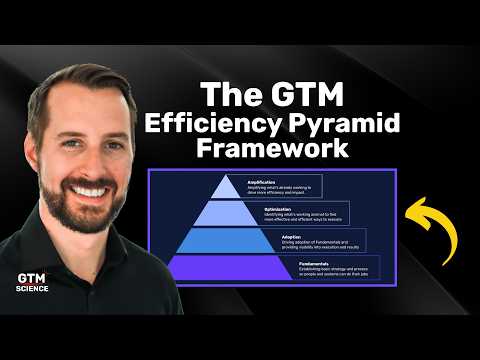
RACHAEL BUECKERTYeah. And like you were saying before, you know, we try to look at this and we have to ask where is that number coming from and then go back to the start on that metric. I mean, that's why we have go to market efficiency pyramid, right? When, where we try to start with, with our clients is, uh, at the foundational level, the fundamental level and making sure that we know where those numbers are coming from and that the processes are all defined so that when we get to the point where we are slicing and dicing their reports and building these dashboards for them and creating insights for them, we're already at a place where we can trust those numbers and we know where they came from. That's exactly it. And unfortunately, like that doesn't
EDDIE REYNOLDShappen in a week. No, no. You can fix like maybe one metric in a week, uh, assuming that you don't
EDDIE REYNOLDShave to wait nine months for that metric to be populated with accurate data, but to like get the holistic picture, it takes some real time. It doesn't take forever though. No, it doesn't take forever. All right, cool. So I wanted to talk about the pipeline council pipeline.
RACHAEL BUECKERTThat's a perfect segue. Yeah. Eddie, tell us about the pipeline council concept. So this is for more mature organizations, right? Let's start with a less mature organization.
EDDIE REYNOLDSLet's say you just got a team of like six salespeople and you've got like one marketing
EDDIE REYNOLDSmanager and you've got like a VP of sales or CRO that oversees it. And let's just say like, we don't care about CS because let's be honest, unfortunately that's oftentimes the case. And it's like, okay, well, you know, what's going on with sales? Like what's our close
EDDIE REYNOLDSrate? What's our ASP? Like how are we generating pipeline from outbound, from inbound? That team
EDDIE REYNOLDSof like six, seven people can kind of wrap their heads around that pretty easily. Hopefully the CRO is in communication with their six salespeople, with their manager. They're looking at the other marketing manager. They're looking at the numbers. It's not rocket science, right? But as the organization grows and now you have an entire marketing organization and an entire sales organization, maybe spread across SMB, mid-market enterprise, and an entire CS organization that maybe hopefully by this point you actually care about, there's a lot going on. And so the idea of a pipeline council is to get everyone together. And ideally this meeting is run by the VP of RevOps or by a team like ours. And you say, Hey, look, we've already gotten the data to a good place where we can trust the data. We know where this number is coming from. This is not a report card meeting where we're going to go in and we're just going to say revenue is up and pipeline is up. No, this is one where we go in and we identify specific problems. We say, Hey, our lead conversion rate has plummeted. What's going on here? And hopefully the RevOps team or go-to-market operations team has come with some strategic insight. And they've said, this is what we think is working and not working. This is what we can do about it. And now you get everybody together and you make a decision on what you do about it. And you come out of that meeting with some tangible action plans and say, we are going to go do X, Y, Z in order to fix this. This could be something that's represented in your revenue operations roadmap, something we also have a framework on. And we say, okay, we are now going to prioritize redefining our ICP and our buyer personas or redefining like what is an MQL or what is our process to follow up with MQL so that we can improve that lead conversion rate or that, you know, lead to close rate. And a pipeline council is an opportunity for everybody to get in the same room and sort of take the gloves off and just say, like, let's, let's just look at the honest reality here. Let's identify some specific problems and let's come out of this meeting with tangible actions to solve those problems and ultimately generate more revenue by building a more efficient go-to-market engine. Yeah. And like, it's not a meeting for, you know, patting each other
RACHAEL BUECKERTon the back and just blowing smoke and stuff like that. Like it is a meeting for coming to the table with issues and finding ways to solve those issues together across the entire revenue factory.
SPEAKER_85That's the idea. Yeah. All right. So that is the pipeline council and that goes into kind of annual
RACHAEL BUECKERTplanning. I knew we talked about it a little bit, um, before in the podcast, but how does all of this work on our processes, unblending the funnel, the pipeline council, how does it come together to help us planning for the future for the company? Well, if we think about an annual plan, like we are
EDDIE REYNOLDSultimately trying to hit a certain revenue target and we're outlining the things that we're going to
EDDIE REYNOLDSdo to hit that revenue target. We need a certain amount of head count. We need a certain amount of budget for marketing, for sales hires, for CS, et cetera. And we need to map all that out.
EDDIE REYNOLDSWell, right now, as of the time of this recording, we just hired a new agency. So I don't know when we'll produce this, but we're recording this on April 16th. It's a little bit late to be, you know, doing your annual plan for 2025. But when everybody was calling us a few months ago, one of the big problems is like, okay, so, all right, we're going to hit this new business number, right? We'll do our top down. We start with annual planning top down. All right. We want to grow from 100 million to 130 million. So, all right, what's the top down? Like we're going to expect that that a hundred million will churn 10 million of it. So then we need $40 million from new business and expansion. All right. Well, what of that is going to come from new business? And what is that of that is going to come from expansion? Or we can just make this stuff up if we want. And we could say,
EDDIE REYNOLDSah, we'll do 20 million new business, 20 million in expansion. Cool. Where is that grounded in reality? At some point, if we want a plan, we can actually execute. We need to ask the hard questions. We need to ask, okay, so we're going to generate $20 million in new business. Well, what's our close rate? Close rates 33%. All right. Well, then we need 3X pipeline coverage. We need to generate $60 million in qualified pipeline. Do we actually have a way to measure that? Do we know whether or not we are on track this year to generate $60 million of qualified pipeline? Or do we have a poor process in place? Or do we not even know what that close rate is? And we're just saying 3X pipeline coverage sounds great, but we don't actually know what our close rate is because we've never had a good process in place before. So now we're just guessing, right? But if we've got this stuff dialed in, we can say, okay, and I'm just using 33% for simple math. Let's use 25%. Simple math as well, but now we need 4X pipeline coverage. All right. So we need $80 million in pipeline. Well, what's our sales cycle? Sales cycle, 60 days. All right. So we need this $80 million in pipeline by October 31st. So where, and maybe we have some seasonality in our business, whatever. What amount of pipeline do we need to generate by January 31st, by Feb 28, by the end of March, end of April, May, June, July, August, et cetera? How do we track whether or not we are on track to generate that pipeline? And this is just for new business, right? What is our ASP? How many different deals do we need? If we put a deal into stage one, we don't really know what the dollar amount is. If we know our ASP is, I don't know, $50,000 and we need $80 million of pipeline, then we need, what is that? 80 times 20, 160, 1600 deals. Okay, cool. What does that break down in 12 months? All right. That's like 120, 130, whatever it is, deals per month, 360 per quarter, whatever. When we have our affirm grip of the numbers, we can build dashboards in Salesforce and build reports and go into pipeline councils. If we could say we're on track for this or not. And we can break that down and say, okay, well, that pipeline is going to come from inbound. It's going to come from these webinars we're doing. It's going to come from these conferences we're going to, et cetera, because we have this historical data that we can trust and nobody can predict the future, but the future might look similar to the past. And if it does, then we think we can hit these numbers by doing X, Y, Z. We need X amount of additional reps in order to do this. This is what their onboarding looks like. This is how long it takes them to ramp to hitting quota, et cetera. We need this many people in CS in order to retain our customers, because this is our process that we need to execute. We need to do X amount of QBRs with these customers, et cetera, et cetera, et cetera. That's what a good annual plan looks like. A bad annual plan looks like top down. We want to go from 100 to 130. We'll lose 10 in churn. We'll add 20 in new business, 20 in expansion. And we have no idea if these are realistic or achievable, or if we have the headcount, the marketing spend, the sales process, the pipeline, et cetera, to actually get there.
RACHAEL BUECKERTYeah. And once you have these metrics and you can rely on them and you know where they all come from, they all just become knobs on a big soundboard. You can turn them and play with them and see like how you can change the metrics or what you need to do to improve these metrics, to reach those
SPEAKER_21numbers at the end of the year. Yeah, absolutely. I mean, you might find like, wow, things are
SPEAKER_33working, but they're not working as well as we want it to. Like we need to justify more spend on
EDDIE REYNOLDSmarketing. We need to do X, Y, Z. I mean, I saw this happen when I was at Salesforce. This is one of
EDDIE REYNOLDSthe reasons why they're so good at forecasting accurately. And at least the time that I worked there, they were hitting that 30% year over year growth year after year after year, because they were looking at these numbers obsessively because they had to report to Wall Street and they're just saying like, okay, great. Like we're a little bit behind the eight ball. Like we need to spend more money on marketing. We need to drive X amount of people to dream force. We need to do this, that, and the other, because we know that this is like, these are the dials and these are how we turn the dials. And that worked for a really long time. Obviously Salesforce isn't magic. Like, you know, they've had years in the more recent past that didn't pan out as well as they wanted them to,
EDDIE REYNOLDSbut they have a pretty good machine. Yeah. And like, and we've seen it with our own
RACHAEL BUECKERTclients too, right? Helping them improve their forecasting machines, their metrics and stuff. And now it's like, okay, now we can actually create an annual plan for you. That is going to make sense and that's achievable. And that is following, you know, reliable metrics.
EDDIE REYNOLDSThe unfortunate reality though, is like, as I said, we're sitting here on April 16th right now. And I'm like, man, if I'm a CRO or a CFO in a B2B SaaS company, and I'm looking at this,
EDDIE REYNOLDSI'm listening to this podcast and I'm like, oh man, like we're, we haven't done this stuff.
SPEAKER_60We got to start today because we're going to start working on this annual plan and, you know,
EDDIE REYNOLDSQ3, Q4. And where do we want to be at that point in time? How much time is it going to take us to get a firm grip on these metrics so that we can create an annual plan next year that we can really achieve. And then next year, I want to be in a position where we're tracking quarter over quarter, month over month. And we know like, are we on track? Are we not? What do we do about it?
RACHAEL BUECKERTLike you were saying earlier, you know, that this might be too early in the year to do annual planning, but like, yeah, no, I agree. It's might even be the best time to get on top of this stuff so that you're prepared for your annual planning by the time you actually need to do it. And your annual, you're doing your planning with numbers that you can rely on and they're consistent.
SPEAKER_33Yeah. And then of course we've got quarterly planning, right? Like that builds towards our annual plan. It builds towards where we're going to end the year. And, um,
EDDIE REYNOLDSwe just started a new quarter. The more that we have a firm grip on these metrics, the more accurately we can plan. This is so important to you specifically for CROs because that's kind of like what their whole job
RACHAEL BUECKERTrides on, right? Are you able to create a forecast and then are you able to actually hit those numbers?
EDDIE REYNOLDSYeah. And I mean, like, there's so much talk all the time about like, oh, I took this job as a CRO or a VP of sales. And I had this number that was impossibly hit and I didn't hit it. And then I'm out of a job in 12 or 18 months. And it's like, well, definitely sympathize with that. But did we stress test the numbers? Like, was that a number that we signed up for that we could really achieve? And, you know, I have a lot of empathy for the revenue leaders of the world facing
EDDIE REYNOLDSthat dilemma. You can't always, you know, you don't always have perfect information when taking a new job, but there is extremely high turnover among revenue leaders for precisely this reason.
RACHAEL BUECKERTBut if you have a good handle on this stuff and you know about these things, like what a great position to be in coming into a new company and being able to look at it all and be like, okay, this is like my first order of business. I want to check all this stuff. I want to make sure, you know, I want to stress test it, make sure we can rely on it and then move forward with that. And that just, I don't know, I feel like that would make you just seem so much more thoughtful about the role that you're coming into.
EDDIE REYNOLDSWell, that's oftentimes like when we get the call or when, you know, the new VP of
EDDIE REYNOLDSgo-to-market strategy and ops comes in. I can't name names for obvious reasons, but like, I'm thinking of like a particular CRO that brought us in and he's like, you know, my CFO doesn't trust me. Like he's coming into a new job and he's like the previous CRO, like the CFO is asking for numbers and it's just like, we don't trust these numbers. We don't trust what you're telling us. And like, I need to build that trust. And oh, by the way, we have to do every single thing that we've been talking on this podcast in order to get there. And it took a while, right? But imagine being in that position where you're like, my CFO doesn't trust me because the last CRO like kind
EDDIE REYNOLDSof just made this stuff up. Yeah. And that is another huge problem too. And like one that we
RACHAEL BUECKERThave difficulty facing, you know, a lot of the times when you're digging into this stuff, it uncovers places where people might've been fudging some things or, you know, making some stuff up, or doing processes in a certain way to make themselves look good. And that can be difficult to come up against as well. It can, but also like, I think this is the benefit of having
EDDIE REYNOLDSthis holistic approach because there's certain things you can't fudge, right? There's certain things in finance where it's just like the numbers are what they are. Like you want to talk about
EDDIE REYNOLDSclose rates. Like we can argue that all day long lead conversion rates. What is an MQL? But like most organizations, I shouldn't say all, but most, they know what their ARR is. They know how much money they spend on sales and marketing. They know how fast revenue is growing. So we can start to look at these numbers holistically, especially like most organizations have pretty accurate financial statements. If we pull the numbers from our financial statements, then we can actually see like how efficiently we are spending money to grow revenue where like the devil gets into the details. That's harder, but like, we also have the ability to like measure the efficiency of the go-to-market engine based on metrics that like we can trust at a high level without even doing any of this stuff.
SPEAKER_28We can just literally say like, okay, how much money do we spend on sales, marketing and CS and how much
EDDIE REYNOLDSdid our revenue grow or how much did our gross margin grow?
RACHAEL BUECKERTYeah. And just, you know, the plain facts of it as well without any biases at all. I think that's why a lot of our customers appreciate our view on things because we have that third party completely unbiased view of the numbers and we can just give it to them straight.
SPEAKER_37That's the idea.
RACHAEL BUECKERTYeah. Awesome. Well, I think that was all the questions I had for our go-to-market metrics framework. Cool. But if you want to actually see the framework yourself or the metrics index or the process index, you can go to unionsquareconsulting.com slash frameworks and you'll find them there as well as all of our other frameworks. We have a bunch up right now. And yes, that will also be in the show notes.
EDDIE REYNOLDSWe're also going to do some YouTube videos that will probably be in the show notes at some point too, right? Oh yeah, absolutely. Cool. Awesome. Well, Rachel, thank you as always for putting all this together and bringing these very thoughtful questions and creating these amazing infographics that everybody raves about.
EDDIE REYNOLDSSo I appreciate it. And this is always fun.
SPEAKER_95Yeah. Thank you too, Eddie. This is great.
EDDIE REYNOLDSThanks for listening to the show. If this resonated and, or you'd like help with anything we talked about in the show, please reach out to us. You can find us at unionsquareconsulting.com and the info will be in our show notes.