EDDIE0:00I Think a lot of go to
EDDIE0:01teams today are playing whac-a-mole, and they're jumping from one thing to the next,
EDDIE0:04trying frantically to
EDDIE0:06AI and improve systems and improve processes.
EDDIE0:09And it's all over the place.
EDDIE0:11so we've really refined this over a long period of time to try to, like, get crystal clear on what the priorities are
EDDIE0:16that we can turn the
EDDIE0:17noise into a signal and have something that's really going to move the needle for revenue.
EDDIE0:21need to be perfect. What we're really trying to ask is, are certain areas of our go to market good enough
EDDIE0:28that we can move on and try to fix the next thing, or are they fundamentally broken? And
EDDIE0:32result is going to be a tangible action plan for what to do about it, so that you can actually go and start executing on those things, and you have a clear line of sight on what you need to do in order to make those
EDDIE0:41necessary improvements and go to market.
EDDIE0:47Welcome to go to Market Science, the podcast for crows and revenue leaders scaling mature B2B companies.
EDDIE0:53There's an art and there's a science to go to market and we're obsessed with the science.
EDDIE0:57In this podcast, we share tangible, actionable playbooks from the trenches,
EDDIE1:01what we're learning, working as go to market strategy and DevOps consultants for our clients here at Union Square, Consulting
EDDIE1:07and candid conversations with revenue leaders in the market that have been there.
EDDIE1:10If this podcast delivers value, we'd love a five star rating and a follow. Now let's get into it.
RACHAEL1:19Welcome back to Go to Market Science. I'm Rachel Burkhardt, and I'm here today with our CEO and founder, Eddie Reynolds. And in this podcast we're going to share how go to market teams can run an incredibly quick and effective diagnostic on the state of their go to market using our proprietary go to market diagnostic framework.
RACHAEL1:35So to do this exercise yourself, you can find the link in the show notes or go to Union Square consulting.com/frameworks and find it in the framework.
RACHAEL1:42There.
EDDIE1:43think it's actually a backslash but same difference backslash.
RACHAEL1:47It's a I guess so yeah you're right you're right. Yeah.
EDDIE1:50Anyway I'm excited to dive into this with you, Rachel.
RACHAEL1:53Yeah. Me too. As the as the date of this recording, it's a very new framework, but, yeah, it'll be it'll be all ready to go once, this this recording is published.
EDDIE2:05Tell us a little bit more about what we're going to cover today.
RACHAEL2:07what this framework is, it's like, kind of a lite version of our internal diagnostic that we do with our own clients. It's something that will help get you a clear enough picture of where the gaps are in your go to market operations, to begin prioritizing what you need to work on next, to really start seeing things move forward with the evidence to back those projects up.
RACHAEL2:29So the diagnostic, it isn't just a survey or just a list of questions. There are questions in it. But it's not just that. It also requires a bit of effort in the form of mapping those answers to those questions onto what we're calling a heat map to get that complete picture. So it might sound a little confusing now as I talk about it, but it'll make more sense as we go into it.
RACHAEL2:48Or if you check out the visual in the framework on their website, and we have links to all that in the show notes.
RACHAEL2:54It is it does take a little bit of effort, and we know we could have made it simpler, but we would have rather made it useful. So, Eddie, why make this framework? Why did we do it?
EDDIE3:03Well, you tell me it was your idea.
RACHAEL3:05But it was my idea.
EDDIE3:06You answered that question anyway. I think it was your idea. You pushed it. You worked with Gerry, who runs our consulting team, and then you guys worked on it together and then brought it to me for light revisions and feedback. And one thing I will say is like, so our our go to market diagnostic is over 150 questions.
EDDIE3:25We don't necessarily ask every client all 150 of those questions in one go. That's quite a lot to take down, but we have those questions available to ask for very specific and different use cases to identify the gaps and go to market. And it feels very onerous. Right. And I will say, like even me reading through how you and Gerry summarize this, it's simplified the entire idea in my mind to the extent that I think we're now going to go back to the drawing board and improve how we do our diagnostic with our own customers, it really clarified things and took some, some things that were multiple questions and turn them into one single question.
EDDIE4:01You introduced the idea of a heat map, which I think is a really great way to just visualize what go to market looks like in different areas, which we're going to get into, and explain that to an executive. And the really answer your questions like, why bring this framework is because we believe in, you know, taking the best of what we're doing and publishing that to the to the world.
EDDIE4:21Hopefully some people listening to this want to reach out to us and become clients, but many other people, hopefully they end up leveraging this internally and benefiting from it. We get great feedback from folks about our content that they're using this stuff internally and they're seeing results. And that is, you know, while we don't charge for that, like that's something that makes me feel really great about what we do every day.
EDDIE4:40And we wanted to like, really think about, like, what problem are you trying to solve and go to market first before necessarily sharing how to solve those problems. And I think I Think a lot of go to market teams today are playing whac-a-mole, and they're jumping from one thing to the next, trying frantically to implement AI and improve systems and improve processes.
EDDIE5:01And it's all over the place. And when I talk to crows and go to market strategy and ops leaders, a lot of times they're incredibly overwhelmed. They never have enough time in the day, and they've got massive pressure to produce, and they're trying to get so many things done. And we face that same pressure when those folks hire us.
EDDIE5:20And so we've really refined this over a long period of time to try to, like, get crystal clear on what the priorities are so that we can turn the the noise into a signal and have something that's really going to move the needle for revenue. And so, you know, years and years of doing this ourselves, we've refined this and we wanted to share that with the world.
EDDIE5:38And I think in doing that, we refined it even further than what we have already had for our internal use.
RACHAEL5:43Absolutely. And I'm really happy with where we landed on, on this late, diagnostic framework, because all the other kind of like diagnostics I've seen out there that's similar to this, they aren't just like lists of questions that you're you know, checking boxes and going off one by one. And it just doesn't capture the nuance of all of these different systems and all the different things that can be going on in your operations at any given time.
RACHAEL6:10So, yeah, we tried really hard to capture that nuance in a way that wasn't so complex that people looking at this aren't going like, oh my God, I'm not going to do this. I don't have time for this. This is crazy. So it is it is an exercise that you can do in, I don't know, maybe even 20 minutes probably if you have all the reports and stuff at hand or less.
RACHAEL6:31But get some real value out of it and not just something you'll look at on paper, go, oh, cool. And then never look at it again
RACHAEL6:37for sure.
EDDIE6:38And I think it's even more important to emphasize that. And we're going to get into this in the podcast and people can, you know, check out the framework and read through this. But to preview that, we're also going to talk about how to take action on this. So the end result is not some heat map that says we're really good in this area of go to market, and we're bad in this area.
EDDIE6:55That's sort of like the middle of this journey. The end result is going to be a tangible action plan for what to do about it, so that you can actually go and start executing on those things, and you have a clear line of sight on what you need to do in order to make those necessary improvements and go to market.
EDDIE7:10And that's a big thing that we're going to emphasize here on this podcast. And in the framework that we've already written up, is how we actually take this and translate that into an action plan or a go to market ops or rev ops roadmap that the team can go execute and see real impact on revenue. I also say without at the risk of rambling, because you have a lot of questions that we got to go through in less than an hour.
EDDIE7:32things that's really important to note here is that we are under massive pressure when we have a client hire us. Nobody is willing to pay us to spend 90 days doing some diagnostic and give them some fancy PowerPoint presentation. At the end of it all, we are oftentimes working on specific areas and go to market the day we start working with somebody while simultaneously trying to do this diagnostic so that we don't end up playing whac-a-mole indefinitely.
EDDIE7:55And so the way that we've developed this framework is to help folks do exactly that in their own organizations, because we realized cross CMS, VP of Go to Market Strategy and Operations, VP of Rev Ops, all of these folks are under incredible pressure to produce and get things done yesterday. And we wanted to develop a framework that's not just theory and results.
EDDIE8:16And some fancy PowerPoint, but gives you a tangible action plan that you can move on quickly.
RACHAEL8:22All right. So it's obvious that something like this could be really helpful for SMEs. But why is it a tool that even enterprise companies can use.
EDDIE8:30Well I think it's even more useful for enterprise companies. I think the challenge that we see with SMB is that oftentimes they have one sales team, one motion, maybe 1 or 2 marketing channels and sort of just one, you know, type of case. And so one could say, okay, like if you go in and fix all of the areas of go to market that are broken, then you can see significant improvement.
EDDIE8:52But what we find with a lot of those companies is that people are too busy closing deals and things aren't broken enough. What happens in the enterprise and where we specialize and focus our energies,
EDDIE9:03that they've got multiple motions that are broken at the same time. And so it first sort of justifies our existence in that, like, we don't have just one simple problem to fix. We've got multiple problems. And then, well, think about this is like I'm thinking about a specific customer as an example, they had an SMB motion, a mid-market motion, an enterprise motion, and a separate international motion.
EDDIE9:24Right. And you think about inbound outbound pipeline management, customer success, all of those things. It's so much more complicated than for an SMB, and it's really easy and very common for some of those things and go to market to be working relatively well and other things to be just completely broken. And then as the organization continues to grow and expand into new markets and introduce new products and try new marketing and sales channels, it just gets increasingly and exponentially complex.
EDDIE9:55And so I think running through an exercise like this for an enterprise team is so much more valuable than it is, even for an SMB team.
RACHAEL10:02Yeah. I think enterprise teams can like really jump the gun on more advanced operations, you know, trying to chase the number, increasingly bigger numbers every year and every quarter and keep up with board expectations. And it's probably easy to, like, miss those critical foundations that end up make or breaking, the more complex implementations that you have later on.
EDDIE10:20we should just clarify, when we say SMB or enterprise, we're talking about the company itself, not who they're targeting. So an SMB is oftentimes targeting SMB customers themselves, and that's like their only channel. Whereas an enterprise company may have SMB, mid-market enterprise international, numerous different channels and marketing tons of different products that they have to run through CSS, etc., etc., that just make the entire go to market significantly more complicated.
RACHAEL10:45So what tends to break when leaders try to fix go to market reactively instead of diagnostically?
EDDIE10:50I think like you have the, the problem where the squeaky wheel gets the grease and that squeaky wheel may be an outspoken manager or leader. And you end up fixing the wrong problem. Right. So like the consistent feedback that we get from rev ops is that they're just flooded with inbound requests to fix a million different disparate things, and they never see any rhyme or reason to what they're doing.
EDDIE11:18And oftentimes they feel like, okay, I'm doing all this work, I'm super busy, but I'm not moving the needle in revenue. And so we're going to jump into very specific things that people can do using this diagnostic. But to jump ahead a little bit, let's just talk about let's say outbound and pipeline management. If we were to say no to all of these requests and just say we are going to fix the outbound and pipeline management processes such that we are generating more clear, qualified pipeline and then closing more of it and forecasting more accurately that is a monumental change for an organization.
EDDIE11:51But instead, oftentimes what we see is here's this little thing inside of outbound that we need to fix. Hey, here's this little thing in inside of pipeline. Like we need to fix the pipeline report that we fix in in pipeline. And we never actually see any impact to revenue because we don't have enough focus to move the needle.
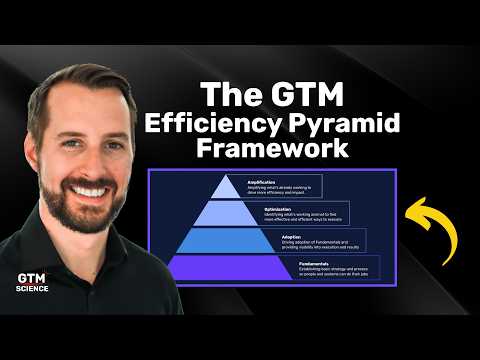
RACHAEL12:08All right. So for the sake of time let's go on to the next section. So we're going to talk about how to get the most out of this framework. So one important thing to know is if you're not used to our content at this point we talk a lot about maturity stages. And we have something called the go to market efficiency pyramid and four stages of go to market ops maturity.
RACHAEL12:28So there's at the bottom foundations then adoption optimization and then acceleration. So Eddie, why did we choose to look at this go to market, diagnostics through the lens of these maturity stages, and then the functional emotions that we talk the most about pipeline management, outbound, inbound and customer success.
EDDIE12:49Yeah. So here's why. So we'll go back to the example I was sharing. And I'll keep hitting on this example throughout this podcast. Just so it's consistent. Let's say that we have problems in our outbound motion and or pipeline management motions. Right. The first thing we want to think about, is the fundamentals. And I think you said foundation, but it's.
RACHAEL13:07Did I know.
EDDIE13:07This? Yeah. All good. I think we use it interchangeably. I think of like the fundamentals on adoption as our foundation. And if you look at the pyramid visual, it's going to look like that, right. That foundation is the difference between, for example, having a bunch of different reps that all have a different idea of what a qualified sales opportunity is.
EDDIE13:26They have wildly different levels of open pipeline, different close rates, different sales cycles, and they're just doing things their own way. Well, why do we have sales process? Like let's take a step back from that for a moment. The reason that we have a sales process is because we as an organization have closed a bunch of deals. We're not some early stage, $1 million startup still trying to figure it out or 100, $200 million company.
EDDIE13:50We have closed hundreds or thousands or tens of thousands of deals over the years, and we see recurring themes that cause us to win or lose deals. We've then reversed engineered that to say, hey, new sales are up or even old sales are up. If you do all of these things, you significantly increase your chances of winning a deal, of winning a bigger deal and doing it in less time.
EDDIE14:12So go do these things so that you don't lose money and let things fall through the cracks. Well, when we just say that verbally and we don't translate that into people actually doing those things consistently, then the organization is losing money hand over fist. We end up spending more money, as in like higher calc for every customer that we acquire because our team is going through inefficient motions.
EDDIE14:37The same thing can be said for inbound. The same thing can be said for other channels that develop pipeline that we're not going to get into here today. And the
EDDIE14:44same thing could be said for every aspect of customer success. So the foundation, as I see it, is the fundamentals and the adoption of those fundamentals where we go from, hey,
EDDIE14:55everybody disagrees on what this process is to everybody is executing this process, or at least the most important components of that process consistently.
RACHAEL15:05And I know this is this whole thing is just by the very nature of it, fairly complex and potentially overwhelming. So how should a CRO mentally approach this diagnostic to avoid getting overwhelmed or feeling like it's too much to wrap your head around?
EDDIE15:20I'll say two things. And these are somewhat conflicting. One, we we're going to introduce this idea of the go to market decision tree, where we ask a series of questions to help narrow focus. So we may go through that decision tree and end up at the example I keep sharing, which is we need to fix our inbound motions and our pipeline management.
EDDIE15:39I shouldn't call it a motion, but pipeline management, right?
EDDIE15:42doing that, if we get laser focused on that, we're going to end up generating closing more pipeline by definition, generating more revenue, which is going to be extremely meaningful for the organization. We also push aside all the other things that are going to distract us from that pursuit.
EDDIE15:57We're going to have to ask less questions in our diagnostics. So in our case, where we have over 150 questions that we could potentially ask, we're eliminating many of those questions so we can get to the heart of the problem that we're trying to solve. However, what I really love about the way you and Jerry put this framework together is you simplify those questions so that we just have four questions for outbound and four questions for pipeline management, and four for inbound and four for customer success.
EDDIE16:22So it would be very easy to just answer all 16 of those questions and have a high level overview across all of go to market. Or you could do both and make it even faster. But either way, at some point in time you're going to have to narrow focus and say, what's the specific area of go to market that we want to fix and prioritize over the next 90 or 180 days as much of our resources as possible to fixing those things and saying no to all of the other whac-a-mole requests that come through, unless they're absolutely mission critical.
RACHAEL16:53And what kind of honesty do you think is required for a diagnostic like this to actually work?
EDDIE16:58Well, one thing I think it's really important is that we don't need to be perfect. What we're really trying to ask is, are certain areas of our go to market good enough such that we can move on and try to fix the next thing, or are they fundamentally broken? And so I think like there's nuance in that. But what we're trying to get at here is if we spend time and resources trying to fix this thing, will that move the needle?
EDDIE17:22We will never, ever be perfect. Our pipeline management will not be absolutely perfect, such that every single deal that's in our pipeline should be in pipeline. It's in the perfect stage. It's got the perfect next steps. Every single sales rep has the perfect sales cycle, and they're selling large deals. Their close rate is above 35%. We're never going to have that.
EDDIE17:44But the question is how broken is it? And if we dedicate resources to fixing that, will that move the needle more so than tackling other areas of the business? And all we're trying to do is get to good enough, right? If we've got reps that are consistently closing at 20, 25, 30%, which sounds crazy high when the average B2B SaaS company is like 10 to 20%.
EDDIE18:06But I've never personally experienced anything south of 20% in my career, including starting my own company. And so like to just get there with what I've experience in every job I've ever had, what I experience at Salesforce, what I experience in this tiny little company that I've built that had none of the assets that Salesforce has, is that we're wasting so much less time and resources and money trying to acquire customers.
EDDIE18:28So the question is that we need to be honest about if we allocate resources to fixing this problem, will that move the needle? If so, let's focus on it. If not, we can move on to the other thing where that is true.
RACHAEL18:41So let's take a little bit deeper into the four go to market ops maturity stages. The step one of the diagnostic is really making sure we understand those stages and why they even exist. So Eddie, could you explain to us a little bit about why we need to know what these stages are and the order that they go in and why that's important?
EDDIE19:04Sure. So we'll start with the fundamentals. And to dumb this down, it's different for each area of go to market. But essentially it starts with understanding your ICP and your buyer personas. Who's your customer. Then it's mapping out the customer journey and the process that's relevant for the part of go to market that we're talking about, right. The reason this is, and then and then thirdly is building this into the systems.
EDDIE19:24The reason that this is important is I'll go back to this pipeline management example. If you show me a pipeline report, and every sales rep has a different definition of a qualified sales opportunity or sales qualified opportunity, they have a different process for trying to close those deals, a different idea of what stage two, stage three means, etc. then the pipeline report just means nothing.
EDDIE19:43And I can't begin to tell you how many times I've talked to sales leaders, cross, etc. that say, oh, we've got $30 million in pipeline, but I don't trust that it doesn't mean anything to me. That is a fundamentally broken go to market. And so going back to that honesty question we have to ask, would fixing that make a massive impact on our revenue production?
EDDIE20:03If it's wholeheartedly broken, then yes. If it's not that broken, if you say, yeah, like our reps average 25% close rates, we've got good sales cycles. We don't have a lot of junk in our pipeline. I think it's pretty good. It could be better, but I think it's pretty good. Well, then we can move on to another area of go to market and say, well, okay.
EDDIE20:22The way that we close deals is pretty good. What about outbound? What about inbound? What about onboarding and, you know, monitoring customer health or identifying expansion opportunities, etc. if those things are fundamentally broken, that is where we're going to get the most impact on revenue, right? But that's only step one. Step two is adoption. So if we sit down and we create a bunch of fancy documents that outline, you know, what our our definition of our customer is and what our process is, and then it just sits in a Google doc somewhere that does nothing for anybody.
EDDIE20:52Right. We need to put in the hard work. And it is the hardest part of going to market and getting the team to adopt those definitions and process and execute consistently. And if we do that, that's the 80 over 20. That's where we get the most bang for our buck. We go in, we take an aspect of our go to market that's wholly broken and we fix it.
EDDIE21:12And maybe it's not perfect, but it's pretty decent. That will give us the fastest and biggest impact on our revenue production once we've done that. I usually we usually advise our clients to do that across their entire go to market before starting to allocate significant resources to optimization. Optimization is where we now take these reports that we have in our systems, and we start to analyze the data, and we look for ways to like turn the needle a little bit, to tweak the engine and try to get a little bit more efficiency.
EDDIE21:43Now, I think this is incredibly powerful and over a longer period of time, with lots of, lots of resources allocated to this, we can make incredible improvements on our go to market. But we can't do that if we don't have the ability to look at our data and understand what's going on. If we don't have the fundamentals and adoption in place, we're just operating on gut feel and hopes and dreams.
EDDIE22:06If we have solid process and data, we can then analyze that data and start to optimize it. Once we've done that and we've kind of at least done good enough. Again, it doesn't need to be perfect. There's always more we could do, but we've done a good job of looking at our data and trying to fix things. Then we can go into acceleration.
EDDIE22:22And acceleration is where we start to introduce a lot more automation, a lot of AI, all the fancy shiny objects, they get everybody excited. And the reason that we have put this as like a fourth stage of the pyramid is because this is oftentimes where people want to start. They want to go implement that. A new AI tool.
EDDIE22:40But the data that you're feeding that AI is absolute junk. People aren't doing basic things like we're not following up with leads, and now we want to create like some AI thing that's going to do whatever. And you're like, you know, maybe that works, maybe it doesn't. Over the long term. But you know what is guaranteed to work?
EDDIE22:59Just getting your reps to follow up on your leads or identifying that those leads aren't worth following up to begin with, and stop writing those leads to your reps. There's really basic stuff that we can go in and fix before we start to get into all these fancy tools, but once we've got that foundation in place, we've started to optimize it a little bit.
EDDIE23:16Then we can start to look at tools like AI and automation, other things, and say, okay, how do we amplify what's already working and what we've already taken at least a little bit of time to try to tweak and fine tune.
RACHAEL23:26And that concept of
RACHAEL23:28going through and progressing through the stages of maturity from fundamentals to acceleration and not getting ahead of yourself and skipping one and going to like acceleration before you have the fundamentals down is kind of the whole concept.
RACHAEL23:42And reasoning behind the way that we've, organized this scoring system in the heat map for the diagnostic. So the heat map is there to show you
RACHAEL23:52where you may have developed later stages of the pyramid, preemptively and where you need to maybe go back and, you know, fix earlier stages in order for the projects of those later stages to actually work and get you revenue results.
EDDIE24:08Yeah. I mean, I've heard other people talk about this as go to market bloat. A lot of this is buying a bunch of fancy tools and then not seeing any impact. Now, I think over the last few years, we've seen a lot of organizations pull back on that. Possibly not enough though. And this is where you see, okay, we bought all these fancy tools, we implemented all this stuff, but we're not seeing an impact to revenue.
EDDIE24:26Why is that? Well, that's because we don't have our fundamentals and adoption in place. We don't know who our customer is. We don't have an efficient process for targeting that customer and trying to convert that customer. And then we layer on all these like fancy tools and automation and AI on top of that thing that's broken. And then we're wondering why we're not seeing ROI from those investments.
EDDIE24:48If you go back in and fix the fundamentals and the adoption, then you can go back into those tools that you might be locked into contract with and go, oh, wow. Now I see how we can get value out of this.
RACHAEL24:59So moving on to step two. And we already talked about this a little bit earlier on. But this is identifying your focus area and using the good market ops decision tree to help with that. So Eddie why do we recommend focusing down on one area with a go to market ops decision decision tree when we could, you know, just look at everything all at once.
EDDIE25:18the simple answer is, is that like, it's too stressful to look at everything at once you're playing whack a mole, you're not going to have impact if it is hard enough to get everybody rallied around the idea of, for example, we're going to fix our outbound program, it's really hard, right? But if you get all the right stakeholders in place and you say, here's a clear action plan, you have a significantly higher chance of achieving that.
EDDIE25:42But what you have to do to achieve that is to say no to everything else. And so I think it's really critical that CRO sit down and ask themselves the hard questions of where do I want to focus my resources to get the most impact on my go to market? And so with the go to market, ops decision tree, we start off with a basic question.
EDDIE26:02If you could improve only one thing over the next 90 days, what would it be? Generating more new business or or higher net revenue retention? Nine times out of ten people say new business. Fine. I could debate that, but we'll go with that for now. Then you ask, okay, with a new business, is it generating more pipeline or closing more of the pipeline that you're already generating?
EDDIE26:24Again, nine times out of ten people say generating more pipeline. I'll push back on that one a little bit harder. If you're closer, it's 10% and your pipeline's a mess. Why would you want to invest resources to just put more stuff in the top of the funnel that's going to slip out a leaky funnel? I really recommend fixing your pipeline management if that's the case, but you can do that in tandem with like maybe one pipeline generation motion, such as outbound or inbound.
EDDIE26:48Usually not both in 90 days. So you say, okay, like we're now landed on outbound and pipeline management. We're going to say no to everything that is not absolutely mission critical. Burning the house down and we're going to focus our energies on fixing that. You are ten times more likely to be successful in that regard, and to get through the fundamentals and adoption in 90 days, such that you can then pivot to optimizing those two motions or pivoting to something else, like inbound, for example, and saying, okay, like we've got all our reps calling all the right people.
EDDIE27:20We've got a good territory plan in place. It's capacity based. We've got everything segmented out, etc., etc. like we got the right messaging. We're just like laser focused on making outbound work. We're generating pipeline. Folks are running through an efficient process to close deals. We're not losing deals because we're skipping, you know, stupid steps. Now let's go and like, figure out what we do with inbound.
EDDIE27:40And now we're feeding that into the pipeline that we have a greater chance of closing. That is a monumental impact that will having a monumental impact on revenue if done right. But if we just play Whac-a-mole and constantly try to fix everything across, go to market at once, we will never get there.
RACHAEL27:56And you can read more about the Good Market Ops decision tree through the link in the show notes or on our website. And you don't need to read through this in order to do the diagnostic. Like we said, we want to keep this really simple and easy for you guys. So there's no like, required reading.
RACHAEL28:12We're going to go through everything that you need to understand in this podcast, in the framework itself, in order for you to do the diagnostic, successfully. The point of this part is just to really look at the bottlenecks in your go to market and revenue growth and know where your biggest priority is. So you can you can focus in when you're looking at that heat map and trying to decide what you should do first.
RACHAEL28:33So step three now we're getting into answering the diagnostic questions and the scoring philosophy. So
RACHAEL28:40we have a list of diagnostic questions in the framework. We're not going to go through every single question on this podcast, because I think that would just take way too much time and probably not be super fun to listen to.
RACHAEL28:50But it's, go to the framework and you can take a look at them.
RACHAEL28:53We have a worksheet that any made up. It's very beautiful and very helpful. You can do the whole heat mapping everything there. It's all programed for you. So how these questions work is we organize them by four different the four different go to market ops categories you mentioned before. Pipeline management inbound outbound customer success I mean, no, these are the only things that you do and go to market, but this is just kind of what we focus our content on mostly at this point in time.
RACHAEL29:19Anyways. So for each section, let.
EDDIE29:21Me address that really quickly, Rachel. I think like an obvious gap would be like let's say channel or partners, right? But I think you could look at outbound and you can ask similar questions to channel four channel or partners without, you know, too much of a stretch of the imagination, like so. For example, the first question on fundamentals for outbound is, do we have defined and documented ICP that matches with marketing and customer success data and capacity based territory assignments for our help and reps?
EDDIE29:51Now there's lots of different flavors of partners. But for example, if our partner channel is hey, we reach out to folks at certain types of organizations that could then refer their customers into us. Well, then we just translate that question. Do we have a defined and documented ideal partner profile that matches with marketing and customer success and capacity based territory assignments for our partner reps?
EDDIE30:14It doesn't take a crazy stretch of the imagination to translate this to something else. And we didn't want to cover every single possible go to market motion here. There are certain things like Plg, where because of the types of companies we work with, we just don't run into it that often. But same thing, like with Plg like, do we have a clearly well-defined like product, qualified lead and a clear process for our reps to follow up with those product qualified leads?
EDDIE30:38Again, you don't have. It's not too difficult to think about how this might translate to areas we haven't covered.
RACHAEL30:43And that worksheet is fully editable. You can get the link to get your own copy of it. So if you need to edit the questions in the worksheet itself to match their business more, you can just do that and easy peasy. So for each section, we ask those four questions, one for each of the maturity stages. Question is designed to give us a general idea of how completely that maturity stage is built out for that category.
RACHAEL31:09So we ask you to answer each one using a red yellow, green scoring system. So red meaning this is missing yellow meaning we've got it. We have it somewhat to some degree. And green being like a strong. Yes. Like we 100% have this. It's fully built out. It's operational. It's great. So we also give, a list of evidence that you can pull for each section to help support your answer.
RACHAEL31:31So this is helpful. You know, when and if multiple people in the organization are using this worksheet together and maybe they're giving different answers, which is another problem on its own. But we'll get to that in a bit. You can see where the source of truth lies and maybe even potentially uncover some other issues with your reporting accuracy or the existence or nonexistence of some reports in the meantime.
RACHAEL31:56All right. So, Eddie, what is the danger of being overly generous with the green score?
EDDIE32:02Well, going back to my point, I think we need to, like, draw the line between the yellow and green of, like, if we fix this, is this going to dramatically impact revenue? So if we're overly generous, then we're basically saying or lying to ourselves and saying we have a motion. Again, let's take pipeline management as an example or an aspect of our go to market motion.
EDDIE32:21I know that's not a motion in and of itself. And we've got reps losing deals that they should be winning because they're skipping fundamental steps in the process because we either having defined that process well enough or we haven't driven them to adopt and execute that process consistently. This is costing us money. This is costing us a lot of money.
EDDIE32:39We have a deal we should have won and we didn't win. And or and it's usually and we're spending a bunch of money to have reps chase deals that aren't qualified. And so instead of taking that time and going out and maybe running outbound for example, where they can generate more pipeline and give their themselves the ability to be more discerning about what kind of deals they chase are stuck.
EDDIE32:59And I always see so many companies do this. It's such a cliche that reps never have time to prospect because they spend all their time chasing deals they'll never win. This cost the organization massively right. Like if you think about the opportunity cost of a rep, if their quota is $1 million every hour, cost the organization $500 in quota attainment.
EDDIE33:20So if they spent half of their hours chasing deals that are qualified, this is a significant cost to the organization. So if we are lying to ourselves and saying, oh, this is good and not fixing it, it's detrimental for the organization and I'll share a tangible example that I run into all the time with this. So I'm on the phone with the CRO and I'm like, hey, new business or owner or new business?
EDDIE33:40Okay, cool. New, pipeline management or more new pipeline, more new pipeline. And I'm like, okay, cool. What about your existing pipeline? Are you guys doing a good job of that? Yeah, we're doing a great job of that. But this is like in the context of a sales call. We're going to this really fast. Okay. And I'm like, really?
EDDIE33:56What's your close rate? Well it's 10% okay. Let me ask you this. If we pull up a pipeline report right now, right this second, how many of the deals in that pipeline do you think you can actually close? Well, that's a good question. I mean, there's definitely a lot of deals in there. Okay, let's get more specific.
EDDIE34:14What's your average sale cycle? 60 days okay. How many deals do you have in your pipeline right now that are more than 120 days old? Oh, like half of our pipeline? Okay, so what you're telling me is I need to generate more pipeline. I need to generate more pipeline, I need to generate my more pipeline. And you can't close that pipeline effectively,
EDDIE34:32half of your pipeline is zombie pipeline that you will never close because it's very easy to see.
EDDIE34:37Like if you have a sales cycle 60 days in and your deals are at 120 days plus, you're not going to win that deal like
EDDIE34:4499 times out 100. You're not going to win that deal. Yeah, we know this because you could just look at your closed one deals and look at what percentage of all the deals you've ever won is an organization in that category.
EDDIE34:54We're 120 days plus. It's probably less than 1% of your deals, and those customers probably churn as well. So you're
EDDIE35:01just wasting massive amounts of resource on this. So if you are lying to yourself and saying it's pretty good when it's not, then you are going to invest tons of resources in generating more pipeline in this example that you will just lose for stupid reasons.
EDDIE35:17Quick pause. If you're getting value from this episode, I want to ask you a small favor. Take 30s right now. Open up the app you're listening to this on and give it a five star rating.
EDDIE35:26It sounds small, but it's the single biggest thing you can do to help us get conversations like this in front of more revenue leaders.
EDDIE35:32While you're there, hit follow so you never miss an episode.
EDDIE35:35Okay, let's get back into it.
RACHAEL35:36the level of honesty that's needed to do something like this. You're only hurting yourself. And the company really to, to overlook these things and you know, kind of bluff and say that it's doing better than it is. I know, I don't know, the dips for some organizations, maybe there's politics involved where it's like, you don't want to say that something is doing poorly because you might ruffle someone's feathers or I don't know, but but this is important.
RACHAEL36:00It's important to do if you actually want to see growth in movement. And these things that you're working on the organization.
EDDIE36:06and I don't mean to be so critical of other people, I make this mistake myself. Like, we want things to be better than they are. And sometimes it's hard to face the music. And, you know, I tell myself in my own business, like, oh, this thing is really great. And then when you look at the data and you try to think about it objectively, you're like, no, this is a problem, and we need to fix this.
EDDIE36:22And the sooner that we can come to that truth, the sooner that we can fix it and have a better go to market engine.
RACHAEL36:28And again, that's where that evidence to pull section comes in really handy because you can just see like what should you be looking at to make sure that this idea that you have of where you're at is actually correct.
RACHAEL36:39how should leaders handle disagreement internally when they're scoring?
RACHAEL36:42Let's say you've got five people internally who are each doing this diagnostic and they compare notes and they've got completely different heatmaps going on.
EDDIE36:49A tough question, right? Like
EDDIE36:51big believer in having a CRO that makes the ultimate decision on everything across sales, marketing and CSS. If we're not in that boat for example, let's use the proverbial sales and marketing misalignment issue close generating a bunch of leads. Sales team says they're not any good. They don't follow up. The marketing leader says the reason that those leads aren't converting is because sales isn't following up.
EDDIE37:10That's really tough. You know, I think ultimately you need a tiebreaker. The CEO should step in. I always question like what the CEO is doing if they're spending almost half of their revenue on go to market and they don't have an opinion on things like this, like this is really detrimental for the organization. But I don't have the like the silver bullet for solving all political problems in a go to market organization.
EDDIE37:33I think it's really important that you have one person that makes the final call. I think it's really important that you have shared sets of data. This goes back into the fundamentals. Like if marketing has their data and their system and sales has their data in their system, it's going to make this significantly harder. But yeah, I don't have a great answer because there's not a silver bullet here.
EDDIE37:50If you have two people that have conflicting goals and don't report to each other, and there's no referee that's going to make, you know, the final call on this.
RACHAEL38:00Yeah. And that can be like a really deep systemic issue that happens before you're even hired as a crew. Like, I remember having my.
EDDIE38:08Podcast.
RACHAEL38:09Or CMO or any CXO really, with my my podcast episode with Warren Zenner, we talked about, like, you know, issues that could be happening in the company that you need to root out before you take a role as zero. And one of them being like, how do they view the role of the CRO? Are you actually a CRO, or are you just kind of like a glorified VP of sales?
RACHAEL38:28What kind of authority do you have kind of oversight? Do you have what's expected of you and so on?
EDDIE38:33Yeah, it's it's going to be it's going to be tough if you're in that situation. And then I think if you are the best that you can do is try to, you know,
EDDIE38:42politics and make friends with that CMO in this example and try to find common ground and try to figure out how you guys can both win together.
EDDIE38:50But it makes it even more difficult if that CMO, for example, is being judged by like their lead generation and you as a CRO are being judged by the amount of deals you can close win, and you all have like conflicts and how you get paid, how you keep your job, etc. we shouldn't get too deep into that, but it's just worth saying.
EDDIE39:06Like there's not a silver bullet here. There's really serious problems that cause these issues.
RACHAEL39:12So moving on to step four. This is where we show you guys how to plot your heatmap after you answer your questions. So this is where things really start to come into focus. So we get you to plot your answers onto a chart. And in, in the worksheet we have that all built out for you. You just have to click a dropdown for each question.
RACHAEL39:29Red, yellow, green, super simple plots plots it into the the heatmap chart right there. So this heatmap gives you a clear visualization of your current go to market ops maturity picture. So Ellie why is visualizing this diagnostic so powerful?
EDDIE39:45think this piggybacks off of your last question, right. So it also depends on who's creating this heatmap. Let's say that we have a VP of go to market strategy and ops that's creating this heatmap. And they're bringing that to their CRO. Well this is a really easy way to just visualize. Here's our entire go to market and where we're strong and where we're weak, and why we should prioritize allocating resources in specific areas and saying no to other things, why we should narrow our focus to the things that are going to be most impactful.
EDDIE40:11If, however, it's the CRO doing this, and we've got this CRO CMO issue that we just discussed, where there's misalignment, then it might be a scenario where the CRO brings that to the CMO or vice versa, or one of them brings it to the CR CEO and says, this is how I see our go to market. These are the problems that I see preventing us from hitting our number this year, and I want to do something about it.
EDDIE40:35I think for busy executives, having a visual that just clearly articulates this is the landscape that we are working with right now is super, super helpful, even if it's kind of basic.
RACHAEL40:48And so what kind of patterns can immediately jump out when teams see their heatmap? I know there's some common ones.
EDDIE40:54I think first, like you can see okay, like this particular motion is working really well. And it's because we have all the right things in place. And this particular motion is not. You could also see this particular motion is working really well despite the fact that it's really broken, which is possibly even more interesting because then you think about like, oh, let's say for example, that like we have inbound and we're crushing our target.
EDDIE41:16But we are not following up with leads, and we don't have a clear definition of what a marketing qualified lead should be, etc., etc.. What's the reaction to that? It's like, well, imagine what we could produce if we fixed all these problems. So I think that those are a couple of things that will come out of that.
EDDIE41:32And then also you mentioned that maybe we have all these fancy tools at the top of the pyramid. But we don't have the foundation in place. And so whether that motion is working or not working, that can be a really good thing to identify. Here's what we could fix to get, you know, more results. And, you know, here's a here's a classic example of this that we had with an a customer.
EDDIE41:52So a tangible example with inbound and outbound. So we went through a similar process to this. Did the diagnostic. We have the sales and marketing misalignment issue where you have these leads that are being generated and not being followed up with. And so as a result they're not converting, etc., etc.. So what do we do? Well, they actually didn't have an SDR team in place.
EDDIE42:11This is going to be a so they built an SDR team. We help them do it. And then we worked with them to get all these fundamentals and adoption in place. At the end of that journey, or at the end of this part of the journey, you've got the SDR is following up with all these inbound leads, following at the right number of times, the right cadence, the right messaging as quickly as they're supposed to, etc. and then these leads are just not converting.
EDDIE42:35Now you have like really tangible evidence to point to this and say these leads are truly not qualified. These should not be going to the salespeople. We need to redefine our definition of a marketing qualified lead, which takes us back to our fundamentals. But the other thing that we did is we said, well, what if we take these SDR and we take a similar process for outbound to just point them at the right targets and outbound almost overnight.
EDDIE42:58Within a couple of weeks, they started generating a serious amount of pipeline. I think it was hundreds of thousands of dollars of pipeline. They generated in just a few weeks. Well, this shows that the people in the processes working, what wasn't working were the leads. So now you can raise the bar on the leads. Right. And so when you have like this heatmap you're able to like see that idea visually.
EDDIE43:20And you can go back and say okay like if we fix these issues we have a significant chance of improving our performance in this particular area. And I think that that was a tangible example where it's like this chicken and egg thing of like, are our definitions wrong or is our execution wrong? Well, if we fix the execution and it's still not working, then maybe the definitions are wrong, but then we take the execution and move it over to somewhere else, and the execution works and produces the desired result.
EDDIE43:44And we can be pretty clear and confident that it's the definitions, in this case, the market definition of marketing qualified leads. That's wrong. And if we fix that, we might have a winning formula.
RACHAEL43:54Yeah I love that story. It's one of my favorite and some other like patterns that I've noticed also having one area of go to market that's been completely neglected and everything else is in the yellows or greens. So one that we see a lot is customer success. You know, usually the fundamentals are red or yellow and pretty much everything is usually red or yellow in Customer Success.
RACHAEL44:20Maybe not acceleration. People always love to insert eye into things before, the, the foundations have been built out. So.
EDDIE44:28CS is just like, departments just constantly under underfunded. Right. Like it's seen as a cost center. And so if our inner are is not where we want it to be, specifically, if our renewal rate or retention is not where we want it to be, and then we look at the fundamental process and find that, like, we don't have a clear definition for how we onboard a customer.
EDDIE44:49I don't remember the exact questions that we've outlined in this framework, so forgive me if I get this one off because you simplified what we use every day. But things that you're looking at like, do we have a way to to to score whether or not our customers are healthy? Do we have a process to do something about it, etc.?
EDDIE45:04If those are all no, no, no, no, no, then we shouldn't be surprised when our inner are is below target.
RACHAEL45:10Yeah. And no area of your like none of these areas of go to market should be in the red for fundamentals or adoption. So if you have anything that's red in fundamentals or adoption that needs like immediate attention, especially if things higher up are in yellow or green. So you can't have, you know, somewhat optimization if you have no fundamentals or adoption going.
RACHAEL45:34There's a huge mismatch going there and you need to take a deeper look at that.
EDDIE45:37can't optimize something because like for us optimization is
EDDIE45:41analyzing the data. And then testing things to improve and improve that data, like it's our close rate. Like if we don't know our close rate, it's hard to improve it. Yeah, if we know our close rate then we can try things and see if that improves our close rate and then acceleration.
EDDIE45:56If you have bad process and bad data and you layer on automation or AI most of the time, all you're doing is amplifying a broken process. An
EDDIE46:08example of this would be like, okay, so we've got all of our SDR like running outbound, and they go into outreach and they send all these messages and we can't convert anything.
EDDIE46:15So here's what we're going to do. We're going to automate the send. And we're going to like cast a much wider net and do 500 activities per SDR every day. Or we'll use I will use ChatGPT to go in and like write the email. And then we're surprised when that doesn't work. Well. We never figure it out. Slow non scalable way to make this work.
EDDIE46:36So what would make us think that if we just layer on automation and AI that it's magically going to work? That's not how things work. All we're doing is amplifying a broken process. The exception to this is, is where we may be able to use AI to do something like, okay, how do we define something at the bottom of the pyramid, at the base of the pyramid, like our ICP and our buyer personas?
EDDIE46:58Maybe we have good data or can get really good data on who our customers are, and then we can feed that into an AI engine and better articulate who are ICP is. Well, now we're fixing the foundation and that I'm all for. But if we're going to actually try to layer stuff on to like the actual go to market motion of executing a process, especially with like an agent, we need to have that process dialed in.
RACHAEL47:22Absolutely. So step five interpreted tie interpretation and prioritization. We've already been talking about the interpret part. What about prioritization. How do we balance speed with discipline here.
EDDIE47:34I think a really important point of all this is like the hardest
EDDIE47:37part is behavioral change right.
EDDIE47:40So we're talking about all of go to market marketing sales course. But a lot of times like when our examples, we just end up talking about STRs and ease. And the reason for that is because they're the bottleneck, right. We can create the best leads in the world, but if our team doesn't follow up with those leads or follow the right process to close and win those deals, then it's all for nothing, right?
EDDIE48:01And that's the hardest part. The hardest part is training, not just training them and saying this is the new process, this is what we need to do. But having management come in and hold them accountable and drive that behavior day after day after day, and that will make or break any of these initiatives. And so going back to our example of outbound and pipeline management, if we say over the next 90 days we want to get through fundamentals, and adoption.
EDDIE48:26So we want to get that foundation in place. The make or break is whether or not frontline managers and executives are going to back that initiative and say, we are going to end the 90 days where we've got all the people doing the right thing. Now, we could have like an enterprise sales cycle that takes us nine months or 18 months, and it's going to take a long time before we actually see an improvement to close.
EDDIE48:45Right. But what we can see in 90 days is our reps now following all the right steps to avoid chasing the wrong deals and avoid losing deals that we should otherwise win. As an example, with pipeline management, that is something that we can do in 90 days. But in order to do that, we have to get everyone in the team aligned in agreement of what that process is, and go and actually drive execution of that process and say no to all the other things that are going to distract us from doing that.
RACHAEL49:13And this leads really well into step six, which is building your roadmap. So in this framework, now that we've, you know, talked about the different maturity stages and we've talked about the different questions and how to map it and what the interpretations are, what do we do next. We we can see the heat map. We know where our issues are.
RACHAEL49:30How do we turn this into action? This is where the roadmap comes in. So, Eddie, do you want to kind of describe, what the roadmap is and how we use it?
EDDIE49:38absolutely. And so for clarity, if you go to our website as of the time of recording, this is titled Rev Ops Roadmap. I want to retitle it to go to Market Ops Roadmap splitting hairs. There may be, but whatever,
EDDIE49:48this is and we follow like an OKRs framework, you can follow whatever framework you want. But on the left are our objectives and key results.
EDDIE49:55So the objective could be we want to generate more pipeline. We want to close more pipeline. The key results are what are measurable, how much more pipeline. We want to generate $50 million of pipeline this year or this quarter. We want to improve our close rate from 20% to 35%. This gives us something very tangible. Then we have the initiatives.
EDDIE50:15The initiatives are we need to build a territory plan, run a capacity plan before we run a territory plan, etc.. Right. These are the initiatives that should help us achieve these key results for our objectives. So what a Reve ops roadmap or a go to market ops roadmap will do is it'll outline. Here are our top level objectives and key results on the left, and the tangible initiatives that we need to take down on the right.
EDDIE50:42The reason this is so important is that if we present this to all the parties that be in go to market and the executive leadership team, we want to get buy in and have everybody standing behind this, because at the end of the day, when push comes to shove and we say in order for us to improve our close rate from 20% to 35%, we believe that we need to redefine our sales process or our closing process, train our team, and then drive them to do these things on every single deal that we work.
EDDIE51:12Someone is going to have to hold them accountable to actually doing that, and that is not easy. And if our team is not 100% bought in to that action plan, and they're lobbing like distractions at people, and sales reps are pulled in different directions and nobody's holding them accountable, we'll never get there. And then we end up with a Google doc that sits there until it's stale, and we need to redo it in a year or two, and it's just a completely wasted effort.
EDDIE51:37So the reason that we are so adamant about this is that it gets alignment with the CRO, the CMO, the CEO, etc., that this is what we're committing to over the next 90 days or more.
RACHAEL51:49And we usually stick to about 3 or 5 initiatives on our roadmap at any given point in time. Why do we want to limit it to that? Why not have 20?
EDDIE51:58Because we're just not going to get them all done. Now, let's be clear. Like initiatives can have subparts to it, right? But when you think about an initiative like we are going to like redefine our sales process or closing process, that's a big thing. And to the point that I just made, we need to train the team and get them to go and execute that.
EDDIE52:17That is not like a one day activity. And so if we put 20 things on there, it's more likely that we get none of them done. If we get 3 to 5 on there, everybody's busy. The CRO is helping the team close deals. We got to hire new reps. We've got a million different things. We got a board meeting coming up like, it's not like we are all just sitting in a dark room for 90 days doing nothing.
EDDIE52:39But this. When we think realistically about what we can achieve, 3 to 5 major initiatives is probably the most that we can achieve, and those should be sitting inside of 1 or 2 areas of our go to market, such as outbound and pipeline management, that we want to tackle. And that's it. That doesn't mean that, like, we don't follow up with inbound leads or we don't try to like save that customer that's about to churn.
EDDIE53:03In fact, it's the opposite. Like we're going to try to save that customer that's about to churn. And that's why we only have time to tackle 3 to 5 initiatives in 90 days.
RACHAEL53:11And how should we be defining initiatives so that they don't become big projects?
EDDIE53:17think that you have to have like a clear deliverable. Right. And so when
EDDIE53:21push comes to shove for me the clear deliverable when I don't have anything else is do we have a document that's been generated that everybody has read through and signed off on? That's
EDDIE53:33like a very clear initiative. It's a yes or no, right. Because if we're just like redefine sales process that be that feels very vague.
EDDIE53:41You could say we need to train the team. Or these could be one like one initiative, right. Like developing the, the the process map and then training the team. But like, can we check the box? Everyone's agreed on this process. Everyone's signed off on it. We deliver training to the team. We've built this out in the system.
EDDIE54:00We have a report for this thing. That's another like litmus test for me, a lot of things and go to market for me to come down to, do we have a report in Salesforce or some other system on this thing. So let's take outbound as an example. This is a question I asked here. I was a lot. Do you have a report right now that shows you how well your team is covering your named accounts?
EDDIE54:24I'm amazed at how many companies will put all this effort into like capacity planning and territory planning and named accounts, etc. and then it's just like, hey, are your reps calling those accounts? I don't have a report to see that. And then the next place would be, do you have a regular cadence where management reviews those things to ensure that you're doing those things that are most important now, maybe for your organization, like it doesn't matter which accounts you call, fine, then it's a bad example.
EDDIE54:48But there's something that is make or break for your ability to generate and close pipeline or retain and grow customers. What is that thing that you need to make sure your team executes, and do you have a report for it? And is management looking at that report on a regular schedule basis to hold the team accountable to executing?
RACHAEL55:05And this leads into step seven integrating planning and metrics as well. Because you also need to have a specific metric that ties back to each initiative as well to look back on in your reports
RACHAEL55:17ideally.
EDDIE55:18But this is something that I think is confusing for folks, right. Let's take close rate as an example. And let's say it's in the enterprise sales cycle. Let's say it's 18 months for us to close a deal. You're not going to improve close rate in 90 days if you have an 18 month sales cycle. But what you can do is you can say, okay, like we have outlined the process in a document, we've trained the team, we've built the reports, and we've got the manager, we've got management reviewing those reports.
EDDIE55:43And now after 90 days, we can confidently say that our team are taking all the right steps to execute our sales process. Then you have to wait 18 months to see all these deals get closed, won and closed lost to see if that improved your close rate. This is just the unfortunate reality of something like this. Now, if you're doing outbound and you're trying to like generate X number of meetings, you might be able to see results in a week.
EDDIE56:05It depends on what we're talking about here. But there's a difference between what you can achieve in 90 days and the metric, and how long it will take you to see an improvement in that metric.
RACHAEL56:16And how does this all tie back into. And you're planning and forecasting.
EDDIE56:20So I think this is a chicken and egg scenario. Right. So if we have none of this stuff in place, let's say outbound and pipeline management are just kind of, a dumpster fire. When you sit down and we create our annual plan and we say, okay, well, last year we made x number of calls. Wait, we can't see that.
EDDIE56:36So we don't know. We generated this amount of pipeline, but we don't really trust that number. We close this many deals. We probably do trust that number. So okay, we think we need three X pipeline coverage. And so we want to generate $20 million this year of, of revenue from outbound. And so we need to generate $60 million of pipeline.
EDDIE56:56We're just guessing okay fine. Like we're doing the best that we can with our annual plan. The question is do we want to have to go through the same exercise with the same ambiguity in 12 months? If we fix all of this stuff over the course of this year, I right now we're recording this on January 26th. So theoretically people should be done with their annual planning by now.
EDDIE57:15I know many aren't.
EDDIE57:16got 11 months to fix all this stuff. So when we go into our annual planning next year, we can say our close rate is 27.5%.
EDDIE57:24know this because we've got our team executing our process consistently. And so we don't need three X pipeline coverage. We need 3.7 X pipeline coverage. And now we know we need exactly this much pipeline.
EDDIE57:38And our sales cycle is exactly 63 days. So we need all of this pipeline by October 28th or whatever the date is
EDDIE57:48We're like so much more crystal clear on what we need to do and so much more likely to be able to execute that.
RACHAEL57:53And so is this like that shift between bottoms up and top down and looking at things more from a bottoms up perspective instead of just top down?
EDDIE58:04and no. So when are you talking about bottoms up? We're talking about like how many calls do we need to make in order to generate X number of meetings in order to generate X amount of pipeline in order to close when it by this date, etc.. So yes, if you have all this data, you can do better.
EDDIE58:18Bottoms up planning. You can still do bottoms up planning without it, you're just taking wild guesses right? So that's the difference. Like I don't need this in order to say okay. Like well I need to have three X pipeline coverage. So I need to generate this much pipeline. And I think that like if we have X amount of meetings will generate this much pipeline.
EDDIE58:36And I think if I make X calls I can generate X amount of meetings. But I'm just guessing what we want to do is get that foundation in place so that we're not guessing. We have real data, and we can confidently say if we hire these reps and onboard them in this period of time and they do X, Y, Z, and x, percentage of them like, don't work out, we'll be able to hit our number.
EDDIE58:56Oh.
RACHAEL58:57Those are all of the steps for the diagnostic. And I know we covered a lot. I hope, everyone was able to follow along, potentially even following along looking at the framework as well.
RACHAEL59:07And what's intentionally missing from the public version versus the kind of diagnostic that we do with our clients?
EDDIE59:14just the detail in nuance. Right? So our diagnostic is over 150 questions. Some of those questions have been combined into one question here. But we wanted to make this simple. We didn't think it was going to be impactful for people to read through all 150 questions. So that's the major thing that's missing. The other thing that's missing is, is just sort of even more focus because those questions are so, there's so many of them.
EDDIE59:42We don't have the luxury of going through all of them in one go, because you've simplified this into 16 questions. You could actually do that, which is cool. But even if you can answer all 16 of these questions in 20 minutes or an hour and then develop a plan and say, this is how we're going to fix all of go to market, you can't fix all of go to market in 90 days.
EDDIE60:02Not unless you have like a three person sales team and you just have like one motion. Sure, you could do that in 90 days, but if you have an enterprise type company, 100 million plus in revenue, multiple different go to market motions, it's going to take more time. And so I think that oh, sorry. Go ahead.
RACHAEL60:18Oh, sorry. I just can say it and correct me if I'm wrong, but I believe the internal version, is also a little more complicated in the way that we score. It does not just red, yellow, green, similar, but not just those three. And the way that we like plot it on to our own version of what would could be considered the heatmap.
EDDIE60:34Correct. And there's just a lot more nuance, right? Like we have people on our team with a ton of experience, that have been doing this a while on their own. And we've been doing this while collectively. And so there's just a lot more nuance here. This is essentially just a simplified version. With that being said, I think I've learned a lot going through the process of generating this framework with you, and then it's forced me to think, how can we simplify our own internal process.
EDDIE60:58So I'm actually pretty excited about this framework.
RACHAEL61:01Yeah me too. And so how should Sierra's decide where do they need to go deeper than this or not.
EDDIE61:07I think the answer is going to be the strength of their team and the impact that they see to revenue. So as an example, let's say that this is a small company with five salespeople, and we just everything is outbound and we close deals. And then we have like a pretty simple CSS process.
EDDIE61:25We don't have anybody in rep ops. The CRO is listening to this podcast and they're like, this could be a cool exercise. And they go through the exercise really quickly and they're like, I think I have a really good idea what I need to do here, and it's enough to be dangerous. It's enough to like, see the impact that I want to see in the organization.
EDDIE61:40That's where I think good enough is good enough. When
EDDIE61:43you're operating an organization 100, 200 million in revenue, I think that you need people that have real experience and go to market strategy and operations, or you are going to be just losing a lot of money. I mean,
EDDIE61:56here's kind of a random example. I remember listening to this talk about like how they created the Facebook like button, like the amount of rigor they put into thinking about how do we make this, like button perfect, right?
EDDIE62:08Why does that matter? Like, would you or I care about the like button on our website? No, it just doesn't move the needle. But for Facebook, when they have 2 billion people clicking that button, like probably 30 billion times per day, the shade of blue that that like button is makes a difference. And so I think that when you're operating in a certain scale and you're looking at is our outbound motion fundamentally broken or not?
EDDIE62:35Well, when you're outbound motion is generating $100 million of pipeline, then those subtle changes can make a really big difference for the organization. But if you're a $1 million startup and you're just trying to get going, like the main thing you need to do is just say like, can we get like a halfway decent target list and get our reps to follow up and prospecting to that target list with halfway decent messaging, somewhat consistently?
RACHAEL62:59And I think, like looking at those nuances in all these different companies and in a very specific company and being able to tell where we need to dig in deeper and what kind of questions we need to ask to uncover. The real unlock is where, our practitioners really excel.
EDDIE63:16I don't want to plug our services too much, but, like, that's that's where the rubber meets the road is. And I don't want to just plug us like, you know, if if you're
EDDIE63:24a CRO listening to this of a $200 million SAS company and like you don't have a strong strategic go to market ops leader in place, whether it's
EDDIE63:33us or a full time hire or one of our competitors.
EDDIE63:36Like it's a
EDDIE63:37really small expense in comparison to the impact that you can see. And I would just say make
EDDIE63:42the investment to have somebody that's going to run through exercises like this, because you will find gold in the little tweaks that you can make across go to market in, and making sure that people are not skipping steps that will help you win deals that you're already generating, or targeting the right people in order to generate that pipeline, or retaining and growing your customers.
EDDIE64:03And it's
EDDIE64:03just amazing to me how many heroes I talked to. And within 30 minutes we've uncovered like massive gaps in their go to market that are just so obvious that if you fix them, they're going to drive millions of dollars of increase revenue for a fraction of a fraction of that cost. And yet people are hamstrung because, oh, well, we only have budget for salespeople.
EDDIE64:23We don't have a budget to like actually fix the engine. It doesn't make any sense. It's like saying like, okay, like we have budget for more F1 drivers, but we can't upgrade the car. Well, you're not going to win the race if you don't upgrade the car like your driver is only so good. It is an arms race right now to be
EDDIE64:40targeting the right customers with the right messaging in the right channels.
EDDIE64:43And if you're not having somebody look at that rigorously, you're going to lose. It's just that simple.
RACHAEL64:49And if you want to have a conversation like that with Eddie or somebody else on our team, you can follow the link in the show notes to reach out to us, or just go to Union Square consulting.com.
RACHAEL65:00And I think that's it. That's all I got today for the the framework, Eddie.
EDDIE65:03Awesome. Well, as always, thank you for putting so much thought into this framework, into the questions running through this podcast. I hope people get value out of it. And for the people listening, thank you for listening.
RACHAEL65:13Yeah. Thanks guys.
EDDIE65:15Thanks for listening to the episode. If this resonated, please give us a five star rating and a follow. It helps us reach more people, and you get our latest and greatest content without having to search for it.
EDDIE65:24And if you're looking for hands on help and go to market strategy and or rev ops, please reach out to us. We help our clients with everything from annual planning to improving processes and go to market, implementing systems to support those processes and go to market. I
EDDIE65:38We're always happy to offer a free consultation to help you identify the best opportunities to improve your go to market engine, with or without our help.
EDDIE65:46You can find us at Union Square consulting.com and the info will be in our show notes.