EDDIE REYNOLDShow many revenue leaders find themselves in a job where they've just sort of like accepted this number? Like, okay, I've got to hit $130 million this year. And then they find themselves a few months into the year going, this is impossible to hit. And then you see the turnover among revenue leaders. It's extremely high. I think the average tenure is 18 months. And to me, I think being somebody who's so operations focused, it'd be hard for me to imagine this. For me to take a job as a CRO and then basically lose my job a year and a half later, because I missed a number that I never figured whether or not I could hit it to begin with. I don't know, that to me seems like a huge
EDDIE REYNOLDSloss both for that individual and for the organization. Welcome to Go-To-Market Science.
SPEAKER_02There's an art and there's a science to go to market. And in this podcast, we talk about the science by interviewing CROs, private equity investors, and other sales and marketing experts, as well as talking about what we learn every day in the trenches, helping to build go-to-market engines. I'm Rachel Buchert, marketing manager here at Union Square Consulting. And today I'm
RACHAEL BUECKERTtalking with our founder and CEO, Eddie Reynolds, about creating an annual plan. Hey, Eddie, how's going? It's going well. I'm always thrown off because the only time I ever hear your last name
EDDIE REYNOLDSis on this podcast. It's like, I don't use it on a daily basis. And I'm like, oh yeah, that's how we've been working together for a long time now. And I still can't remember how to say your last name, which is amazing. I still don't know how you used to say it. And I know you'll
SPEAKER_05never tell me. I don't think I ever say it. It's just, we're a small team. It's Rachel.
RACHAEL BUECKERTYeah, that was true. So anyway, excited to dive into this with you. Yeah. And for anyone listening to this, we did recently launch a framework on this topic. If you'd prefer to read instead, you can find that at unionsquareconsulting.com slash frameworks. And that is our annual planning framework. So Eddie, just kick us off. Tell us a bit about why annual planning is so important. Well, I think every company has an annual plan.
EDDIE REYNOLDSAnd I don't even know if I would phrase the question as like, why is annual planning so
EDDIE REYNOLDSimportant? But why is the way that we're recommending doing it so important? And the answer to that is, is that I think a lot of annual plans fall short in their ability to generate a target that is actually achievable to set the team up for success and to have, you know, a tangible action item list of things that they can do to go execute that plan and really have a chance to achieve that number. And so I think part of that is actually the plan itself. And I think part of it is how you execute the plan after you've already created it. And we're a little bit behind the eight ball and coming out with this content. I mean, it's January 6th as of the date we're recording it. So, you know, it's crazy. We still have people reaching out to us saying, hey, we're trying to finalize our annual plan for 2025. But what's more important is how they're going to actually execute that plan. And I'm anxious to get into that today, because it's one thing to create a plan and just sort of have it on a piece of paper and it sits at a file somewhere. And at the end of the year, we kick ourselves that we didn't achieve the target. And it's another thing to turn it into a daily motion. And that, I think, is a really big thing for us.
RACHAEL BUECKERTI think a big part of it, too, is the way you start with annual planning. And I think a lot of people start with their metrics, their top-down goals and targets, but then they end there and they don't continue with bottoms-up planning and finding their baseline.
EDDIE REYNOLDSYeah, I think that's the unfortunate reality, right? Like the board, the investors, the CEO, et cetera, say, okay, we need to increase revenue by $30 million this year or whatever it is. And
EDDIE REYNOLDSthat's a target that may or may not be adjustable. As the CRO, you may not be in a position to push back on that too much. But you have to really validate whether that's possible and how that's possible. To go and say, well, we're going to double headcount in sales and that's going to help us double our sales number and hit that revenue target is just unrealistic. I think even from a top-down perspective, we have to understand, okay, what's our total ARR target? How much of that is coming from net revenue retention? How much first is going to come from just gross revenue retention, meaning our existing customers? How much of it is going to come from expansion? And then what gap does that leave us that we need to fill with new business in order to hit that target? And then we need to think about where is that new business coming from? What is our close rate? You know, how much are we going to close of the pipeline that we generate? Okay, so then how much pipeline do we need to generate? Where does that pipeline come from? Does it come from inbound? Does it come from outbound? Does it come from partners? Where are we going to get this pipeline? And then we start to drill in much further from there. And I'll save that because that's like our step two. And I'm sure you've got questions there. But I think even just top down, you know, we need to really break this down by its component parts. And that's a great place to start. Many companies do start. I don't think there's a lot of companies out there that aren't going to do what I just said. But it's only the very beginning of a great annual plan that you can
EDDIE REYNOLDSactually achieve and execute. And how detailed should we be getting on getting our baseline for all of
RACHAEL BUECKERTthese targets and goals? Well, I think you've got to do the best you can with what you've got,
EDDIE REYNOLDSright? I mean, companies are at various stages of maturity in their go to market. And when we work with
EDDIE REYNOLDSour customers, I mean, I guess to articulate this, I've been having this battle with my consulting team for a long time. And it's a very healthy battle where I say, look, like I want to see all these metrics on day one. What is their close rate? What's their sales cycle? What's their average sales price? What is the conversion rate from channel to channel? Which channels are performing, which are not, et cetera. And we never have that. And I'm like, why haven't we built that? And my consulting team comes back to me and says, they don't have the data. We need to improve the processes before we can improve the data. And so in one way, I would say we're behind eight ball producing this podcast on annual planning on January 6th. On another hand, it can take months or quarters in order to fix these processes in order to have that accurate data. So people listening to this might have already created their annual plan for 2025. But what about the annual plan for 2026? If you want to know how much pipeline you can close, you need an accurate close rate. And that close rate is dependent upon having the right process in place to teach your reps how to qualify deals and also how to close deals correctly so that they do close the right percentage of deals. And then that will inform you how much pipeline you need to create. But if you're in a situation where you open up your CRM and it's just a hot mess, then you might have to make some assumptions. You might have to say, well, I think we could close one out of three deals this year. So we need 3X pipeline coverage. So we need to create this much pipeline. I think that our sales cycle is this long. So I think it's 60 days. So that means we need to create all of our pipeline by November 1st or October 31st. I think our ASP, I mean, that one is
EDDIE REYNOLDSgoing to be a little bit easier. ASP, you could probably get from accounting if you don't have the data in CRM, is going to be this. And even if you have perfect data, there's still assumptions being
EDDIE REYNOLDSmade about the improvement of these metrics as well, right? And so as we get into step two, as we've outlined in our infographic and in the framework on our website itself, we start talking about breaking these things down, the close rate, the ASP, the sales cycle, by channel, by region, by product. You may have a flagship product that sells really well, and you may have a new product that you're coming out with that just doesn't have the same conversion rates and close rates. And you need to factor that in. And so I think it's really important that we break these numbers down and come up with sort of this bottoms up plan to realistically forecast, okay, like if we put this much money in marketing, we have this many sales reps, and it takes them this much time to ramp, how much pipeline can we generate? And what percentage of that can we close? And when do we have to create that pipeline in order to close it by the end of the year? And where would you want to start with that? Do you want to
RACHAEL BUECKERTstart with your retention numbers or sales or marketing? I personally would want to start with my
EDDIE REYNOLDSretention numbers. I mean, assuming, you know, and we're typically creating content for our ideal
EDDIE REYNOLDScustomers, which are typically, let's say in the low end $30 million in revenue up to a couple hundred million dollars in revenue or more, you've got substantial revenue already. You know, if you're a startup listening to this, and you know, you've got 200k of existing revenue, then yeah, new business is going to be your lifeblood. But if you're sitting at 100 million in revenue, it's pretty important to be thinking how much of that 100 million are you going to have at the end of the year? You know, if you have retention rates of 90%, there's 90 million right there, can you get $20 million of expansion and get to 110% NRR, that is going to be a really substantial difference, right? So now we want to go from 100 million to let's say 130 million. Well, if we got, we're getting to 110 million in NRR instead of 90, I mean, that makes a big difference, right? That's double the amount of new business we need to generate if we have 90% NRR versus 110%. So yeah, I absolutely would want to start with NRR. And then next, of course, I would want to go to new business. But within both of those, I want to break those down. I want to break NRR down by what's our retention. If our client set is small enough, I would want to actually forecast that out client by client or customer by customer, right? If we have 1000s or 10s of 1000s of customers, then even better, we can use analytics to analyze the data and use stats and mathematics to figure that out. Law of large numbers, we're going to probably have more accurate numbers. If we have a small number of customers, let's say that we're at 100 million in revenue, and I don't know, like our average customer is $500,000, it's 200 customers, could we forecast out customer by customer, which customers we think are going to churn and which are not, which our expansion opportunities are not? If we have long sales cycles, let's say we have a nine month sales cycle, because we're expanding enterprise accounts. Well, you know, we might already have a really good idea on January first, how we're going to end the year. And the way that I like to picture this personally is
RACHAEL BUECKERThaving, you know, that step one, getting clarifying your targets and goals with the stakeholders leadership on sort of like the right side of a spectrum, and then our bottoms up planning on the left side of that spectrum. And then our step three and four is kind of figuring out what we can do in that middle space to fill those gaps and to have where we're starting connect to where we want
RACHAEL BUECKERTto go. Yeah, so I knew you're gonna, you're gonna mention this, you're gonna ask people, what's the
EDDIE REYNOLDSdifference between step one and step two and step three and step four? And like, if I'm just being
EDDIE REYNOLDSreally honest, we talked to our team and putting this together, we went back and forth on multiple revisions, we read a bunch of other people's content to see what they were saying. And at the end of the day, this is arbitrary. There's a number of things that I think are really important to create a great annual plan. But whether that falls into step one, or 1.2, or whatever, like, I don't know, we did the best we could with this article, but I'm not sure how important it is. I think what's more important is that folks are actually doing these things. And so if you look at our infographic, which people are obviously not going to be able to follow on the podcast, we talk about this top down plan, and we talk about the bottoms up plan and looking at things like what is our close rate, what's our conversion rate from leads, etc. And then we get into the go to market strategy, and we start to look at, okay, like, how much can we generate from this segment? How much can we generate from this product? What are our goals? What are our new business goals? And then, you know, how might this be affected by budget cuts in our customers? What scenarios can we run to test this, right? These are all things that are interconnected. And I would encourage anybody listening to this that wants to understand this more to actually read through the framework that we've published on our website. But these things are all interconnected, right? And so at the end of the day, what's considered top down and bottoms up and go to market strategy versus go to market planning, you know, I think is a little bit nuanced. The important part is just that somebody actually looks at this thing, right? And so, you know, once we've validated our bottoms up plan by looking at what those conversion rates, close rates, ASPs are, etc. across different channels, regions, products, now we're able to kind of sort of develop that plan. And we're able to say, okay, we think that for this region, our new business goal is this for this product, our new business goal is this for expansion, or our goal is this, etc. And we've got that grounded in the foundation of real data, or at least assumptions that are as informed and as well based as they can be, right?
SPEAKER_35You also then we're going to get into this in a little bit, you're always factoring in some
EDDIE REYNOLDSoperational improvement. So maybe our close rate last year was 30%. But we're going to go and we're going to do all of these things to improve our close rate. And we're going to assume that we're going to get the close rate to 35%. It's very common that an annual plan will have assumptions like this, because we're always going to have a target that's hard to reach. You know, no investor CEO is ever going to come to their CRO and say, Oh, yeah, like we gave you this revenue target, it should be super easy to achieve, right? No kidding. So we've got to like, look at all these things. But we also have to look at the downsides as well. Like, you know, what's happening in the political climate, right? Like we've got a new president coming in. And so how is that going to impact your particular business, right? That may be a good thing, it may be a bad thing. What other headwinds are you facing? You know, there's lots of stuff going on. And you need to look at these different scenarios. What happens if you have a certain number of reps leave the organization, if you're large enough organization, large enough team, you can just assume that a certain number of reps are going to churn just like your customers, you're going to assume that it's going to take a certain amount of time for new reps to ramp up. And so I think what we tried to do in this framework is to sort of give folks all the boxes that they can check as they're going through and saying, did I miss something? Is there something I didn't think about? Because I'm going through this, and I'm trying to build this up. And oh, man, you know, I, I forgot to factor in the fact that we're probably going to lose a few sales reps this year. And so when they leave, whoever replaces them is not going to immediately jump in and be producing the same revenue. So we've got to factor that into our plans, we have to have these contingency plans. And then we go into step four, as we've outlined it, like I'm saying, I think this is pretty nuanced, and I'm not stuck on what step number this or that is. And we start to think about like the brass tacks of how to execute this, right? So we start with capacity planning, that's a really big thing for us. Because if you go tell a sales rep, like, hey, I want to call 2000 accounts, it's like, okay, you can have all the best plans in the world. No sales rep on earth can call 2000 accounts, unless, of course, you know, they're pressing send all in sales loft, or you just have them on an auto dialer. But when we think about like selling a product for let's say $50,000 $100,000, like having meaningful interactions with people, you just only have so much capacity. And the same thing applies with marketing, like how much capacity do you have to do webinars, there's just only so many webinars your marketing team can do in a year. And how many leads are those webinars going to going to generate based on historic numbers? Same thing in CS, like your CSMs only have so much capacity to do QBRs, to be proactively looking through your accounts, your AMs to be identifying and, you know, closing expansion opportunities. And so we've made a really big deal about this capacity planning thing in the annual planning framework and much of our other content, because we need to sit down and think about, okay, like we have these new reps, and they're supposed to produce X revenue, how are they going to do that? How many accounts can they call on? How many deals can they manage in their pipeline at once? Or I should have done that the other way around. How many deals can they actually manage in their pipeline at once? Okay, they need to close this many deals. So they need to have this many deals in their pipeline. Can they do that in eight hours? It's six hours and five hours? Has it taken 12 hours? Like how long does that actually take? Is there any time left over to do anything else? Do they have time to prospect into existing customers if they're covering existing customers? Do they have time to manage like new leads? Do they have time to prospect into new business? These are really important questions to ask. And many organizations unfortunately don't. And they're like, why aren't our reps calling any new business? Well, because they literally don't have any time in the day to do that. Or they're not motivated. That's a separate issue. And so when we break this capacity down, then we can sit down and we can say, okay, we can have our reps make X number of calls. We can look at our historic numbers and we can expect to convert that into X number of meetings. We can convert that into X amount of pipeline. We can close X percentage of that pipeline in this many days, which means we can create this much pipeline by November 1st in our six day sales cycle. Close everything by the end of the year. Here's our percentage. There's our ASP. Boom. This is what we can do from an outbound perspective. Our sales team can handle all that pipeline. Okay. What can we do with inbound? All right. We can do this many webinars. We expect this many leads from webinars. We have our SDR team calling them down. XXX. We get all that capacity mapped out and we realize, wow, okay, we can hit that number, but we need this much headcount across the organization. And this is where you go back and forth with finance and say like, okay, we can do this, but we need this budget for headcount, for marketing spend, et cetera. And if we can't get that budget, here are the numbers. Hey, CFO, I just want you to know, this is how many deals one AE can do. And so if you think that we can produce this number with X number of AEs, something doesn't add up here. Where do you want us to change the numbers? And there are CEOs and investors and CFOs that don't want to hear that. And there are others that are realistic and want to say, okay, like let's create a plan that we can actually execute.
RACHAEL BUECKERTAnd so much of annual planning is like turning those dials and adjusting those numbers and like
RACHAEL BUECKERTfinding what combination of things is going to work to actually achieve your plan in a realistic way based on historical data and your capacity planning and all these things, your budgets and everything.
EDDIE REYNOLDSYeah, absolutely. And I think that's a lot of back and forth, right? You know, we're constantly like refining it. You know, you get your top line number and your budgets from the CEO,
EDDIE REYNOLDSCFO, and then you go and you try to figure out what can we realistically achieve? And then you come back. It's really interesting to me though, to see how many revenue leaders find themselves in a job where they've just sort of like accepted this number. Like, okay, I've got to hit $130 million this year. And then they find themselves a few months into the year going, this is impossible to hit. And then you see the turnover among revenue leaders. It's extremely high. I think the average tenure is 18 months. And to me, I think being somebody who's so operations focused to be hard for me to imagine this, for me to take a job as a CRO and then basically lose my job a year and a half later, because I missed a number that I never figured whether or not I could hit it to begin with.
EDDIE REYNOLDSI don't know. That to me seems like a huge loss, both for that individual and for the organization. Mm-hmm. And that's a big part of why we're doing this too, is to help CROs and revenue leaders
RACHAEL BUECKERTget to a place where they're able to make plan and hit those numbers and they don't lose their job in a year and fulfill that high turnover rate that happens so often.
EDDIE REYNOLDSYeah. And you know, I would also add, like, I don't think this is a static plan. So we're going to get into this in a moment, but like, there's a big piece of this that is like, how do we actually
EDDIE REYNOLDSgo execute this and report on this and like run, you know, trend analysis on it? Like, are we on track? Are we not? What's going on? We'll get into that in a moment. But even before that, we create this plan and then we have this big number to hit and there's this big gap. And it's like, okay, like, well, with all these factors at play, we can hit our, say our $130 million target. We can hit 110 million. Like, where do we get the extra 20 million? Well, this is where you also have some operational improvement at play. You say, okay, well, we need to increase close rate from 30% to 35%. We need to increase our ASP from this to this. How are we going to do that? Some of that is go-to-market operations or revenue operations, whatever we're calling it these days. And that can go into our RevOps roadmap. And we think about, well, all right, our close rate is not great because we don't have a defined sales process because we don't have good pipeline reviews because we are not, you know, coaching our reps on what deals they should be pursuing and what deals they should walk away from and what things they need to be asking at what stage in the deal. So if we do all those things, we can increase our close rate from, I don't know, 30% is probably generous. Let's say 20% to 25%. Okay. Well, we're going to bake into our assumptions that we're going to do that. And then we think that if we launch this many webinars, we can create this many leads and this much pipeline and close this much revenue from that. And so we've got all these assumptions baked in and, you know, these things are going to filter their way down to revenue operations, to training and enablement, to head count, to different marketing initiatives, to all kinds of things. And so we need that to like filter through the organization and to actually go execute on those things in order to realize our plan. And then in our world and go to market ops, like this basically feeds our revenue operations roadmap, where we say, here are the specific list of items that we need to achieve in order to hit our target. We need to increase our close rate from 20% to 25%. So here are the three things that we're going to do in order to do that. We need to increase our retention rate from X to Y. Here are the things that we're going to do to do that. We need to identify more expansion opportunities. We're going to do these three things to do that. And then we've got to go execute. And I see annual planning as sort of like the penultimate in strategic go-to-market operations, where we think about how are we tying like all this stuff we're doing in Salesforce and this reporting and this process documentation to like hitting our number. And the big thing for me is if we really understand where we're trying to go and we understand that in order to hit our number, we've got to increase that close rate and increase that retention rate, et cetera. This is why we're doing these things in RevOps versus this seems like something that would be good to do.
RACHAEL BUECKERTAnd it goes down to like such a basic fundamental level to like increasing your close rates. You can start looking at processes like, well, is your sales process baked into your CRM? You know,
RACHAEL BUECKERTis that affecting your close rates? Because there could be so many things that are going wrong and leaking revenue, essentially, simply because you don't have processes in place.
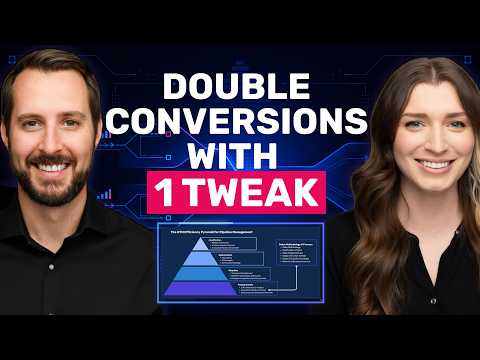
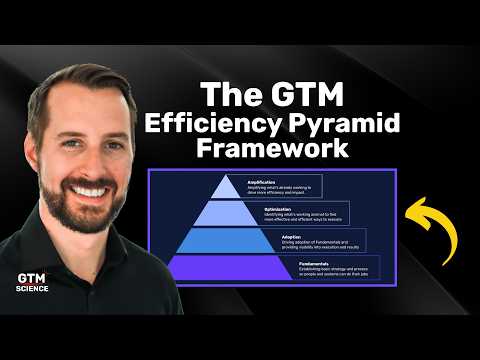
EDDIE REYNOLDSYeah. And we've outlined a lot of this in our go-to-market efficiency pyramid, but I think like you raise a really good example. Like who cares if your sales process is baked into
EDDIE REYNOLDSthe CRM? Well, I personally don't care up until the point where I decide I need to understand if my sales team knows how to close deals. How do I do that? Am I going to go and sit around the horn and start asking them deal by deal what they're doing, what they're not doing, joining calls? Sure. Like, yeah, I'll do that. But wouldn't it be so much faster if I could just pull up a pipeline report and go through it? And Salesforce is already asking reps the questions that I would otherwise ask. And now I've got visibility into this pipeline. And this is where we're talking about operational improvement. It's not just like building stuff in Salesforce. This like translates into a management best practice where you're telling your managers, hey, I need you to coach reps on how to close deals. I need you to inspect their pipeline. I need you to tell them when they have deals in the pipeline that shouldn't be there. I need you to tell them what they should be doing at each step. I need you to coach them. I need you to give them feedback on what they're doing. Ask pointed questions. And how do you do that without visibility into your pipeline? It's really hard to do that when you are only able to go by asking your reps what's going on. And so many organizations say, oh yeah, yeah, we have our pipeline in Salesforce. And I'm like, what's in there? You've got the name of the deal, maybe your decision maker tagged, your dollar amount, your close date, and that's it. Okay, so what's going on with this deal? What's the next steps? What's the decision making criteria? What is their decision making process? You know, what are all the aspects of medic or med pick, whatever sales methodology you buy into? Do I have to ask every rep about that on every single deal? Or do I have a repeatable, scalable process to do that?
RACHAEL BUECKERTAnd that's the difference between like, you could create the most brilliant annual plan in the world. But if you don't have the systems and the architecture and the processes to support your
RACHAEL BUECKERTpeople and actually making that happen, it's never going to happen.
EDDIE REYNOLDSYeah. I posted that, something like that on like Jan 1, because I was like reading some stuff that had nothing to do with go-to-market or operations. And it was just like,
EDDIE REYNOLDSokay, tell me about your goals and tell me what systems you have in place. And we're not talking Salesforce. We're talking like, I want to get healthy this year. Like, do I have a system to make sure that I eat healthy food for breakfast, lunch, and dinner? Which is also something my wife and I are really big on. Not that we are the best at this, but we try. And it really comes down to like real brass tacks of like, how do we make a grocery list? When do we buy groceries? You know, what does breakfast, lunch, and dinner look like? How is this repeatable and scalable? I find myself eating like the same foods for every meal every day. And it's just like, oh, like now that you like turn this into a process, you're like, oh, wow, I don't need to know how many like calories is in this or that because like I eat the exact same thing for breakfast every single day. And it's just like, okay, I know that I'm good there. But there's so much work involved in that. If you have a system in place, you're much more likely to achieve that than if every single day you wake up and you're like, what am I going to eat today? Same thing. If every time your sales reps come into work and they're like, oh, who am I going to call today? Yeah. What am I going to say to them? Yeah. Yeah. What do I need to do to prepare for like this, you know, third phone call with this
EDDIE REYNOLDSdeal in my pipeline? Yeah. If you want to make your people
RACHAEL BUECKERTmuch more efficient and closing deals and earning revenue, there's process for that.
EDDIE REYNOLDSYeah. And so I was going to jump into like our sort of like last step, but tell me what else you want to ask here, Rachel. So what are some processes that you would say would be fundamentally important
RACHAEL BUECKERTthat anyone reading this should be able to say, yes, I have that in place right now?
EDDIE REYNOLDSSo I think a lot of this is outlined in our go-to-market efficiency pyramid, but I'll start
EDDIE REYNOLDSwith the sales process. And the reason I start with the sales process is that it affects all new business and it affects all expansion sales. The only thing left out is renewals. And one could even make an argument that if you don't know how to close new business and expansion deals, your renewal process is probably broken too. You know, that's debatable. We could also make a really strong argument for why we should start with renewals, but I'm not going to do that today. Cause at the end of the day, when I talk to customers, they always want to generate more new business. Before we fill the pipeline, let's actually make sure we're closing deals. And so there are a few fundamentals that come into place here. Do we have our ICP and our buyer personas really well-defined by definition? If we don't, we're not going to be closing as many deals because our ICP literally tells us, Hey, who are the people that we close the most? Who are the people that become our most valuable customers? That's literally the definition of ICP. So if we don't have that in place by definition, that means that our sales reps are chasing deals with the wrong people in the wrong companies. All right. Now we've got the right people that we're targeting. What is our qualification criteria? I know this is like controversial. People are like, Oh, like reps are overqualifying. I'm not saying that they should be doing that, but we do need some level of qualification for reps to at least know, Hey, I should put this in the pipeline and invest a shitload of energy and time into it. We've got our qualification process down. Then what is the step-by-step process? What do we need to do in stage one, stage two, stage three? Let's take MedPick as an example, right? So like we always recommend our clients pick a sales methodology. We don't pretend to be sales consultants. I'm not
EDDIE REYNOLDSgoing to tell you how to sell. Although I've been doing it a long time. I've got plenty of opinions. Let's take MedPick as an example. All right. So what is the decision-making process and the decision
EDDIE REYNOLDScriteria for your customers? When do reps ask that? At what stage? And where's that field in Salesforce where they can fill that out? And at what point in time do you maybe say to your reps, you can't move a deal from stage X to Y until you have answered this question? This is going to make it impossible for reps not to be thinking about this because they literally can't move their deal forward. And I'm not a proponent that we make Salesforce so difficult to use that your sales team rebels. But the things that are really important, like the things I just mentioned, like at what point in time do we want to require reps to answer those questions? Like I think that that's important. And when I was a rep at Salesforce, this is exactly what I experienced. Like those were the types of questions. I think it was pre-medic days, but very similar questions to those baked into the CRM. All right. Now we have that in place. Do we have a pipeline review process? Meaning like, do we have a report that we give to our managers and we say, you're responsible for reviewing this pipeline and calling your reps out if something's off and helping to coach them, to do better? Just by doing that, you're going to have a much higher close rate. Your reps are going to know what they're doing. They're going to onboard a lot faster. And you're also going to set yourself up for accurate forecasting. And that would be kind of the next piece is like, do you have a solid forecasting process where you go and you review the pipeline ahead of time? You clean it up. You go into your forecast call. People call their shots if that's how you do forecasting and you have objective data to do that with. All right. Now we've got this really clean pipeline and an accurate, accurate forecast. Now let's look at outbound, for example. All right. Well, we start with outbound. One, we got our ICP, our buyer personas. The next piece is we need to figure out our capacity and our territory planning. What is the capacity of our reps? How many accounts can they cover? What are their territories look like? Then we look at building out cadences. Like what is the step-by-step process? I really shouldn't call it cadences as much as what is the outbound process? What's the step-by-step process they need to follow to reach out to a cold prospect and convert them into a meeting and then into qualified pipeline, right? And then it's kind of like similar to what I just described. Like then we need to see that reporting in Salesforce. We need to see like training and enablements. And then we need to start to measure metrics to see what's working and what's not to generate pipeline. And this is where management then goes in and starts to tell reps, hey, this is what's working. This is what's not. Pivot here. Focus more here. Do a little bit more of this here. And you're going to see much more outbound pipeline being generated. Similar concept to inbound. We need to have our ICP and our buyer personas really well defined. We need to have our lead qualification really well defined. You're really testing my memory here, Rachel. Like we've written this all down on the website, but we need to have a step-by-step process to follow up with these leads. We need to know what lead routing looks like. We need to know where these leads go to, what reps they're assigned to, how fast the SLA is for getting back to them, et cetera, et cetera. And when we build all these processes in, we should see the conversion rate, the close rate, the ASP go up because we've got people doing all the right things. And that's where in our annual plan, when we make these assumptions and operational improvements, we have to go build out a roadmap to say, okay, we got to go do all this shit so that we can actually achieve this assumed improvement in operational efficiency. I don't want to touch on ICP and buyer persona again for a second,
RACHAEL BUECKERTbecause I feel like it feels so basic that it gets glossed over really easily by a lot of people.
RACHAEL BUECKERTAnd I think a lot of companies, especially with their scaling into, you know, 50 million, hundreds of millions of dollars in ARR, I think sometimes it can be forgotten a bit and it's not looked at again and revisited and reviewed again, because sometimes your ICP changes over time, or you have a different product that has a different ICP or buyer persona, and that needs to be broken down and segmented. And just doing that can increase your efficiency with marketing and sales and everything, including customer success and how many tickets come through, whether you have the right
RACHAEL BUECKERTpeople using your product or not.
EDDIE REYNOLDSYeah, absolutely. I mean, I remember I worked at Salesforce when they bought Pardot, which is now called, I think Salesforce Marketing Cloud. I don't know, not a huge fan of it, so can't keep up. Similar to HubSpot for those that may be less familiar with it. You know, we were going and calling
EDDIE REYNOLDSon people trying to sell this marketing tool and you're realizing like, wow, we have all of these companies that have bought Salesforce to manage their sales team that are in no way a fit for this marketing tool. They're not even close to being ready. It's a very different ICP and buyer persona. And I mean, I think people don't go granular enough. I mean, I remember one of the things that I was doing that the Pardot reps taught me is like, hey, go install these plugins into your internet browser, go to their website and see what kind of tracking software they have. And if you go to their website and they haven't invested anything in the website and they have no tracking software on there, there's like nothing going on on their website, like what's the likelihood they're going
EDDIE REYNOLDSto drop $25,000 in this new marketing tool that nobody's heard of. I worked at Salesforce a long
EDDIE REYNOLDStime ago at this point, getting old. And it's like, well, yeah, like that's the ICP. The ICP isn't like baby SaaS companies with X to Y revenue. It's like, okay, you could be in that, but you have a shitty website. Clearly, you're not interested in investing in marketing tools. I think that most companies don't get specific enough on ICP and buyer personas. And it's all tied in with territory planning and capacity planning. And it's even tied into your reporting. I mean, I'll give you an example report here that I was just looking at with Jerry and our team with one of our clients. What percentage of the accounts in an AE's name have been called in the last three months, six months, whatever, what have you? If that number is like 1% or 10%, like you clearly have a problem, right? Like I see most companies will define their ICP as like their total addressable market. And then it's like, okay, we have 500,000 companies we can go after. And I'm like, okay, cool. But how many will you, you know, I've got Troy, our sales rep going after 48 accounts. That's it, 48 accounts. And I'm like, you know, there are five, 10 people in each of those accounts.
EDDIE REYNOLDSYou can message them five, 10, 15 times. If you do 40 activities a day, it's going to take you a long time to get through 48 accounts times five to 10 people times 10 to 15 activities. And then once
EDDIE REYNOLDSyou're done with that, great. It's been six months and you haven't talked to the first guy in six months. So you can go back to him. There's just absolutely no reason to be targeting 2000 accounts because like, those are not your best accounts. Your best accounts are like whatever capacity you have. So I think like it has to tie in together where you're saying, okay, like how many calls can this person make in a day? How many people do we want to target in the account? How many times do we want to call them, email them, send them a LinkedIn DM before we give up? All right. It becomes a quite a large number. And then how many accounts can that person actually cover in a given period of time? Once you figure that out, we figure out, okay, this is what their territory should look like. Well, then how do we identify the absolute best accounts for that territory? Well, that goes back to ICP. And if our definition is so broad that it gives us 500,000 accounts, it's like, well, that's not sufficient. Like we're going to have to figure out a way to narrow it down further. Mm-hmm. And we cover that quite a bit in our Outbound framework as well.
RACHAEL BUECKERTWe do? Yeah, we do. It's something we're really big on. We talk about it a lot. Awesome. And I wanted to touch on risk mitigation and contingency planning a bit as well. When I was talking to some of our consultants on annual planning and what we do for our clients,
RACHAEL BUECKERTone thing that came up that was interesting to me was making sure you have buffer in your annual plan for when things can go wrong and being able to protect that as well from stakeholders who might like see that kind of buffer area and be like, hey, I think we can actually like make more and
RACHAEL BUECKERTmore money here. You have to be able to defend that and be like, no, you know, we need this buffer because of certain things can happen. And, you know, if we lose a salesperson, you know, this much time it takes to ramp them up, et cetera, et cetera.
EDDIE REYNOLDSWell, there's a flip side of the way that that's perceived in the general market. I oftentimes see salespeople complaining about like, oh, wow, like every rep missed their quota, but the company made their number, which I think is a little bit messed up. And it also goes into like, why in the hell do quotas have to be so hard to hit? Like, I don't buy into this assumption that like, oh, once a rep
EDDIE REYNOLDShits 100% quota, they're just going to quit and go like sit on the couch and play video games. Like I was at 504% of my quota in my first job out of college and not because I was such a great salesperson, the quotas were really easy, but I was also number one in the country and I got to go to Hawaii and Disneyland and like, I wanted to be number one. Like, you know, I hit 245%. Like, did I say first quarter? I think 504 second quarter, 254 first quarter. And yeah, I was like number one in the state. And I was like, now I want to be number one in the country. I just don't buy
EDDIE REYNOLDSinto this concept that reps have to have this quota that like is virtually impossible to hit. But I do
EDDIE REYNOLDScompletely identify with this idea that, okay, like reps all have these quotas and you add them all up and the actual company target is nowhere near that because you're not going to have reps hitting every, like every rep hitting quota. You're not even going to have every rep, like make it to the end of the year if you have a large enough sales team or if you're just unlucky. So you have to factor these contingencies into your plan. What happens with the new product that you're launching? It doesn't go as expected. What happens if the Fed changes interest rates? Like to some extent, there's only so much you can do to predict these things. I spent the first 10 years of my career in finance and I sold private equity investments to institutional investors, like literally billion dollar funds. And I always found it comical that like these people who are supposed to be like the smartest people on earth that, you know, all went to Harvard and managed like these billion dollar funds. Like more often than not, they can't beat the S&P 500 because like they don't really know what's going to happen. And nor do we in go-to-market ops. There's only so much you can do to like understand like where the wind's going to blow. But I do think that there are certain things that you need to say like, well, you know, if this happens, like what are we going to do? How can we like factor in a little buffer so that A plus B plus C plus D equals more than our target?
RACHAEL BUECKERTYeah. It's not just changes and unexpected things that happen within your company, but you like, like you said, the world at large industry changes, market changes, just political climate,
RACHAEL BUECKERTlike you mentioned, you don't, so many things can happen.
EDDIE REYNOLDSYeah. But I also think it's kind of funny. Like you can get too far down a rabbit hole there and I'm just like, okay, cool. Like you want to tell me what's going to happen with like the geopolitical climate next year. It's like, okay, like if you're so smart at this stuff, like why are you working in B2B SaaS? Like why don't you just go trade securities and like skip over all this stuff? Like you can make billions of dollars if you actually knew exactly where things were going to land 12 months from now and you didn't have to spend it trying to sell software.
RACHAEL BUECKERTYeah. So there's a line to be drawn in the sand there for sure. Like plan as much as you can, as much as it makes sense, but don't spend all your time on it. Don't go overboard and make it a limiting factor and producing a plan. I mean, that's my personal view because I think people
EDDIE REYNOLDSget wrapped around the axle on some of this advanced stuff. And I'm like, hold on a second. Like you don't have a clean sales pipeline. You want to tell me like who's going to win the
EDDIE REYNOLDSpresidential election and like what the Fed is going to do and how Canada is going to react. I'm just picking on you because you're Canadian, you know, like, I don't know, but I do know that your pipeline is crap right now. And if it wasn't crap, you'd probably close more deals. There you go. Try to focus the most on what you can change. Exactly. So once you have your plan kind of figured out and you've turned all the knobs
RACHAEL BUECKERTand you have an idea of what you can change, what you can do, how do you present all of this to leadership? At what point can you bring it all together and show them and say, here's what I have in mind? Well, I think once you've baked out the plan, right? So I think like you start by
EDDIE REYNOLDShaving some preliminary conversations with CEO, CFO, et cetera, and understanding what are the targets? What are the budget constraints? What are things going to look like? What is their initial view? And you kind of come up with like that initial plan. And then you go through the exercise that we just went through and you start to refine it. And then you come back and you present it and you say, here are my assumptions. Here is what we think is possible. We have seen historic numbers that mean we can do X, Y, Z, which means that we can generate this much NRR and this much new business via these channels. You know, these are what the conversion rates look like, et cetera. We're going to assume some improvement here. We're going to need some additional headcount for this. We're going to need some additional budget for this, et cetera, et cetera. And then it becomes this back and forth, right? Obviously the CFO may be, you know, pushing back and saying, Hey, like, I can't give you all that budget. And the CRO is pushing back saying, well, if I can't get this much headcount and this much budget, here are the numbers. These are how the conversion rates work. You can only expect so much. And then there's always room for irrationality, right? Like, okay, I don't care. I just need you to make it happen. That's your job. It's like, all right, well, a person wouldn't want to work for somebody like that, but there's always going to be a little bit of that. Right. Um, and I think that that's where the presentation comes in, you know, it's not like a one shot deal where you are just like doing this in a silo and then you go and present it. Like, I think there's a little bit of back and forth, but then once you're ready, you go and you present the numbers and you say, okay, like here's the plan that we come up with. These are the assumptions that go into it. These are the dials that we need to turn. This is what we need in order to do that. And then you get feedback and then you finalize that plan. You get everybody in alignment and say, okay, this is the plan that we're going to go execute this year. And then that's the really critical part is actually going and executing it. Yeah. But I'll save that until you ask me the question on that topic. So once you have the plan approved and you know, you've done all this work, how are
RACHAEL BUECKERTyou going to roll this out to your teams and actually get the ball rolling and get it executed?
EDDIE REYNOLDSOh, perfect segue. Well, first you got to go present this to the team. You got to go to them and say, this is what we're going to do this year. But I think what's really important is that it shouldn't
EDDIE REYNOLDSbe this static document, right? Like to me, not to pitch Salesforce so much, but like it should roll into Salesforce. Like, you know, you need, obviously sales reps need targets and quotas and commissions, and that's a piece of annual planning or something that comes out of it. You're going to need dashboards in Salesforce. You're going to need reporting and you're going to need to like track these reports to see how you're trending towards that number. So let's talk about our close rate as an example, right? So we're, we talked about how we're going to improve close rate from 20% to 25%. Where is that being tracked? What report and dashboard is that on? Who's responsible for looking at that report and how often do they look at it? Who is going to take the time to go and slice and dice that report and look at the close rate by region, by team, by product, by customer segment, by rep, and see what's working and what's not to improve that number. Because I can guarantee you, you don't improve your close rate from 20% to 25% by just saying, we're going to improve our close rate, which is unfortunately what happens a lot of times. You've got to put the hard work into actually going and making that improvement and that requires like consistent tracking. So you're going to want to see how much pipeline and revenue you're producing through every channel. You're going to want to see your new business pipeline report, your expansion pipeline report, your renewal pipeline, and you're going to need to take time to go through that and slice and dice those numbers and weekly reviews and one-on-ones with your team and monthly reviews and bigger quarterly reviews. Maybe even having like the concept of a pipeline council where you bring all revenue leaders together to discuss this stuff and take action on it so that you can keep moving towards that target. And if at some point you determine that like, wow, that target we were supposed to hit is just not obtainable, then you need to go to the leadership team and say, okay, like we need to adjust. This is what's realistic now and keep trending towards that number. You can't let this annual plan just become static and like sit in a document somewhere that nobody looks at it.
RACHAEL BUECKERTAnd who should be responsible for keeping their eyes on that plan and those metrics and slicing
RACHAEL BUECKERTand dicing the numbers and making sure that everything is going the way it should be?
SPEAKER_16Well, I think that the CRO is ultimately accountable and also the CEO is ultimately accountable, right? Those are the people that carry that number and carry the burden of the
EDDIE REYNOLDSresponsibility of delivering it. However, I think like in terms of the heavy lifting, you know, your VP of RevOps, for example, plays an integral role in my mind. And I think like, Tim Strickland, formerly CRO of Zoom Info, now at Summit Partners Private Equity Firm, said this on our podcast, you know, he's like, I'm looking at these numbers every single day. And I'm going to the VP of RevOps and I'm saying, here's stuff that I'm uncovering and I'm learning. At the same time, if the VP of RevOps is not, or RevOps team is not doing the same thing, then they're not doing their jobs. It needs to be this two-way street, right? I think that the CRO and the CEO are ultimately accountable. The buck stops with them for delivering in that number. And the reason you have a RevOps team is because this is hard work and you need people slicing and dicing those numbers, going through it on a regular basis. When we talk about our pipeline council, we usually talk about like the VP of RevOps running that because it gives all of these revenue leaders the ability to come and just show up and say, okay, like, here's what's going on. What do we do about it? And discuss it. I think that there's a lot of heavy lifting
EDDIE REYNOLDSinvolved. That's really good to have someone dedicated to that responsibility.
RACHAEL BUECKERTSo what happens when you need to make adjustments as the plan goes on?
EDDIE REYNOLDSOkay. So let's, let's keep going with our like close rate example. Let's say we needed to get our close rate from 20% to 25% and it's just not happening, right? Or probably a more tangible example would be that we've got a particular channel that is not performing the way that we thought it would, or a new product not performing the way that we thought it would. Well, we need to take this full circle back to the top of the plan, right? Take our top, our tops down plan, our bottoms up plan, et cetera. We need to look at this historic numbers and we need to adjust and we need to say, okay, we're not going to hit that number in that particular area in the way that we thought. So what are we going to do about it without plugging like the pipeline council too much? People can read about that on our website separately. That's kind of the idea, right? You bring these real numbers to all of revenue leadership and you say, what are we going to do about this? Right? This is the thing that's working. Maybe there's something else that's working really well and we can double down on that. This thing's not working. Maybe we need to pull investment from it and shift it elsewhere. Or maybe we need to bring in RevOps to optimize the process so that we can improve that particular aspect of our go-to-market. But I think this thing goes full circle. I don't think the annual plan is like a set it and forget it for the entire year and you don't look at it again until it's time to do the next annual plan the next year. You have to be constantly tracking and iterating on this and identifying the things that are working and where you can invest more, the things that are not working and that you either need to kill and or where you need to make those operational improvements. That's why if you look at the graphic that I'm staring at right now to help myself here, I think it's so important that it's this virtuous circle where we're just constantly tracking and seeing what's working, investing more in that, seeing what's not working and cutting it, and or finding ways to improve the operational performance in those areas so that we can actually get to the number that we need to get to.
EDDIE REYNOLDSYeah. If it just was deep down to making a plan and following it and then everything was
RACHAEL BUECKERTrainbows and daisies, it'd be way too easy.
EDDIE REYNOLDSOh, you remind me of like the famous Mike Tyson quote, like everybody's got a plan until they get punched in the face.
RACHAEL BUECKERTYeah. That's annual planning in a nutshell, huh?
EDDIE REYNOLDSYeah. Probably that's just like business in a nutshell.
RACHAEL BUECKERTYeah. All right. Well, any other last thoughts from you, Eddie?
EDDIE REYNOLDSNo. This has been great, Rachel. Thank you for all the thoughtful questions and thank you for all the work that you put in helping us build this framework. Thank you. Awesome. Yeah. It's been really fun. I'm excited to see the reaction from the people.
EDDIE REYNOLDSAwesome. Where can people learn more, Rachel?
RACHAEL BUECKERTYou can go to www.unionsquareconsulting.com slash frameworks. That is our entire frameworks page. You can find the annual planning frameworks there, as well as all the other frameworks that we've published so far. And I will be putting in the show notes.
EDDIE REYNOLDSAwesome. Well, thank you, Rachel. This has been fun, as always.
SPEAKER_71Thanks, Eddie. See ya. Thanks for listening to the show. If this resonated and or you'd like help with anything we talked about
EDDIE REYNOLDSin the show, please reach out to us. You can find us at unionsquareconsulting.com and the info will be in our show notes.