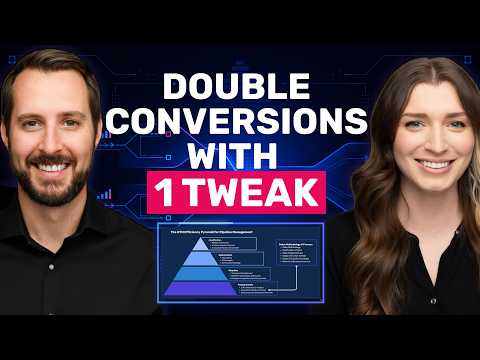
EDDIE REYNOLDSwhen you're sitting at $100, $200, $300 million in revenue, I guarantee there's so much inefficiency in who the sales team is targeting. And there's all this silo data and marketing is working so hard to generate all these leads and they're hoping that these leads will convert. And then you've got this other team over here making all these outbound calls and you're calling into different industries and different segments and different geos. And it's like, man, that is so much money spent on both the inbound and the outbound effort for somebody to not just take a step back and just say, okay, which companies, when we prospect into them, convert to the most amount of revenue. Welcome to go to market science. There's an art and there's a science to go to
EDDIE REYNOLDSmarket. And in this podcast, we talk about the science by interviewing CROs, private equity investors, and other sales and marketing experts, as well as talking about what we learn every day in the trenches helping to build go to market engines. Welcome to another episode of go to
RACHAEL BUECKERTmarket science. My name is Rachel Buchert. I'm the marketing manager here at Union Square Consulting. And with me is Eddie Reynolds, our CEO and founder. Hey there, Rachel. Hey, how's it going? It's going
SPEAKER_09well. So Eddie, you say there's no difference between inbound and outbound. Why do you say this?
SPEAKER_05The reason that I say there is no difference between inbound and outbound is that these are
EDDIE REYNOLDSeffectively the same motions. With outbound prospecting, we have a list of people that don't want to talk to us and we pay SDRs, BDRs, or AEs to call them and try to get them to take a meeting. Inbound is exactly the same thing. Saving our hand raisers, which we'll talk about in a moment. Everyone else, the people that download white papers and come to webinars and somehow hit our lead score. These are still just people that have no interest in talking to us. And we pay salespeople to call down on them and try to convince them to take a meeting. And we have these two separate motions and two separate teams doing the exact same thing, often to the same companies and the same individuals at different points in time. It's a siloed and broken set of motions that really are no different from each other.
SPEAKER_05So what should we do instead of having these separate inbound and outbound motions?
EDDIE REYNOLDSSo I think like first, before I upset anybody, I want to take hand raisers and put them aside. And I'll say people that have expressed interest in our product or service have raised their hand and requested a meeting with sales or a demo. That's another category, right? But when we talk about inbound, I'm talking about all the other inbound leads. And I think we need to take a holistic view and try to answer a very simple question, whether it's inbound, outbound, all bound, ABM, whatever you want to call it. Who do we want our salespeople calling today? If we pay our sales team to pick up the phone or send emails or LinkedIn DMs or smoke signals, whatever our channels are, which prospects, which companies and which contacts are going to have the greatest opportunity for us to convert them into the most amount of revenue. So a very simple question. And if we just think about answering that question, we can design our go-to-market motion, specifically our pipeline generation motion around the absolute best targets for our sales team to go after, whether or not they have engaged with our marketing.
RACHAEL BUECKERTAwesome. And I know we created a whole framework around this topic, the all bound ABM framework. So what was your thought process and reasoning for creating this framework to help CROs dealing with this?
EDDIE REYNOLDSWell, I think that the thought process is just coming from like these challenges that I'm seeing. Like
EDDIE REYNOLDSwe have this disconnect between sales and marketing. That's so common. It's cliche, right? You know, marketing is working really hard to generate a certain number of leads. We pass it over to the sales team. Sales calls down on it. It doesn't convert into revenue in the way that we want. We get the fingers pointing from marketing to sales back and forth. We're like trying to figure out what's working and what's not. Then we've got folks over here, like making outbound calls and we're saying outbound is dead. We increase the volume in order to try to like get more meetings. And then the more we increase volume, the less it works. And it's just a race to the bottom. You know, we, we tell marketing managers or marketing leaders that they need to generate more MQLs because our conversion rate is near zero. So we need 8 million MQLs in order to get one single deal. And then we tell outbound sales, the same thing. And you know, this actually even goes beyond what we're talking about here in today's podcast, but basically it's just a broken motion. We aren't targeting the right people with the right messaging at the right time. It's really that simple. And if we take a step back and stop thinking about what's inbound or what's marketing, what's outbound sales, and we just ask that simple question, who do we want our sales reps calling today? Then we can start to design a system where we use all of the intel and all of the data that we have from all of our sources, from the intel about the company and the contacts to their intent with tools like Sixth Sense to our first party intent, meaning like the engagement that they have with our marketing. And we look at that objectively and we say, how do we take these different data points and evaluate who the best prospects are for our sales team to call today?
SPEAKER_05I guess this must have like just a huge impact on, you know, sales efficiency and team alignment when
RACHAEL BUECKERTyou're combining these two motions and making sure that everyone's actually working together towards the same revenue goal instead of one department, you know, working towards an MQL goal and another department working towards something else.
SPEAKER_01Yeah. I mean, let's use some simple math and let's look at this through the financial lens, right? So we don't talk about finance enough here at Union Square Consulting, which is unfortunate because
EDDIE REYNOLDSmy background is finance and it's something I'm very passionate about. And as the owner of a business, all the money I spend on things like this podcast comes directly out of my pocket. So it's something I feel. And we think about how much money organizations are spending on sales and marketing. Oftentimes it's 40% of revenue. So we've got a hundred million dollar company spending 40 million dollars on sales and marketing. It's not always the case, but it could be, and that's a lot of money. So we then think about it and we say, okay, we've got our sales reps calling inbound leads, quote unquote, I'm using air quotes here for people listening. What if we make a thousand calls on inbound leads and we only convert that to so many dollars of revenue. And then we make a thousand calls on outbound prospects and we convert that to more revenue. Well, if you are an investor, what would you want to do? Wouldn't it be obvious that you would say, well, let's stop calling all these inbound leads and let's call cold prospects because it's more profitable to do so. Right. But we have built this enormous marketing engine and everybody has this vested interest in keeping the status quo. And so it's really hard to take a step back and do that. And also if we look at this as like one single thing, then we sort of like miss the wheat from the chaff or whatever the metaphor is there within marketing, like there's going to be certain types of leads that are going to convert to revenue at a higher rate than other types of leads. And so if what we do is we set the bar and we say, okay, we've got this outbound team and they're calling these cold prospects and presumably we have an unlimited number or reasonably unlimited number of cold prospects to call on. Then we can always just take our inbound SDRs and put them on the outbound team and make more outbound calls, right? Well, if we know that we can convert a thousand calls or a thousand emails or whatever it is into X dollars of revenue, because we've got our outbound engine dialed in, which I realize is a really big assumption here, then it sets the bar to say that the only time it makes sense for us to call inbound leads is when they convert at least as much as our cold outbound prospects. And now we are basically taking
EDDIE REYNOLDSthese two different teams or we're comparing them to each other because ultimately we have the opportunity to shift resources. If those resources are not being best spent where they have the greatest opportunity to generate revenue, right? So now we sort of combine these two motions and we get back to that simple question of who do we want our sales reps calling? And we can start to use metrics to evaluate and say like, let's, let's stop worrying about what's inbound and outbound. And, you know, we get into attribution and how complicated that is and how nobody trusts it. And it's just like, well, let's forget about all that. Not to say that we don't do attribution, but let's just think
EDDIE REYNOLDSabout which companies and which contacts present the greatest opportunity for us to convert them into revenue. And then it's a very difficult question to answer, but just getting to that question enables us to look much more objectively at our entire pipeline generation motion.
RACHAEL BUECKERTAnd I think there's something to be said too, for looking at not just the sales motion, but the marketing motion as well. Like when you're combining these teams and you're sharing data and resources and all these things, like you can use your marketing engine to help your sales reps get higher reply rates with their outbound efforts as well by, you know, ABM targeting those outbound target list companies.
EDDIE REYNOLDSYeah, absolutely. And, and I want to be careful with ABM because people have different definitions
EDDIE REYNOLDSof what ABM means. People have different views and beliefs around ABM. But when I think of ABM, I just think of something as simple as we're going to go after a list of accounts. And that list of accounts could be one account, 10 accounts. It could be a thousand accounts, but we have put some level of effort in to determine what those accounts should be instead of just saying, okay, like there's 50,000 companies in our TAM and we're just going to randomly select them. We're going to try to call through them. Not that anybody actually does it, you know, that poorly, but you know, I think the gap between ABM and maybe folks that are not doing ABM is just how much thought are we putting into the investment we're making into a particular set of accounts. And if we're really thoughtful about which accounts are going to present the best opportunities for us to prospect into them by looking at all the data that we have from our marketing data to the traditional outbound data, including in, you know, third-party intent data, then we're most likely going to generate more revenue. I mean, by definition, right? Like we're reverse engineering the revenue generation, right? So we're trying to answer the question of which accounts present the most revenue opportunity. Assuming that we answer that question somewhat well, then by calling those accounts by definition, we're going to generate more revenue. The only way we don't generate more revenue is if we answer that question incorrectly by picking the wrong accounts. And even if we do that, at least we tried and now we can look at what we did wrong and iterate and try again to do better.
RACHAEL BUECKERTSo what's the very first step in trying to get this right?
EDDIE REYNOLDSSo, like I said, I think the first step in creating an all-bound motion is to separate out the hand
EDDIE REYNOLDSraisers. Now, we may have all hand raisers being really valuable to our sales team, or we might want to filter them and make sure that they're in our ICP and our buyer personas and or I'm sure that there are certain companies where there's other criteria that really make a difference here. But let's take hand raisers and let's ask like, which of those hand raisers are going to most likely convert into revenue? Those are our absolute best opportunities. Those are way better opportunities than any other type of inbound lead. And they're way better than any cold prospect. For the most part, I'm sure there's some exceptions. And we want to get that routed to the right salespeople as fast as humanly possible. These are the most valuable leads we can possibly have in our organization. And in order to get that value, speed to lead is paramount. People are reaching out to us. They're most likely reaching out to one or two other competitors. Studies show that most of the time, the first vendor to respond wins the deal. And so the fastest that we can get back to them, the more likely we are to win that deal. So we need to design our systems and our process around speed to lead, and ideally around getting that lead in front of the best salesperson that we can get them in front of. Oftentimes, in my opinion, that's an AE. The inbound leads that we generate here at Union Square Consulting, I take
EDDIE REYNOLDSthese on myself. So many AEs are like, oh, this isn't worth my time. Like, I can't call down on a thousand leads. Well, we're not talking about a thousand leads. We're just talking about the people that are in your ICP, in your biopersonas, that are raising their hands saying, I want a demo. I want to meet with sales. I take those meetings myself. They're really valuable meetings. Unless there's some exception in a company where they're just getting so many hand raisers that are just like woefully unqualified, I would say route them to the most senior salespeople you possibly can. You might need
EDDIE REYNOLDSto use some SDRs in order to improve that lead response time, because that's critical. If they're waiting hours or days to get back to leads, that could be problematic. But we've got to balance that speed of lead with getting them in front of the rep that is most likely to close the deal and close the biggest deal possible, because they know what they're doing, and they're going to get value out of these most valuable leads. Once we've separated those hand raisers, then we get to the next piece, which is to look at, of all of the rest of the companies on earth that we could call and the people in
EDDIE REYNOLDSthose companies, who do we want to call first? Who do we want to spend a very significant portion of our revenue on having salespeople call into or prospect into? That is the big question that we want to try to
EDDIE REYNOLDStalk through today.
RACHAEL BUECKERTAnd when looking at that group of people, I'm guessing, you know, you want to first find people who are in market and have buying intent already and are already showing signs of this. So how do we identify this real intent that's going to be useful for us in lead scoring?
EDDIE REYNOLDSWell, I don't know if I would agree with your statement. I think that we are now crossing a chasm from these hand raisers into sort of this unknown. And we're going to talk about lead scoring, and we're going to talk about account scoring, and this is like a highly iterative process. There's no silver bullet here, and it's different for every company. And so you say, like, they have intent. I'll use an example. Like, let's say that you have the best account you could ever dream of, right? I don't know, you're SpaceX and you're selling to the US government, which is probably not a good example. I don't have a lot of experience in government. And I'm sure there's lots of different departments that are applicable here, but, you know, go with me on this. If they've never heard of you, they don't, they've never heard of your company. They don't know what you do, but they're the best account that you could ever work with. Don't you still want to call them regardless of the fact that they don't know who you are? Mm-hmm. And equally, if you have an intern at one of your competitors who is scouring your website and they are all over every piece of content that you've ever put out, do you really want to waste your time calling them? I think we all know the answer to that. And so there's this gray area in between where we say certain accounts we probably absolutely want to get in front of regardless of what their marketing engagement is, regardless of what Sixth Sense tells us. We just want to get in front of those companies because they're such great opportunities. We have other companies that are going to exhibit a lot of intent via third-party intent tools like Sixth Sense. We've got other companies that have a lot of intent being shown through our marketing engine. And so we kind of
EDDIE REYNOLDShave to combine all that data and we just need to decide who do we want to call first. So I would start with, we first need to do a capacity plan. And this is something we talk a lot about in some of
EDDIE REYNOLDSour other content. Before we know who we want to call, we need to know how our prospect, we need to know how many people and organizations we can prospect. So if you tell me we've got a hundred salespeople, just to use round numbers, and you know, they can spend, let's just say we don't have SDRs, we just have AEs. They all have time to spend two hours a day prospecting. Okay, so we've got 200 hours a day to prospect. And I'd say, well, how long does it take to actually send an email to a prospect? How long does it take to go to their website, to research it, to look at the contact, to write the email the right way, et cetera, et cetera. Maybe we have a low price point, we're high volume, and we can do a ton of emails. It's not usually something that I am a big fan of. Maybe we're enterprise sale and we can spend a lot of time researching, but whatever it is, we need to figure that out. This sort of leads us to know, here are the actual number of people we can reach out to in a year. You know, we want to reach out to each contact five times, 10 times, 15 times before giving up, whatever that is. We arrive at a number and it says, look, like we can cover this many contacts and there's X amount of contacts per account. So we can cover this many accounts. Now we know what we're looking for. So let's just say our hundred salespeople can adequately cover a hundred accounts each. So it's 10,000 accounts. Okay, cool. So like, what are the best 10,000 accounts? Well, that's where we start to like, take all of this data and we try to answer that question. What are the best 10,000 accounts or a thousand accounts or 500 accounts that we want our sales team going after? And that's where we use all this data to try to figure out who those accounts might be. Okay. And then the next step, like I'm guessing is using that data to now score this list and figure
RACHAEL BUECKERTout who we should target first. Absolutely. And so this is where things get really, really tricky,
EDDIE REYNOLDSright? This is a pretty complex data exercise, but it's not dissimilar from doing a lead score, right? We're just pulling in more data points, right? So anybody that's asking how to do a lead score, our advice is start with something simple and then build upon it. Try to reverse engineer. Look at the customers that you've won, right? So if we were to say, okay, we have a bunch of customers. Let's start to look at what's their firmographic data of all of our customers. What percentage of our customers are in this industry? What percentage of our customers are in this revenue range? You know, what's the revenue growth? Do they have funding? You know, what's the technographic data? If we're selling software, it might matter what other software they're using. What are the things that are most important to like, tell us which companies we work with, which companies buy from us? We look at deals that we've lost, right? And my advice to companies would be to start simple. You know, you might just say, you know what? There are 20,000 companies that are in this industry, in this revenue range. And maybe there's like two other pieces of criteria that are like really important to us. And we say, okay, cool. Like that's, that's who we want to target. And if we had time to call all of them, then we're going to call all of them. And then we'd say, okay, like let's narrow it down. Of those companies, which ones have engaged with your marketing? Which ones are exhibiting intent with Sixth Sense or whatever tool you're using? How do we narrow this down? We don't have a team or this level of data here at USC, right? So Rachel, how did we do this? We went down this same exercise for our V1. We looked at which companies are in our ICP, which people are in our personas, and which of those people have engaged with our content. And which of those people have engaged with our content the most that float them up to the top that we might want to call first. And that's sort of your V1. And then you can carry that forward and you can keep iterating and you can keep looking at what does the data tell us about the types of organizations that are converting the most, right? This is what's going to enable us to get the best bang for our buck in our sales and marketing investments. Because by definition, we're basically just trying to ask the question of, if we spend a dollar to have a sales rep chase down a leader, a prospect, which leader prospect is going to generate the most revenue?
RACHAEL BUECKERTAnd this seems so obvious and so common sense to get to that V1, just something simple.
SPEAKER_24But why do so many organizations have such broken leads going models?
EDDIE REYNOLDSWow. What a big question. I mean, first of all, this is just hard work, right? And you have to have
EDDIE REYNOLDSeverybody aligned on this. So even just to do this exercise, you have to have some support from the top and say, okay, not only are we going to build a lead score, but we're going to really work on it and try to iterate it and make it better. Just doing that requires like, you have to have somebody to actually work on that. You have to have support from leadership. You have to not be distracting them
EDDIE REYNOLDSwith 8 million other things that they could be doing. You have to go build that in the system.
EDDIE REYNOLDSYou have to find the data. You have to integrate the data into the system. You have to do a lot of work to build that out. And that's one reason why I'm saying like, keep it simple, because we can easily fall into the trap of saying, well, we need all of this data in this system. And by the way, like, I'm completely ignoring existing customers. We could really think all bound and we can incorporate our existing customers and our product usage data. And when we want to call into existing customers for expansion sales opportunities, it's like, oh, now we've got to like integrate this data into Salesforce. And there's this massive like implementation project. That's going to take us six months. And it's like, that's cool. That might be the right thing for the business long-term, but what do we do tomorrow? Like, how do we get our sales reps calling better prospects tomorrow? That's why I'm saying like, let's start with something simple.
RACHAEL BUECKERTSo after we've done the simplified V1, how do we make it a more comprehensive lead scoring model
SPEAKER_24that can help us even more in narrowing down this list?
EDDIE REYNOLDSSo I think we need to constantly look at what's working and iterate. And I feel like I'm not going to provide a great answer here because I think it's, it's a bit of an oversimplification and it's an oversimplification because it depends for every company. What I think we want to do is we want to break
EDDIE REYNOLDSleads and prospects down into different cohorts. So we might say, okay, like, let's look at this
EDDIE REYNOLDSby industry. Let's look at this by revenue ban. Let's look at this by growth rate. Let's look at this by, you know, how much they engage with our content, like who came to webinars, who, you know, downloaded white papers, whatever. And like, how do we create a bucket of leads or prospects that we have actively worked? And then just look at the conversion rate across that bucket. And this is sort of like an infinite exercise, right? Like there's no shortage of ways that you can slice and dice your
EDDIE REYNOLDSdata to try to figure out what's working and what's not working. But there is always a shortage of resources to analyze that data. And also there's a shortage of actual data to analyze. So you can only
EDDIE REYNOLDSgo so far with this, but most organizations don't have the resources to do this. And so I think that it really behooves companies to, to be thinking about this before we hire yet another SDR, yet another AE, we ask ourselves like, do we have the team we have in place today, do we have them calling on the best people that they could be calling on? Because if we are at a mature stage as an organization, and we've already got a pretty big sales and marketing team, we're spending a lot of money on that. It's probably a lot more efficient to spend money on making sure that we are shooting at the right targets versus spending money on more arrows.
RACHAEL BUECKERTHow do you know that we've gone far enough in refining that list before we just, we just go for it and launch it and stop working on it?
EDDIE REYNOLDSI think that you wouldn't stop working, like going for it and launching it is something I'd say, like, just do it quickly and go after it. Right. I think that you could do an exercise in a very
EDDIE REYNOLDSshort period of time, a day, a week, a couple of weeks, whatever, and land on something that's probably better than most organizations have today. And then you can go and measure the results of that, right? That doesn't mean that you stop working on it. I think that you want to work on this indefinitely, especially as like, if this works, now you are improving the productivity of your entire sales and marketing team, right? Every dollar spent on sales and marketing now produces more revenue than it did before, because you're picking better targets. So you can justify investing more and more money into this. You can justify more people, more tools, more analytics, more slicing and dicing of the data to refine this. And, you know, I worked at Salesforce and granted, this was a long time ago. Now it's like over 10 years ago, I started at Salesforce. And so some of this stuff wasn't in place then. But even then I saw the sophistication with which Salesforce looked at this stuff and they had people full-time like crunching these numbers. And I remember one day somebody just came to me and they're like, look, like you have your entire territory to cover here, the specific NIAX codes
EDDIE REYNOLDSand six codes of the organizations that spend the most money with us that are easiest to sell to. And by the way, you can just run a filter in Salesforce and you can see these NIAX codes and
EDDIE REYNOLDSsix codes are sick codes. And you can look at your territory and you can stack rank or tier your territory accordingly. Now that's a pretty simple version of this, but how valuable is that? Right? Like so many organizations like sales reps are either trying to figure that out on their own, or they're not figuring it out at all. They're just, they've got an activity, a quota to hit. I got to make X calls every day. Here's my list. And I'm just banging through that list. And it's like, wow, like software companies that are well-funded and that are growing really fast. And they use HubSpot are buying like so much easier to sell to than manufacturing companies that are family owned. But your rep just has a list of a bunch of software companies, a bunch of manufacturing companies, and they're just trying to work through that list and make calls. And they can't see the data that
EDDIE REYNOLDSone group is converting so much better than the other. And especially if we're talking about like SDRs and people new in their career that are just like taking their marching orders and like banging out calls. Like it's such an incredible inefficiency to just like crack the whip and say,
EDDIE REYNOLDSmake more calls, make more calls. Instead of saying like, call better people or call better prospects. Yeah. And just out of my own personal curiosity, in a company that's, let's say $100 million plus,
RACHAEL BUECKERTB2B SaaS, who do you think is doing this dedicated data analysis? Do these companies you think have their own dedicated analysts or are they still using their rev ops people, their CROs?
EDDIE REYNOLDSIt's a completely like wide spectrum, right? Like many of these companies are not doing this at all.
EDDIE REYNOLDSSome of these companies have one single rev ops person that's just like fighting for their life to try to figure this stuff out. I was literally on the phone yesterday with someone in this exact situation, exactly what you described, plus $100 million company, basically have like one or two rev ops people. And this one person is trying to figure this exact thing out, but has 18 other things to do. Right. And then you have organizations that have entire data teams that can really think through this stuff. It's a really wide spectrum. Okay. I guess that's where we come in then. Well, yeah. And like, I try not to like pitch our services too hard on this podcast. Obviously that's the purpose. And so, Hey, if you're listening to this and you want help with this, reach out to us, go to our website, click the button to book a call and it'll route directly to me. You can book on our Calendly and you can get super fast speed to lead and you can book a call right on my calendar and we'll chat as long as you're not trying to sell me something, which unfortunately people do. In which case I will decline the meeting, I will find you. And I'll talk through how we get help with this, but it's not necessarily about like, Oh, you have to hire a consulting firm to do this. It's just, you have to have the resources to really spend time on this. And the reason we talk about a hundred million dollar plus companies is like, Hey, like you can do this at a million dollars. Like we have, but you know, you're not like, if you improve your conversion rate by 5% or 10%, that might not justify
EDDIE REYNOLDSspending six figures on a rev ops higher. I personally, um, if I didn't already have a bunch
EDDIE REYNOLDSof people in rev ops working for me, if I was running a $1 million company, I would hire somebody in rev ops, but a lot of organizations like really struggle to justify that spend. But when you're sitting at a hundred, 200, $300 million in revenue, I guarantee like there's so much inefficiency in who the sales team is targeting. And there's all this silo data and marketing is working so hard to generate all these leads and they're hoping that these leads will convert. And then you've got this other team over here, making all these outbound calls and you're calling in a different industries and different segments and different geos. And it's like, man, that is so much money spent on both the inbound and the outbound effort for somebody to not just take a step back and just say, okay, which companies when we prospect into them convert to the most amount of revenue?
RACHAEL BUECKERTYeah. It seems so simple. And it's, you know, it doesn't really matter. Like if you decide to, you know, work with us or somebody else, or just have somebody on your team doing it, the point is to do this stuff and do this works. It's going to prevent so much revenue leakage and it's going to prevent such a domino effect that affects every other part of the company and your revenue generation down the line.
EDDIE REYNOLDSYeah, a hundred percent. Um, but the challenge is, is like CROs are under immense pressure to hit a quarterly target, to hit their annual target. They've got a higher X number of people. We've got to make these calls. We've got to book meetings. We've got to book pipeline. And it's sometimes really hard to justify taking a step back to sort of sharpen the ax. And that's why I said, keep it simple, right? Like, Hey, you know, we don't usually have the luxury of doing some six month exercise to use a term my old boss used to use, like build a million dollar brick. It's like people criticize salespeople a lot, but there is a lot to be said for just hustling. You know, I built this company with a $200 investment by just hustling, by just picking up the phone and calling people and emailing people and sending LinkedIn DMs and just being, Hey, this is what I'm doing today. I don't know if this interests you or it doesn't interest you, but I got some stuff to sell. Maybe you want to buy it and surprise, surprise. Some people bought some stuff and nine years later, however long it's been here, we are profitable, cashflow, positive company. But along that way, we wasted an incredible amount of money. And Rachel,
EDDIE REYNOLDSyou've seen this firsthand. Look at all the money we wasted in our marketing efforts last year and the
EDDIE REYNOLDSyear before by generating all these leads that weren't converting. And we had to take a step back and say, okay, which leads are converting? What types of companies, what size of companies, what people in these organizations, what content is resonating with those folks? And I only mentioned content because Rachel, you run marketing here and that's something that you've seen firsthand. We're really more talking about sales efforts on this particular episode, but if you're not taking a step back and looking objectively at your data, what's working and what's not working, you just end up wasting so much money. Yeah. And so much time. I mean, how does it feel for you now that we have a better sense of who our ICP is and who we're creating content for? Oh my God. It's so much better. I feel like we're actually getting somewhere and
RACHAEL BUECKERThave a path ahead and seeing the results from it as well is nice. Yeah. And I think it's the same thing. I'm so careful, especially because I have so much
EDDIE REYNOLDSstuff to do. It's really hard for me to ever find time to prospect. And it's like, if I'm going to do that, or if we're going to put together a marketing event, who do we want to target? And if we're not really careful about that, we just end up wasting
EDDIE REYNOLDSprecious resources that we don't have to waste.
SPEAKER_33Yeah. Chasing vanity metrics that really mean nothing in terms of revenue in the long run.
EDDIE REYNOLDSOh my God. Like, isn't it amazing to see like how much my LinkedIn has tanked in the last like six months and yet we're like generating more and better leads.
SPEAKER_35Yeah. Yep. It seems counterintuitive, but it works.
EDDIE REYNOLDSAnd we're not alone in that. Like, uh, I don't want to name names, but we're talking to somebody else. I think you were on the call the other day that was sharing the same experience and it's like quality over quantity, right?
SPEAKER_33Yeah. A hundred percent. So we're talking about lead scoring. How do we turn our lead scores into more of an account level insight?
EDDIE REYNOLDSSo again, like this is where I really struggle. There's no perfect science to this, right? So we could just say, Oh, like, well, just take your lead score and add them up. And then that's
EDDIE REYNOLDSyour account score. And that might work, right? Or you might say, well, you know, like we'll take the lead score for people in our buyer personas and we'll multiply by 10 and we'll take the lead score for other people and we'll multiply by five or whatever. Again, like I would recommend people start simple, but what you're just trying to figure out is, is which accounts are going to going to be best. Right. And you might also want to say, well, we're going to attribute a certain score to the account itself. So you might say, well, you know, if the account is in this industry and this revenue
EDDIE REYNOLDSrange and they've hit this growth rate, or they had this funding, or they use this piece of technology. So I'm talking about like your basic outbound metrics or not metrics, but your basic
EDDIE REYNOLDSoutbound criteria, we might want to look at that and say, okay, well then this account gets this score just like by default. Right. And then you said, so, so what that does is it tells us that if we have like this amazing company, that's never heard of us, we still want to call them. Right. Um, you know, we're selling tide and like, we want to call on, I mean, tide's a bad example because everybody knows who tide is, but we're selling a consumer package. Good. How badly do we want to call on Walmart? We probably want to call Walmart, right? So Walmart's at the top of the list because of, you know, the revenue that Walmart does and the fact that they're in retail and et cetera, et cetera. So we've got this like baseline score for the account. And then maybe we want to add to that. Okay. Here is like the intent score that we've gotten from various individuals via six cents, or we've got our, I meant third party intent, or we've got our first party intent, meaning our marketing data. And we say, okay, well, you know, if they went to a webinar, they get this many points. And if they went like download a white paper, they get this many points. We start to add that up. And the problem with this is, is like, there's just no exact science. Like we're not going to get this perfect the first time. But I think like, if we start really simple and we just kind of say like, all right, well, which organizations do you think like we would want to talk to in the first place? And then of those organizations, which ones have like exhibited some level of engagement with marketing? Let's call those folks first. And then, you know, maybe that list isn't that long.
EDDIE REYNOLDSWe get through that list and now we're landing on companies that have never engaged with marketing,
EDDIE REYNOLDSbut they're still really interesting to us because their organization fits that, that scoring criteria. So I would just start there. And then, like I said, what I would do is once we've sort of established that baseline, I'd run that for however long we can run that. It also depends a lot on our sales cycles. If we have an enterprise sales cycle, it's nine months long. It's going to take us a long time to see like which cohorts convert into revenue, but we can start by looking at which cohorts convert
EDDIE REYNOLDSinto meetings and opportunities, et cetera. And we start to look at that and say, okay, like, well,
EDDIE REYNOLDSlet's look at this particular industry and see how that, see how that converts into revenue. Or we could look at it through the opposite lens. And we could say, like Joel and our team always talks about like lead value. All right. Well, if we have generated a thousand leads in this cohort and of those thousand leads, we generated $200,000 in sales. Cause I don't know, let's say we closed a 10 of them and each sale was $20,000. Maybe that's a bad example. Let's say it's $50,000 and we closed four of them. All right, cool. So thousand leads, $200,000, like each lead is worth $200. And we can compare that to the other cohort and we can say, oh, this cohort, you know, of a thousand leads converted into $300,000. So these, these are worth 300 bucks. Well, who do we want to call first? And we start to adjust our scoring criteria in that way. Yeah. And there's so much, we miss all of that. If we only look at
RACHAEL BUECKERTlead score, not at account scoring at all. So what next, where do we go from here?
SPEAKER_35Segmentation. So on the topic of segmentation, first of all, what do people get so wrong with it?
EDDIE REYNOLDSSo I think there's two aspects of segmentation. So I've been talking a lot about buckets and cohorts
EDDIE REYNOLDSfrom like a data analysis perspective, right? But segmentation is also how we're going after these folks. So I think one of the biggest challenges is like, you have a rep that's trying to call on a CFO and a B2B SaaS company. And that's what pops up in outreach or sales loft. And like they go and they send the email and then they click next. And now all of a sudden they're targeting like a chief marketing officer and a manufacturing company. And then they click next. And now they're targeting a head of sales in professional services organization. How good is that message going to be?
EDDIE REYNOLDSLike you're constantly bouncing from one thing to the next to the next. So the idea here is, is we've put in a reasonable amount of effort to try to identify the right accounts and presumably the right contacts
EDDIE REYNOLDSin those accounts in order to effectively do outbound, which by the way, the reason I'm saying inbound and outbound are the same thing is because most inbound is just outbound in disguise.
EDDIE REYNOLDSWe're going to go outbound to all these different companies. Well, how do we segment them so that we get the right messaging to the right person? If we have a lot of CFOs and B2B SaaS, let's create a segment for CFOs and B2B SaaS. And let's think really carefully about what messaging resonates with CFOs and B2B SaaS. What are things that are keeping CFOs and B2B SaaS up at night? What are they worried about? What might motivate a CFO and B2B SaaS to want to meet with us? Like what problems are they facing that we solve? And how do we create content and messaging around that? How do we teach our team to research them, to come up with like unique insights that they're going to use to personalize those emails or LinkedIn messages or voicemails that they leave? This is so critical, right? So one piece of this whole thing is like, let's find the right targets, but then we have to actually go and like work those targets correctly. Otherwise, if we don't do the right things, then the conversion rate of those targets doesn't actually tell us how valuable those targets are. And the first piece to actually executing on our outreach to those targets is by making sure that we're like tackling one thing at a time. Typically it's one type of company. It could be an industry or maybe like for our product, it doesn't matter what industry they're in, but there's some other criteria that really matters. Maybe there's a big difference between small business and larger businesses. Maybe it's the
EDDIE REYNOLDSUS versus EU. Maybe it's high growth businesses versus not. I don't know. I mean, the list goes on, but what type of company do we want to segment out? And then what individual in that type of company? The goal here is, is that we have messaging that resonates. And like, for me, I get, I get all these emails and they're always terrible probably because I list myself as being, you know, basically in software on LinkedIn, which is not actually the case. So I get all this messaging saying like, Oh, like as the CEO of a software company. And I'm like, do you know, like if somebody just messaged me and they're like, Hey, you run a small professional services business and you don't have any outside funding. And I imagine that like you're hyper-focused on like profitability. And here's this challenge that you're probably facing because you run a small professional services organization.
EDDIE REYNOLDSI never, ever get those emails. And if I did, it would immediately capture my attention. It doesn't even matter what you're selling. Cause it's like, Oh, you might actually know what problems I'm facing, which means if you know that and you're reaching out, you might maybe have a solution to
EDDIE REYNOLDSone of those problems that I'm facing. And all I want to know is like, what are other people like me doing about this problem that I'm facing? I don't care what Coca-Cola is doing about this problem. Like let's pick hiring as an example. You reach out to me and you're like, well, like we want to help you improve your hiring process. This is what we did with Coca-Cola. I get these emails all the time. I don't care what Coca-Cola does to hire the next employee. Like it's not in any way
EDDIE REYNOLDSrelevant. They're not in the same industry. They're not the same size company. Like there's nothing about Coca-Cola that resonates with me. But if you could like really narrow in and just say like, Hey, we've worked with other CEOs of professional services organizations of your size, and they face
EDDIE REYNOLDSthis problem. And here's the solution to that problem. Like, man, you have my attention.
RACHAEL BUECKERTYeah. And it's so powerful, especially these days when everyone's just inundated with that spray and pray generic messaging. And no one's being like, no one's being specific like that anymore. No one's actually taking the time to look and see who this person is that they're talking to and give the messaging that actually relates to their themselves and their challenges. Because it takes so much effort. It's so much work.
SPEAKER_35Yeah. Everyone's addicted to the automated AI, click a button and send something out.
SPEAKER_01Well, it's so funny because like we shit all over AI all the time here. And I'm not actually against it at all. It's like, I'm going to skip ahead because I think you wanted to ask about AI,
EDDIE REYNOLDSbut we can use AI in every step of this journey to improve it. But we have to be thinking about like, how do we use AI to do these things, to hit the right person with the right message, ideally at the right time. And if we use AI to do that, then we can be really effective. If we say to the AI, I want you to write some email that is going to be all things to all people so that we can pop it into our tool and press send all on 10,000 emails, then we should not be surprised when those 10,000 emails come back
EDDIE REYNOLDSinto 50 meetings and four sales opportunities and only one close one customer.
RACHAEL BUECKERTIf even that.
EDDIE REYNOLDSIf even that.
RACHAEL BUECKERTYeah. And human oversight as well. Like AI takes so much actual, just human personal touch and coaxing and human review and oversight. Cause if it goes wrong, I mean, there's so much that can go wrong.
SPEAKER_65It does. And, but like, you know, the funny thing is, is like, we also should all over spray and pray.
EDDIE REYNOLDSAnd I think there's a form of send all that's not spray and pray. It's like, it depends on the price point. Right. So you got to like, think about like, is the juice worth the squeeze? So if you're selling a product for 50,000, a hundred thousand, $200,000, like there's a good chance that like taking the time to like personalize the messaging is going to pay off. You know, I saw statistics from
EDDIE REYNOLDS30 minutes to president's club where they were looking at a cohort of outbound prospects. And by personalizing the emails, they were getting 7% conversion to, I can't remember if it was meetings or opportunities, but 7%. That's pretty high. And then they looked at the spray and pray approach and they were getting 0.49%. So that's a 14 X increase, 14 X. And there's two problems with this, right? Number one is the fact that you're losing 13 out of 14 opportunities to get a meeting
EDDIE REYNOLDSor get a qualified opportunity. I forget what it was, but it's also like you end up having to like
EDDIE REYNOLDSdowngrade to like a lower level prospect because you've already burned through all the good,
EDDIE REYNOLDSgood prospects, right? You sent a hundred out and instead of getting seven back, you got 0.49 back. Then you go to the next hundred, the next hundred and the next hundred. And in order to
EDDIE REYNOLDSlike hit your meeting quota and your pipeline quota, you're not fishing at like the bottom of the barrel because you burn through all the best prospects at the top. Which means like the reason that these prospects and these companies are at the bottom of the barrel is because they don't convert to as much revenue. So now you're like, wow, like, well, we did all this activity and we booked all these meetings. We booked all this opportunity. Cool. Well, your conversion rates are lower. Your average deal size is lower. Uh, your sales cycle is slower and your churn rate is higher and your expansion is lower. Why? Because by definition, your best prospects have better conversion rates and better deal sizes. And you burned through them with like really shitty prospecting and lost the opportunity to do
EDDIE REYNOLDSbusiness with them. And now you are left with subpar prospects.
RACHAEL BUECKERTYeah. And if anyone listening to this, if you're really interested in this topic, we do go into it in much more in depth in our outbound framework. And you can find that on our website, unionsquareconsulting.com slash frameworks. We'll have that in the show notes as well. Moving on to the next step in our all bound ABM, mapping your processes. And this is a really big one. So Eddie, on the topic of process, give us a little bit of an overview about what processes first of all, that we're talking about here. All right. So you're going to, uh, call everybody
EDDIE REYNOLDSon day one and you're going to email everybody on day three, and then you're going to like send them
EDDIE REYNOLDSa LinkedIn DM on day five. And then you're going to do 15 meetings before you walk away after they've ignored you. And then you're going to put them into a marketing nurture sequence. Like that's your
EDDIE REYNOLDSprocess. Right. So how do we define that? Like what I just shared a random example, but like what is actually going to work for us? And again, I don't think there's any like perfect science to this. I mean, there's a lot of data to show that we need to reach out a certain number of times and doing
EDDIE REYNOLDSmultiple channels and multiple individuals in an organization is usually the best approach. But what
EDDIE REYNOLDSmany organizations don't have is they don't have this like really well thought out. Maybe they've built something in outreach, but are they getting the reps to adhere to it? The process needs to also
EDDIE REYNOLDSlike be reportable. There needs to be some accountability because what we want to say is that we picked these 100 accounts that we wanted to go after. And we called them five times and emailed them five times and sent them five LinkedIn messages each across five different contacts. You know, the CFO, CEO, CMO, CRO, CTO, whatever it is. And it doesn't have to be C-level people. I'm just picking random titles that come to mind. And then we say, okay, like we, we segmented this out. We had this process that we reach out to them in this way. We had these templates, you know, part of that process is like, how are reps going to create messaging? Do they have templates that they're going to use? Are they going to research? Are they going to modify those templates? What I was saying earlier is like, if we have a lower price point and we just use a template and just press send all, I'm actually okay with that. If we're like really targeting the right people with the right messaging, that's a lot better than what most organizations are doing, unfortunately. So we map out that process and then we go and we run it. And then we look at the conversion rates, right? And we're essentially saying, okay, for this particular segment, these accounts and contacts
EDDIE REYNOLDSthat hit this lead score and account score, we ran this process and we converted X percentage of them to meetings, pipeline, close one deals, this much revenue, et cetera. And now we can go back and
EDDIE REYNOLDSreverse engineer it. Now, the problem with that is, is like, we don't know was the problem, the targets or was the problem, the process. Now, if we have lots of different cohorts and different segments, then we can kind of compare like, well, if we ran effectively the same process, then, you know, that's kind of isolated, which cohorts converted the best. Then we could obviously AB test. If we have a large enough, you know, sales team and we can start to look at like what's working and not working in the process. And it's a constant iterative process to use the word process a lot, but like a lot of organizations say, oh, like these leads aren't converting. And I'm like, well, show me the report where you can see exactly how reps followed up on these leads. And it's like, ah, we don't exactly have that in the right way. Like, yeah, we've got their emails, but, and I'm not exactly sure how many times. Like we can't see that. And it's like, well, you don't know why that lead didn't convert. Maybe the lead didn't convert because it wasn't a great lead, or maybe it didn't convert because you didn't have a good process of follow-up, but we don't know that.
RACHAEL BUECKERTSo what are the different types of reports and dashboards we should have to be able to track this and look back on it?
EDDIE REYNOLDSI mean, I think this is like pretty simple. Like the metrics you want to look at is like,
EDDIE REYNOLDSwhat are the number of activities? What are the amount of accounts we touched? What are the amount
EDDIE REYNOLDSof contacts we touched in those accounts? How many times did we touch them? How many meetings did we book? How much pipeline, qualified pipeline did we generate? How many closed one deals did we have? What was the average size of those deals? What was our sales cycle in those deals? And if we want to like really carry it forward, like what is the NRR on that cohort of, of customers in terms of the reports? I mean, like this can be something as simple as like, Hey, we're going to set up outreach. And we just say like, you need to do these activities before you finish a sequence.
EDDIE REYNOLDSAnd then like, well, how many contacts in each account? How many accounts did we run a sequence on properly without skipping any steps?
SPEAKER_35Okay, cool. And how do we ensure the reps are actually following this process?
EDDIE REYNOLDSWe have to have a feedback mechanism, right? Like let's say that we have a team of SDRs.
EDDIE REYNOLDSIt's the manager's responsibility, the SDR manager's responsibility to be looking at those reports on a regular basis. Now, rev ops or go-to-market ops or go-to-market engineering, whatever we're calling it, can also help. The guy I was talking to yesterday was talking about this and he's like, yeah, like our managers are not the best at this. Like they really need help. They're also spending all their time like with their reps. Like they don't have a lot of time to do data analysis. And it's like, I totally get that. He was saying like he wanted to jump in and try to help out with this. Unfortunately, he also has 8 million things on his plate. So we got to have somebody that has the capacity to do this, but like what I experienced in Salesforce, I wasn't an SDR there. I was an AE, but you know, they were looking at this stuff and providing constant feedback. Are we calling into these accounts enough? Like these are not complex reports to build. Might take a little bit of work to make sure that we're getting the emails into Salesforce or outreach or whatever it is that we're using. But it's not really that complicated to build these reports. And then we just look like, Hey, Bob, the SDR, like how many accounts did you target? How many contacts in those accounts did you target? Did you run the sequence on all of them? Did you bother to actually personalize any of these like emails? You can, I mean, literally look at the emails and just see like, do they all look exactly the same or did Bob go and personalize them and start to like give feedback on this? And then of course, looking at the conversion rates, like, okay, Bob, how many meetings are you booking per month? Like pretty much everybody is doing that, but the gap is, is like, okay, Bob is either hitting that meeting target or not. But are we looking at why did Bob follow the right process? And, and that process just isn't working. Is Bob not like going after contacts enough times? Is he giving up? He reaches out twice and then gives up. Are the emails impersonal? Like what is causing Bob to not book enough meetings? And then we also have to look at the other side of this. Like meetings are great, but are these meetings converting into qualified pipeline? Is that converting to close one deals? Like it still amazes me how many SDR teams are not even looking at the revenue that they're generating. And when I was at Salesforce, I'd get calls from SDRs all the time. I'm like, Oh, did this convert to qualified pipeline? Did like we win this deal? Like in giving them that feedback, it's so incredibly valuable, especially because these SDRs, they want to be AEs. And like, how are you going to learn to be a good AE when you're just like booking a bunch of meetings and you don't even know which meetings are converting to revenue and not.
EDDIE REYNOLDSIt's just really setting people up for failure.
RACHAEL BUECKERTAnd this is all very similar to like, when we're talking about our outbound processes and stuff like that in terms of all bound and all bound ABM, why is it so important for, for when we're thinking of it in the all bound perspective, like where does inbound come in with this or does it?
EDDIE REYNOLDSKind of doesn't. I mean, so if you think about it, like all bound is just outbound, right? So all we're
EDDIE REYNOLDSsaying is, is let's take our inbound leads and let's separate them. Let's take the hand raisers and put them aside. And let's say like, let's get back to them as quickly as possible with the rep that has the best chance at closing those leads. They're the most high value leads we can possibly
EDDIE REYNOLDSget. We treat them differently. Okay. And then we take all the rest of our inbound leads and we're just like, look, that's just another form of outbound. These people don't want to talk to us. They're not requesting meeting. They're not asking for a demo. If we call them, they're probably not
EDDIE REYNOLDSgoing to answer the phone. If we email them, they probably won't respond to the email. Just like a cold prospect, we're going to have to spend a lot of money to have our reps work really hard to try
EDDIE REYNOLDSto convert a small percentage of those folks into a meeting, into pipeline, into close one. That is just outbound. There's no difference. So when you say, Rachel, that like, oh, this sounds a lot like our outbound framework. That's because it is. All I'm saying is, is like, instead of thinking about outbound as the list of folks we get from zoom info, let's think about outbound as every company and every contact that we might want to get in front of and look at the data we can get from zoom
EDDIE REYNOLDSinfo and the data that we can get from six cents and the data that we can get from our own marketing engine. Yeah, that definitely makes sense. And I'm not trying to give you a hard time. I'm like,
EDDIE REYNOLDSI'm speaking so passionately for the audience. Yeah. Yeah. I know you're going through this and you're thinking like, oh, what question do I ask next? And like, and by the way, like amazing work, putting this all together. And I'm just trying to answer your question, but I'm also just like, there's somebody on the other end of this microphone that's listening to this. And I'm
SPEAKER_65like, this is why this is so important. And then me, like, you know, I'm so new to a lot of these
RACHAEL BUECKERTconcepts as well. So a lot of these questions are really just me trying to figure it out for myself.
SPEAKER_65I mean, you are, and you aren't like you're doing our marketing engine. It's like,
EDDIE REYNOLDSyou know, granted we have a lot less resources than all of our customers, but it's like, Rachel, like how many, if I told you that your goal was to generate a certain number of MQLs, which I've never done by the way, not really. I mean, we have a loose target, but like you're being judged primarily on revenue. And what I think is crazy is like, I'm measuring you on inbound revenue and on all revenue because you as a marketer, what you do impacts all of our revenue, even if it didn't come inbound. I'm constantly reaching out to our private equity partners and they're like, oh yeah, like we read all your content. It's really great. I've been listening to your podcast and it's like, well, they didn't come inbound, but like that really does make a difference. And so you see this, I mean, like if I just came to you and I'm like, Rachel, I just need you to like generate a bunch of MQLs. Like how hard would that be? I mean, how many, back when we were doing like regular webinars, how many registrants did we get? How many people do we get like opting in on our newsletter? We don't even gate any of our content. So if we gated our content, like what we get back when I was posting on LinkedIn, like crazy, I was getting 500,000 views a month, which also didn't like do as much for us as we wanted. And now it's like last week I got like 2000 views. And I think we got more, more leads last week than we were getting most weeks last year. Right. It's like, how hard would it be for you to go spin up a thousand MQLs if I like threatened your job?
SPEAKER_78Oh, not hard at all, but they'd all be useless. Exactly. Most of them at least. Yeah. So like you
EDDIE REYNOLDSsee this, I mean, we ran this ABM exercise ourselves where we're just like, okay, we already know what companies we want to get in front of, which of those have engaged in our marketing in a really meaningful way. I mean, how did you do this? Like, this is a really simple exercise. And like, I'm hesitant to share this with our audience who are hopefully revenue leaders and plus a hundred million dollar B2B SaaS companies, but for our small business, like how did you look at this? How did you try to decide which people in our ICP and buyer personas had the best engagement with our marketing? Oh, a lot of, you know, using different platforms for analytics and, you know, seeing who's
RACHAEL BUECKERTsubscribing, who's through HubSpot, who's subscribing, and then going onto the website and what pages are they looking at on the website and how, what their engagement is like on your LinkedIn. And yeah, a lot of analytics went into it. Yeah. And like, is it the perfect science? Like we don't have access
EDDIE REYNOLDSto six cents. Like we don't have like the perfect firmographic data. We have no idea. Like I just assume these companies are using Salesforce, which isn't like an absolute requirement for us, but it's kind of important. Like we don't have the perfect everything like we would want for our customers, but you know, we came up with something and now all of a sudden, like I've got this list of folks that are not only in our ICP and our buyer personas, but have also meaningfully engaged with our marketing. And like, wouldn't we want to call those folks? Yeah. And it's never going to be a perfect
RACHAEL BUECKERTscience. There's no way the kind of AI and programs that we would need to have a perfect science would mean so much for like privacy laws. Well, and you don't need a perfect science because I think like
EDDIE REYNOLDSwhen I started this company, I think that I thought that we were going to get to that destination.
EDDIE REYNOLDSAnd maybe it's just that the companies that are close to that are not hiring us, but I go on call
EDDIE REYNOLDScall after call after call with CROs and CMOs and VPs of sales and CSOs and CEOs. And just like every day I'm having this conversation and the stuff that's not working is like the most basic stuff, like just picking the right targets for the salespeople to call. And it's like not very common that a company comes to me and they're like, okay, so we implemented six cents and we've got our ICP perfectly defined and our buyer personas perfectly defined and we have a lead score and we have account score and we've dialed that in and we're using AI to like, you know, refine that. And we've been looking at this like every single week for the past two years. Eddie, how can you help us take it from here? It's like, I don't know. Like, that sounds great. If somebody asked me that, they'd be the first person to ask me that. Yeah. And we would be able to take it from there,
SPEAKER_35but that's never how it ends up. I mean, at that point, it just becomes a really complicated data
EDDIE REYNOLDSscience exercise, but like, what a nice problem to have. Yeah. Right. And optimization. I think
SPEAKER_81there's always room for optimization. Well, that's what I mean by optimization. Like, you know, the data
EDDIE REYNOLDSscience exercise is like, well, how do we use this data to even better refine who we're targeting? And then of course, also there's the process like, okay, the targets might be great. What messaging is resonating? And now we just have a lot of data points that we're looking at and we're just trying to see like, well, if we turn this knob and we turn that knob, like what's going to move the needle on revenue the most. And even then, like, I mean, AI is really exciting in this regard. Right. But that's still a really hard nut to crack because even with AI, we don't have perfect data. This isn't like, you know, we call this podcast, go to market science. The reality is like go to market is never really science because you never have a test group and a control group. You never have only one variable. We're constantly looking at things with multiple variables that are constantly shifting. You know, this is why attribution is such a pseudoscience. Yeah. You can never say like, okay, great. Like you listened to the podcast. Did that cause you to buy? I don't know. You read our newsletter. You saw my LinkedIn posts. Like, you know, we called you like one of your, you know, friends like has done business with us. Like which of those things
EDDIE REYNOLDSinfluenced you to buy? Like, there's no way for me to answer that question.
RACHAEL BUECKERTYeah. And if we ever are able to answer that question, it'll probably be, um, an episode on black mirror. Yeah, absolutely. Um, I wanted to touch on pipeline council a bit and, you know, we were talking just about reviewing and getting feedback between the metrics and the reports and everything that we're doing to optimize things. And I think pipeline council is something that we encourage people to develop or to set up rather. Yeah. I think pipeline council is a really effective
EDDIE REYNOLDSthing. Um, and for anybody that's not familiar with it, it's just simply the idea that we're going to have a dedicated meeting to review what's working and what's not working and what to do about it in terms of generating and closing pipeline, which could also include, you know, expansion. So the idea is,
EDDIE REYNOLDSis that usually there's a rev ops or go-to-market ops leader that's running that meeting. And these meetings are best for larger organizations where there's a lot of different moving parts and a lot
EDDIE REYNOLDSof different stakeholders. You could trim this down and do it in a smaller organization. We kind of do something like this internally. Um, and you basically have somebody doing some level of data analysis and you come to the meeting and you're kind of identifying what's working and what's not working. In this case, as we talk about all bound, we're specifically focused on pipeline generation. So you could have your VP of go-to-market ops or your business analyst go in and say, all right, like let's slice and dice this data into different cohorts. And let's look at which types of prospects or leads, whatever we want to call them are converting into meetings, pipeline, and revenue the most. Then you come to this meeting armed with that information and you have the head of marketing, the head of sales, the head of CS, maybe product, uh, maybe finance, CRO, et cetera. And you say, okay, like let's present what we're seeing. And now you have a really candid discussion about it. And marketing can say, okay, like I see that this cohort is converting and this is not converting. Like what do we do about it? Maybe we want to double down on marketing into that particular cohort. Sales is saying like, this is great. Like maybe we want to double down on calling into these types of accounts more. CS, same thing. If we're talking about like our expansion pipeline generation,
EDDIE REYNOLDSright? And now, and pipeline council is not exclusively to pipeline generation. Nor is it exclusively to this all bound concept, but it's just this idea that we've got dedicated time.
EDDIE REYNOLDSAnd even if this was as rudimentary as just saying like, Hey, we've got one person that's going to analyze the data and we're going to come to the team. We're just going to talk about like what that means. That's a forcing mechanism for the organization to start to be a little bit more data-driven and really think through what's working, what's not working, and what do we do about it? And ideally you come out of a pipeline council meeting with a set of initiatives and you say, okay, we are now going to go launch this marketing campaign, or we're going to now like improve our messaging in our outbound or all bound motions, or we're going to do X, Y, Z in order to improve, you know, whatever metric it is that we feel like could be improved upon. It could be something we discover that's not working well. We want to cut, or we need to optimize it. It could be something that is working well. And we think it could work even better if we put a little bit more energy into it.
RACHAEL BUECKERTMm-hmm. And then our last step, step nine, AI. And I know we talked a little bit about AI already. Betty, when does it make sense to layer in AI?
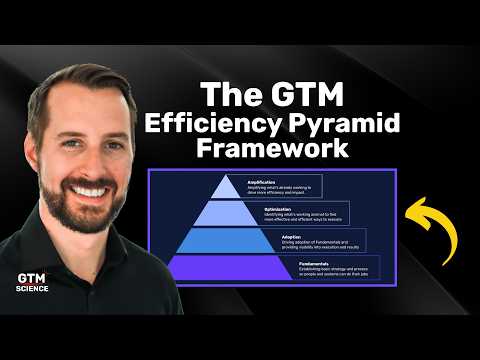
EDDIE REYNOLDSSo I think for the longest time, like if you look at like our go-to-market efficiency pyramid, we've sort of like been placing AI last. It's like, okay, you need to get all this foundation in place
EDDIE REYNOLDSbefore you start using AI. And let's talk outbound and let's use like AI messaging, right?
EDDIE REYNOLDSIn some ways, I think like, yeah, you need to really think through like, what is your ICP and your buyer personas and your capacity and how many accounts should we target? And how do we identify
EDDIE REYNOLDSthe right accounts? How do we segment those accounts? And then once we've segmented those accounts, then we could use AI to try to like figure out the right messaging. But if we just skip all that
EDDIE REYNOLDSand we're like, all right, let's just dump in a bunch of accounts and let's ask AI to like work its magic. Just like any prompt that you ever give any AI, like an imprecise prompt will get an imprecise response. We're not going to get great messaging, right? So that's an example of AI
EDDIE REYNOLDSmessaging, but you could use AI to help better define your ICP, your buyer personas. You could use AI to improve your lead scoring or your account scoring. You could use AI to help figure out your capacity planning. Every single step along this journey can leverage AI to do things better. So I'm kind of like
EDDIE REYNOLDSgoing back on this idea of like, we'll get the foundation in place before you use AI. The exception to that rule is if you can use AI to build a better foundation, then use AI to build that foundation.
EDDIE REYNOLDSBut you can't just skip ahead and be like, oh, we want to send out a bunch of messaging. So let's layer AI on
EDDIE REYNOLDSthis. We've got to figure out all these things first. Awesome. I know we're a little bit over
RACHAEL BUECKERTtime here, but one last question, just like final thoughts about the whole thing. Eddie, how do you
SPEAKER_24think this approach will help change the way revenue leaders think about funnel management?
SPEAKER_56Well, I think first and foremost, like this becomes like a headcount resourcing and a finance question. And if we break this down, we stop thinking about like an inbound team versus outbound team.
EDDIE REYNOLDSWe start to fix a lot of problems. I mean, just for one, like I've never understood this concept of having an inbound SDR be the most junior person in the organization, the person fresh out of college with no sales experience, no understanding of who we are as a company, what our product does, what problems we solve. And then we feed them these hand raisers that are the most valuable leads we could
EDDIE REYNOLDSpossibly get. And then we send them to the person least qualified to convert them. That makes absolutely no sense to me. If anything, if we're going to send them to SDRs, those should be the most experienced
EDDIE REYNOLDSSDRs, right? If we just look at everybody as one team, and then we say, okay, we've got a bunch of SDRs that are responsible for making calls, which accounts do we want them to call on? You know,
EDDIE REYNOLDSmaybe our most senior SDRs or our AEs are taking all of these hand raisers, and then we're left with everybody else when they have time to, you know, go and call these cold prospects or cold leads. Now we're able to much more objectively look at our headcount planning, our resource planning, our spend, and just simply ask the question, like, how much money are we spending to chase these leads and prospects? And how much revenue is that converting into? And sure, we could have some hierarchy and we could say, oh, these are our tier one accounts. And those go to AEs. And these are our tier two accounts. And those go to like our experienced, like, let's call them BDRs if we want. And then we got our tier threes that go to our junior SDRs. Like, I'm totally fine with that. I think for me, it creates like a much more fluid scenario. It's just crazy to me that you have this idea of like this inbound SDR that all they do is like call on people, like downloaded white papers. And then like, they get promoted to like, go and call cold prospects. Like what? Like, how's that a promotion? I guess it's a promotion if your leads are just so shitty that cold prospects are better. But like, it's just such a weird idea to me. Yeah. Well, thank you so much,
RACHAEL BUECKERTEddie. This has been awesome. And you can find the all bound framework at our website at unionsquareconsulting.com slash frameworks. And that will be in the show notes.
EDDIE REYNOLDSAwesome. If people want to go deeper on the outbound framework, obviously, like how we actually reach out to these folks is going to be in more detail in the outbound framework. How we think about like
EDDIE REYNOLDSleads coming in is also outlined in our inbound framework. And then of course, we have like our
EDDIE REYNOLDSoverall go to market efficiency pyramid that kind of covers like the high level across everything. If we're thinking about like maybe going all bound into our existing customers, and we also have some content on how to run a pipeline council. So if folks are trying to think about how to do this, we've got a lot of resources for you. Or if you want to just go to our website
EDDIE REYNOLDSand book a call, I would be happy to personally talk through how you guys can do this. Maybe we can
EDDIE REYNOLDShelp you or maybe we give you some free advice and you take it and run with it. That's totally fine with us as well. But I hope you enjoyed this podcast. Thanks for putting this together, Rachel. Yeah, thank you, Eddie. Thanks for listening to the show. If this resonated and or you'd like help
EDDIE REYNOLDSwith anything we talked about in the show, please reach out to us. You can find us at unionsquareconsulting.com and the info will be in our show notes.