ANTHONY0:00the quarters were kind of unpredictable.
ANTHONY0:01nobody was.
ANTHONY0:02Really understanding,
ANTHONY0:03why something was in the pipeline, why it might,
ANTHONY0:06clothes versus your clothes won versus clothes lost.
ANTHONY0:09they're selling on demo.
ANTHONY0:10I mean by that is that they get on the demo and they point and they click and all that stuff, but they're not really
ANTHONY0:15making a connection as to why.
ANTHONY0:17so we took a really hard look at,
ANTHONY0:19What is our.
ANTHONY0:20ICP
ANTHONY0:20what is our sales pitch and why,
ANTHONY0:23Focusing in.
ANTHONY0:24On
ANTHONY0:25qualification.
ANTHONY0:26that made us
ANTHONY0:27lot more attractive.
ANTHONY0:28we increase win rates from about 25% to over 50%.
RACHAEL0:33And that was all just from
RACHAEL0:35focusing on your ICP, on
RACHAEL0:37your,
RACHAEL0:37sales process. Yeah.
ANTHONY0:39Was a dramatic increase.
ANTHONY0:41that will get you a lot of growth.
ANTHONY0:42but if you can't change the inbound pipeline, if you don't have the growth marketing, if
ANTHONY0:47going to be.
ANTHONY0:48Difficult to grow beyond,
ANTHONY0:49say, 20, 30%.
EDDIE0:59to Go to Market Science, the podcast for crows and revenue leaders scaling mature B2B companies. There's an art and there's a science to go to market, and we're obsessed with the science. In this podcast, we share tangible, actionable playbooks from the trenches, from what we're learning, working as go to market strategy and rev ops consultants for our clients here at Union Square Consulting and candid conversations with revenue leaders in the market that have been there.
EDDIE1:18If this podcast delivers value. We'd love a five star rating and a follow. Now let's get into it.
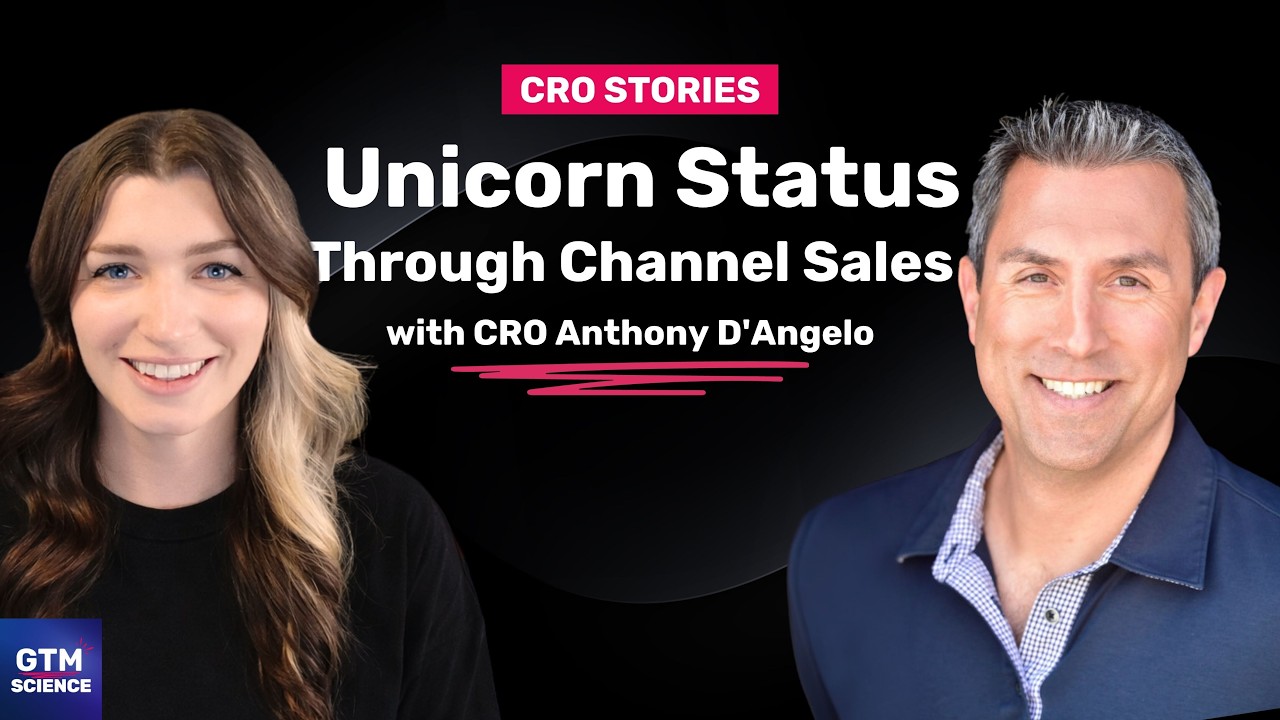
RACHAEL1:27Welcome back to another Crow Stories segment. I'm your host, Rachel Bickert, and with me today is Anthony D'Angelo, the former Chro at unifier. And Anthony has a really rare expertise. I think he is a channel sales partnerships specialist with over 20 years of experience building and scaling channel sales organizations. And that includes stuff like about $610 million exit to Cisco, helping scale keto networks to unicorn status, and more recently, founding his own firm, channel 360.
RACHAEL1:56Thank you so much for joining me, Anthony.
ANTHONY1:59Great to be here. Great to be here.
RACHAEL2:01And I hope I pronounced your last name right. Dent. DeAngelo.
ANTHONY2:04You did. It was absolutely perfect. You know, that apostrophe really.
ANTHONY2:07Is the bane of my existence. You try to check in with an apostrophe. It's difficult.
RACHAEL2:11Oh I bet. So, Anthony, why channel sales? What got you into it? And what's made you stay focused on it for so long?
ANTHONY2:19interesting. Look, really, I think, you know, a lot of times, you know, that's kind of how.
ANTHONY2:23You know, some of our careers, you know, start out, you know.
ANTHONY2:26Interestingly, my very first job out of college.
ANTHONY2:29Was helping somebody start a surf company. You know, they.
ANTHONY2:34Wanted to sell, just not within the city that they were in, but they wanted to sell all.
ANTHONY2:38Over the world.
ANTHONY2:38And not knowing anything about channel sales, that's essentially what it was. It was establishing distributors and shops up and down the east.
ANTHONY2:45And west Coast.
ANTHONY2:47And it was only when I was.
ANTHONY2:48Interviewing later on that I made the connection that, that that was it. But.
ANTHONY2:52You know, I started off.
ANTHONY2:53As a sales rep at a small consulting firm, and this was when the channel was really kind of, you know, coming alive and becoming a a core go to market. And I.
ANTHONY3:03Started off selling that and working with.
ANTHONY3:05Different vendors, as a, as their outlet to getting closer to customers. From there, I took a role as a channel manager at a, at a, at a vendor, and then.
ANTHONY3:16Just took on.
ANTHONY3:17Increasingly, you know, larger roles with within that, you know, all technology. This was when Checkpoint Software first started out, and, it was sort of new, but sort of by luck. But I really, really enjoyed what I was doing. And I saw that I could have fun with it and exercise a lot of different muscles.
ANTHONY3:40And that's.
ANTHONY3:40Still.
ANTHONY3:41One of the things I really, really enjoy about it. It's a little bit of sales, it's a little bit of marketing, it's a little bit of operations, and then you throw in relationships to boot. It's a great spot to be.
ANTHONY3:51And I wish I could say I designed, you.
ANTHONY3:53Know, my, my resume around that, but it just kind of happened by accident. But it was a it was a great activity.
RACHAEL3:59That's awesome. Yeah. I have a very similar story. Just happy accidents and domino effects all around.
ANTHONY4:04That's right. Yes.
RACHAEL4:05Yeah. And channel sales is super interesting to me because like I said earlier, I've only really heard about it in the last few hours before this podcast. And I was like looking up what it was. And I should have known what it was because here at USC, we kind of do a similar thing. We do have like partner partners and partnerships with, VCs and PE firms.
RACHAEL4:25So I think it's like super interesting and, I think a lot of maybe potentially missed potential, missed potential happening with us is you don't really think about it too often.
ANTHONY4:36It's a great point. And it's one of those things that you know of it. You see it all around you. You know, maybe you don't call.
ANTHONY4:43It channel sales, but.
ANTHONY4:44It's the same reason Sony sells their TVs.
ANTHONY4:47Or they used to sell through BestBuy and outlets like that. Now it's going to be Amazon. It's.
ANTHONY4:53Really around getting closer to the customer.
ANTHONY4:55And buying and selling to them kind of where they exist. And then keeping them.
ANTHONY5:01Keeping them happy. And that's tough to do.
ANTHONY5:03As a large company with, you know, a few folks that may not be right around the block.
ANTHONY5:08So you kind of get.
ANTHONY5:10Why it's important.
ANTHONY5:12And I think, you know, when I first started, it was.
ANTHONY5:15Very much around relationships and just taking people to lunch and, and, you know, my, my managers at the time when I was, you know, in my, in my 20s.
ANTHONY5:25That was kind of how they ran the business.
ANTHONY5:27They just built relationships. And people buy from people that they know.
ANTHONY5:32But that only gets you so far.
ANTHONY5:34And I think, you know, once you start seeing the value of it in terms of how you grow your business, it starts to become an inevitability. And you're seeing it more and more with Amazon Web Services and Google Cloud, and everyone's trying to kind of, you know, increase their range, get closer to the customer and sell more.
RACHAEL5:54So what was the shift like for you going from a specialized channel sales role or several specialized channel sales roles in the past to a CRO role where you're overseeing all of revenue.
ANTHONY6:06So you know I talk about it like this. You know when I first started out I mentioned kind of the relationship aspect of it, which is still important, you know, no matter.
ANTHONY6:14What we're doing. Obviously relationships are important, but it was too much around that.
ANTHONY6:18So my first kind of channel.
ANTHONY6:20Manager roles.
ANTHONY6:21I was making money and people said, you're on plan or you're over plan. You're doing great. But I couldn't really tie what I was doing to those results.
ANTHONY6:31And that really frustrated me. And so.
ANTHONY6:34You know, my approach.
ANTHONY6:36Was very much around.
ANTHONY6:39Running the business like a CRO would. I didn't know it at the time.
ANTHONY6:43But.
ANTHONY6:44I wanted.
ANTHONY6:44Hard metrics, I wanted attribution.
ANTHONY6:47I wanted to be able to say, this is my strategy and why.
ANTHONY6:51Here are the things that we're going to do about it, and then reflect on those results, both leading and lagging and say, are we doing a good job or not? And so, I ran my teams and, and, and, you know, like a direct sales team, like a revenue team, combining marketing with sales and operations and.
ANTHONY7:09And really holding to what are we.
ANTHONY7:12Contributing to the, to the organization and why is it successful and then iterating from there?
ANTHONY7:18So it was really born out of a frustration.
ANTHONY7:21I just wanted to know if I was really doing a good job.
ANTHONY7:24But it's one of the reasons.
ANTHONY7:25Why I really liked it. In.
ANTHONY7:28Some ways it's it's it's sort of ignored or it was ignored by the business. And so you got to do a.
ANTHONY7:34Lot of things on your own.
ANTHONY7:36But I think it's.
ANTHONY7:37Why, as I grew in my.
ANTHONY7:39Career, I was able to find.
ANTHONY7:42Connections and alignment, in relationships with folks that really were revenue focused. A CRO at the time liked my perspective because I was looking at it as, you know, kind of a mini CRO, if you will. And.
ANTHONY7:57So I think.
ANTHONY7:58From that, you know, kind of born.
ANTHONY7:59Out of that, I really wanted that.
ANTHONY8:01And I wanted to know.
ANTHONY8:02If I was doing a good job and started attacking it that way. I wish I could say I.
ANTHONY8:07You know, I sketched it all out, but that's kind of how it happened. And then I think since I was running large teams at some point, sometimes small, sometimes large. Taking that and then, you know, tackling, you know, direct sales teams where the channel was a.
ANTHONY8:24Part of it just was kind.
ANTHONY8:25Of a natural, you know, extension of that.
RACHAEL8:28And so did you, see, like, how did you get into, you know, unifier as a CRO? Did they reach out to you or did you see the zero role pop up and you're like, hey, that's actually more in line with what I want to do.
ANTHONY8:39So yeah, so it was it was great because, you know, with unifier in particular, I was their customer.
ANTHONY8:45So, you know, in my roles, you know, prior.
ANTHONY8:49To that, at least a lot of them, I had evaluated pretty.
ANTHONY8:52Much everything that was on the market. I'd implemented many of them, including, unifier. It was called Zwift at the time. But I'd used it, and I could.
ANTHONY9:02Talk to other.
ANTHONY9:03You know, channel chiefs or, you know, channel sales leaders around, not just what it was. And it was basically.
ANTHONY9:10A tool to help you.
ANTHONY9:12Manage and execute across, you know, your channel, across your partners. You know, I could talk to them as a customer or somebody that's that, that used it. So.
ANTHONY9:23It actually started I was.
ANTHONY9:25Referring business to them. I was, you know, already doing some consulting. I was, you know, I wanted a change.
ANTHONY9:31I was a little burned out and didn't want the same exact role.
ANTHONY9:34And I had some flexibility after a few exits and I thought.
ANTHONY9:38Well, let's just try something different.
ANTHONY9:40And in doing so, I was referring a lot of business to them.
ANTHONY9:44And the CRO.
ANTHONY9:45At the time and the CEO said, why don't you come work here?
ANTHONY9:49And so it kind of started off almost like.
ANTHONY9:52A fractional role. And then we found that we had a good alignment, and that and then I understood the business and I really enjoyed it. And so it was a, it was a great run because of a lot of those elements. It just was a perfect fit.
RACHAEL10:07They must have obviously probably already had, channel sales going in the organization before you came on as a CRO.
ANTHONY10:15They did. More importantly, they were selling to people who were.
ANTHONY10:18Running channel sales organization so.
ANTHONY10:20That the product itself, it was a.
ANTHONY10:22SAS, product really around your go to market management of your of your partners, helping them get educated and tracking attribution of deals, integrating with Salesforce, for example, with, with within your CRM.
ANTHONY10:36So there were selling two.
ANTHONY10:39Channel sales leaders. And so it.
ANTHONY10:41Was a really.
ANTHONY10:42Natural, you know, fit. It gave me the opportunity to kind of test my mettle a little bit. You know, you think, you know, I can do this, but you don't really know sometimes before you take those leaps. But it seemed like a really good fit, because I understand the customer.
ANTHONY10:59So the channel sales expertise.
ANTHONY11:02Understanding the customer and speaking to them really, really helped. But also to your point, they also, wanted to kind of build out an element of their go to market. You know, through, you know, through a channel. So that also gave me, you know, good a good foundation for helping them do that.
RACHAEL11:21Yeah. I bet it's easier to, like, work with a company that's already bought into, you know, the thing that you're specialized, and then there isn't a lot of, pushback there.
ANTHONY11:30That's right. Yeah. Well, and what was interesting about it, and I think this is a maybe a good spot.
ANTHONY11:36You know, for, you know, for one of those roles, particularly if you're kind of making a transition, it.
ANTHONY11:41Wasn't really a vertically focused, you know, kind of solution.
ANTHONY11:46It was more horizontal. It was kind of a shared problem.
ANTHONY11:48So whether you were a.
ANTHONY11:49Technology or maybe just manufacturing.
ANTHONY11:54If you sold through.
ANTHONY11:56You know, a, a channel of individual partners, whatever those might look like, this was a product that worked for you. And so.
ANTHONY12:04It kind of it was a it was a really.
ANTHONY12:06Great fit. A I would say a low bar wasn't easy, but, you know, a lower bar, in that and it really gave me the opportunity to, you know, breathe some life into what they've been doing. They've been around for a long time, and start running, the revenue teams that go to market teams, in a in a slightly different way.
RACHAEL12:27So what was one of your biggest challenges or accomplishments as CRO? You know, you know, unifier, specifically around process, operations, strategy and all that.
ANTHONY12:37It was almost exclusively like that. I mean, when I first started, and I think this is really.
ANTHONY12:41Common.
ANTHONY12:42Whether companies are, early stage or even companies that have been around for a long time, but they've kind of been hovering.
ANTHONY12:50You know, let's say around 10 or 15 million. And there's a lot of companies that are like that. I see them every single day. So it doesn't have to be a pure startup, but they share similar things.
ANTHONY13:01And one of those things that they.
ANTHONY13:03Tend to share is.
ANTHONY13:06They've been doing things kind of.
ANTHONY13:07The same way for a long time. And managers weren't really developed. They just kind of got promoted and, and, and things work.
ANTHONY13:16But they just kind of.
ANTHONY13:17Never really grow. And so.
ANTHONY13:19I look at.
ANTHONY13:19Those barriers really to success. Not so much challenges.
ANTHONY13:24It's usually not when someone is doing.
ANTHONY13:25Something wrong, although sometimes that happens. It's just, they just haven't, adjusted, around them.
ANTHONY13:32So that was the case.
ANTHONY13:33With, with unifier. The team had been around for a long time. They'd been selling the same way. And so very quickly, you know, we took a really hard look at how many sales reps do we have versus how many do we need? And looking in that utilization.
ANTHONY13:50It's, it's interesting, some of those.
ANTHONY13:52Fundamentals and basics that we might take for granted and.
ANTHONY13:56Maybe we talk about.
ANTHONY13:57All the time. But you know, when you're running a business, you don't always get the chance to kind of stop, and quantify that, while you're trying to survive. Really. Right.
ANTHONY14:08So, you know, really taking a look.
ANTHONY14:09At some of those fundamentals,
ANTHONY14:13Are very common with companies.
ANTHONY14:15In this range as they're selling on demo. What I mean by that is that they get on the demo and they point and they click and all that stuff, but they're not really making a connection as to why. And so we took a really hard look at, everything from.
ANTHONY14:31What is our.
ANTHONY14:31ICP really. The basics carve out everybody that we're just not being successful with. Really took a hard look at what is our sales pitch and why, really didn't make that a lot more customer focus.
ANTHONY14:45Focusing in.
ANTHONY14:46On qualification.
ANTHONY14:50Again, these are basics and they seem so simple. But what's really important.
ANTHONY14:54To me, and it may be because, you know, I just kind of came up, you know, on luck, I think a little bit, is that never get tired of the basics, right? There's no matter what you're doing, there's so fundamental knowing who you're selling to, qualifying them before you demo, or at least, you know, first week could be on the same call.
ANTHONY15:17But but really customizing that demo.
ANTHONY15:19Versus just more.
ANTHONY15:21Scattershot. And yeah, there was a lot of that. So it was.
ANTHONY15:24Really.
ANTHONY15:24Bringing execution, elements into it. Really, really basic. Nothing magical, nothing super smart. It was just, you know, making sure we, we cut out, the stuff that we just you know, weren't going to be successful at. We really refined the execution, making sure that we qualified really, really well and that our sales pitch was around.
ANTHONY15:49The why was around the impact, of what we bring versus just assuming the customer knew they were buying something, that made us a lot more attractive.
ANTHONY16:02One of my.
ANTHONY16:03Team fundamentals really is around, you know, we talk about differentiation. There's product differentiation.
ANTHONY16:11But but the sales team itself.
ANTHONY16:14Needs to create its own differentiation. And that's really where we focused as, as a team, making sure that we set ourselves apart, that we truly were kind of consultative sales and that we were helping them understand why.
ANTHONY16:29And.
ANTHONY16:30Being honest, hey, maybe we're not the right fit. So, you know, I was really, really proud of the work that we did. We reduced the overall, customer acquisition cost, dramatically. We sold more with less people. You know, unfortunately, they were when I got there, they were kind of overweighted, but we sold more with with fewer people just by discipline, you know, execution of those fundamentals.
ANTHONY16:55And so we increased our, our sales, you know, dramatically two and three depending on the quarter, reduced the customer acquisition costs by, by, you know, really evaluating the team and figuring out what we needed, aligning it to the pipeline and stuff like that. So, you know, that was, you know, a lot of fun, a lot of fun.
ANTHONY17:16And the team there is is just fantastic. They're all really focused on the customer. And so, you know, we aligned all of that weight squarely towards the customer. And there really wasn't a this team that team, the other team. It was one kind of go to market organization, which was really cool. But really for the people.
RACHAEL17:37Yeah, that's those are some really great results also. And that was all just from you like focusing on your ICP, on your, you know, like your sales response times, sales process. Yeah.
ANTHONY17:50Yeah. To it to a large degree. So I mean the, the, the quarters were kind of unpredictable.
ANTHONY17:53This happens very, very often. Right. People all the time and I'm sure they bring this up, you.
ANTHONY18:00Know, because nobody was.
ANTHONY18:02Really understanding, you know, why something was in the pipeline, why it might, you know, you know, clothes versus your clothes won versus clothes lost. And so, you know.
ANTHONY18:15Refining.
ANTHONY18:16All of it from, from start to finish. So, yes, it was the ICP, really, redefining the qualification process. What are we trying to understand? What are we trying to articulate? Establishing with the sales team that our primary goal, particularly early in the process.
ANTHONY18:34Is to shape.
ANTHONY18:35The lens that our customers are looking through. We happen to have a customer set that didn't buy software all that time, all that much.
ANTHONY18:43They needed help.
ANTHONY18:45So, you know, we wanted to be able to kind of help them. But refining the stages and what they meant.
ANTHONY18:50What is entry criteria to a stage exit criteria, simplification.
ANTHONY18:55Of all of those things and then adherence to them? All of those things really start to make it more predictable. So if you say, hey, we're going to do $1 million this quarter, you're going to be pretty close to that. And, and making sure that you can.
ANTHONY19:10You know, also update the business.
ANTHONY19:13This was a time where private equity was kind of investing in this space across pretty much everybody. And that brought, you know, kind of newer requests to understand the business as well. So,
ANTHONY19:25There's so much.
ANTHONY19:26Growth in discipline. And execution and really simple basics. I repeat it all the time. But yeah, there's 20 to 30% growth no matter where you go, if you just do those things.
RACHAEL19:38Yeah. And we I feel like we're almost a broken record repeating that stuff all the time too, because it's a, it's a big, foundation of our content is like, here are the basics. You got to make sure you do all the stuff you have to make sure that you know your ICP, like, really know your ICP, not just.
RACHAEL19:52Oh, well, we sold to these people the last year. So I think that's our ICP. It's like, well, you're missing the people that you lost because you didn't have the right messaging, but maybe those guys were actually your best customers. And just really trying to to drill that into people because, I mean, that's our business is what we, we help people do, right?
RACHAEL20:12So how what were like, the biggest challenges that you faced trying to figure all of this stuff out? Like, was it did it just take did it take a lot of time or were how why was it difficult?
ANTHONY20:25You know, barriers that, you know, that existed.
ANTHONY20:30Within the organization that exist, you know, across most companies that, you know, at that stage, economic barriers, probably the biggest one. And that's you probably hear that all the time. Yeah.
ANTHONY20:40You know, the, the, the front end stuff.
ANTHONY20:42Was pretty easy. I had a plan. I've got, you know, a playbook, you know, built around these basics. I kind of knew and I had the luxury of being that customer so I could come in as an expert.
ANTHONY20:55And you often don't.
ANTHONY20:56Get that luxury. So.
ANTHONY20:57That part was easy. I think getting alignment around, you know, the, the ICP and some of those basics don't just.
ANTHONY21:05Apply to revenue teams. You know, it's it's it's everything across the go to market from product to go to market to customer.
RACHAEL21:11Absolutely.
ANTHONY21:12So driving that alignment that takes a little.
ANTHONY21:15Bit of work.
ANTHONY21:16We'd we'd all love to just say something to everyone going, oh great. Yeah, that makes sense. You do have to bring people along.
ANTHONY21:21For the ride. But it was a really strong team and we got that alignment pretty quickly.
ANTHONY21:27I think one of the biggest.
ANTHONY21:28Challenges, there and I think this is a common challenge is, you know, on the marketing front, you know, we increase win rates from about 25% to over 50%. Wow.
ANTHONY21:42It was it was it was it.
ANTHONY21:44Was a dramatic increase. And that will get you a lot of growth.
ANTHONY21:48But if you can't change the sales.
ANTHONY21:50Pipeline.
ANTHONY21:50The.
ANTHONY21:51Inbound amounts.
ANTHONY21:52So you prove out first, you can win.
ANTHONY21:55What's in front of you. That was where we started. And then you say, okay.
ANTHONY22:00You know, if we get 100 at bats, we're going to win at least.
ANTHONY22:0350 of them consistently. And some of those rates were even higher than 50%. I was really, but if you can't change the inbound pipeline, if you don't have the growth marketing, if you if you don't have alignment there and you're not making those investments.
ANTHONY22:20It's going to be.
ANTHONY22:21Difficult to grow beyond, say, 20, 30%. And that was probably the biggest challenge. And I think that's a consistent challenge across lots of companies that aren't Cisco or aren't Hewlett-Packard, but maybe even there too.
RACHAEL22:34Yeah. That's awesome. That's a pretty huge increase in win rates. Wow.
ANTHONY22:39I was really, really proud of the team. I mean, you know, it's it's surprising and I do I believe it's it's repeatable. I think.
ANTHONY22:47You know.
ANTHONY22:47It's not because these are.
ANTHONY22:50You know, it's not me. You know, it's not because they're magic ideas. It really is because these fundamentals work. And if you get.
ANTHONY22:57Bored.
ANTHONY22:57Of those fundamentals, you won't enjoy the job. And you'll you'll be off, you know, in other, you know, in other directions.
ANTHONY23:03And I think now that, you know, even with AI boy, if you don't have your.
ANTHONY23:07Fundamentals down, AI is just going to scale your noise instead of really kind of scaling your results.
RACHAEL23:13Absolutely. So after you guys saw all this, amazing success with nailing the fundamentals, where did you go from there and how did you,
RACHAEL23:22amplify that even more?
ANTHONY23:24Yeah. So, you know, the, you know, the challenge then became.
ANTHONY23:29You know, how how do we scale this. And so certainly making investments from a partner perspective, a sales channel, was one of the ways that we we did that.
ANTHONY23:39All channels are kind of different. They're different at stage of company.
ANTHONY23:43And they're.
ANTHONY23:44Different a.
ANTHONY23:45Type of company.
ANTHONY23:46It's not always that your.
ANTHONY23:49Channel is bringing in sales pipeline. Let's just say, which is what most people want. In many cases it's just amplifying your message and it's it's cross marketing and, and those things become a much bigger, you know, they have a much bigger impact now as people are doing more research before even talking to you as a, as a sales rapper, a sales team, or engaging with your, you know, your website directly.
ANTHONY24:18That cross promotion and really amplifying that is really what the channel there did. And we brought on some folks that were, you know, experts in that and started building out some of those relationships. So that was one thing that we, you know, that we definitely did.
ANTHONY24:34And then you start looking at, you know, customer advocacy.
ANTHONY24:38And it's all kind of the same, you know, it's the same stretch of, of go to market. You get the first things done first and eventually, you know, how are you utilizing your customers to advocate for yourself to keep that, you know, that cycle going? And it really is around the systems and the and the machinery and making sure that you have a, an engine that's always working for you.
RACHAEL25:03Yeah. Now, how do you can you go into a little bit more detail about that. How do you how do you strategize that and build those programs.
ANTHONY25:11So let's start with the, you know, with the partnerships first really kind of understanding.
ANTHONY25:16You know, which elements, are really impacting your customers. And what we learned really,
ANTHONY25:25Or at least validated, was that our customers that we were trying to sell to.
ANTHONY25:30Weren't just buying, you know, this product, the solution, this the software as a service.
ANTHONY25:36They were also leveraging.
ANTHONY25:37Consultants and marketing agencies and things like that. And so, you know, focusing on that was a, you know, was a big part of it. And and again.
ANTHONY25:48I think the mistake we could have.
ANTHONY25:49Made is.
ANTHONY25:52Expecting those consultants to just hand us deal, you know.
ANTHONY25:56Oh, we sold this for you hear it is which you know when that works it's great. But what they really were doing was informing and helping develop the overall channel sales strategies of our customers. And one element of that is, what's the software solution that you're using to, to execute. And so we had these connections. We found the right partners.
ANTHONY26:20And focused on, you know, building those relationships, around the right context. Had we gone to them and, and said, you know.
ANTHONY26:30You got to give us.
ANTHONY26:3150 deals a year or something like that. It's not their business, right?
ANTHONY26:36They don't. Even if I gave.
ANTHONY26:37Them a referral fee, they don't care. They have a core business. But there was a synergy. They were able to kind of amplify.
ANTHONY26:44Give us insights.
ANTHONY26:45Into certain customers. They definitely refer business as well. But it's not as direct as, you know, we sold it for you. You know, they'll just say, hey, look, this person's looking at this. We talked to them, you know, about you, and then you can kind of strategize together.
ANTHONY27:01But there are, you know, a few.
ANTHONY27:04Where they're actually referring business is kind of part of their go to market as well. But it's not the, it's not the majority of it.
RACHAEL27:13So I'm also curious about how you build these programs kind of in general, going back to talking about the fundamentals and like, figure out who your ISP is and figuring out the sales process. How is that different from, you know, figuring out your direct sales, ICP or your direct sales process?
ANTHONY27:33It's not as different as you think. And I think one of the barriers or challenges or the things that.
ANTHONY27:37Limit, you know, a lot of, a lot of companies from, from being successful is, is treating them different. And I think, you know, for me.
ANTHONY27:46I don't think I always knew this, but I think I kind of attacked it that way. You know, we talked about I tried.
ANTHONY27:52To run the team like a, like a, you know, revenue direct revenue team.
ANTHONY27:56Because at the end of the day.
ANTHONY27:58The.
ANTHONY27:59Goal.
ANTHONY28:00Of your channel is to get closer to your customers is to, you know, meet them where they're at and they have to be able to sell on your behalf. Ideally.
ANTHONY28:10At the very least, they.
ANTHONY28:11Need to be able to identify an opportunity and and present that to you in some way.
ANTHONY28:15Sometimes they resell and they package it around, you know, their own services.
ANTHONY28:21And sometimes.
ANTHONY28:22They refer it, and in some.
ANTHONY28:24Kind of times. Now then you've.
ANTHONY28:26Got Amazon Web Services and Google Cloud and you know, you're buying through this, this, this marketplace.
ANTHONY28:33But but recognizing that it's not all that different, I think is the key.
ANTHONY28:37Certainly from, from my perspective, and the reality is, is that when.
ANTHONY28:42The company treats their sales channel as their team versus some other thing, you start making commitments.
ANTHONY28:53To that team, right? You know, you can't have a successful sales team without educating them, without training them, without enabling them, and without rewarding them in the right way.
ANTHONY29:03If you treat them like just some other thing.
ANTHONY29:08And you know, you.
ANTHONY29:09Only like them when they.
ANTHONY29:10Sell and and you're not really helping them.
ANTHONY29:12Do so, you're going to fail.
ANTHONY29:14So making sure that you have that commitment from, from the top and you saw it as an extension of your team. Truly.
ANTHONY29:23There's nuance there.
ANTHONY29:24I mean, they're not, but, but you have to treat in that way, they will sell.
ANTHONY29:30Not just because they like you, they'll sell what they know, and they'll sell what's going to keep their customer happy. And at the end of the day, if you can't make.
ANTHONY29:37That connection and enable them in the right way, in a smart way, and then reward them in a way, that makes sense for their business. If you're not doing that, you're not going to be successful. No matter no matter what you do. There's.
ANTHONY29:52Nuances by stage as well.
ANTHONY29:54But, but at a very, very high level, it is a revenue team. And if you don't treat it that way, it's really, really difficult to be successful.
RACHAEL30:04And how do you own those metrics? And, you know, that opportunity to give feedback in coach to these sales teams when they're not technically your sales team? Is there are there times or feels like you're kind of overstepping on that other company?
ANTHONY30:17Yeah. You hit the nail on the head within the organization itself, and quite frankly, since I.
ANTHONY30:23Kind of came up as a channel manager, I experienced this. You know.
ANTHONY30:28The channel team, you know, particularly early on, was kind of the.
ANTHONY30:31Stepchild of, of of the organization. And they were.
ANTHONY30:35Kind of looked down upon.
ANTHONY30:36And I didn't like that. You know, I wanted to kind of elevate not just me, but the team and what we were doing. And so there is that conflict, and the.
ANTHONY30:46Conflict.
ANTHONY30:47Early.
ANTHONY30:48On.
ANTHONY30:48Came because.
ANTHONY30:50The revenue teams, the direct sales.
ANTHONY30:53Teams had the most credibility. And this other.
ANTHONY30:56Thing was kind of just an other thing. And I think over.
ANTHONY30:59Time, and I think the, the data will show and I think there's.
ANTHONY31:03There's probably good.
ANTHONY31:05You know, metrics out there to basically say, you know, 70 to 80% of.
ANTHONY31:09Kind of.
ANTHONY31:10Technical, or technology commerce is, is going through a sales channel. It's something that you, you can't ignore.
ANTHONY31:17And there's still.
ANTHONY31:18Remnants of that. I don't really understand it. And I don't like it. And they're just taking people to lunch. And, you know, and stuff like that. But it's really incumbent on the channel sales leaders to start adopting, you know, more of a CRO mentality. In order to be successful. It's kind of like moving from relationship management to revenue management.
ANTHONY31:38And and that, you know, pure luck. But my career kind of, you know, went across that arc, just from, from pure timing, but, but I think, you know, revenue leaders really need to look at that and not treat it, you know, separately and give it the attention. There's definitely strategies, but it starts with that shared.
ANTHONY32:00Hey, you know, I don't even want to say alignment, but shared understanding of what this is.
ANTHONY32:04This is the difference.
ANTHONY32:05Between you growing into a new market. Expanding internationally, and hitting your sales numbers. You just can't do it with the sales team that you have.
RACHAEL32:15Absolutely. So what would be your advice to, a CRO or revenue leader listening to this right now? And maybe, maybe they haven't really thought channel sales before. Or maybe they have like their toes dipped in the channel sales pool, but they don't really know what to do next or how to really scale it and make it meaningful.
ANTHONY32:32Certainly seek advice. I mean, there's folks that have done this.
ANTHONY32:35Before, and, you know, we all are constantly learning and we want to, you know, learn from, you know, different companies and, and the like,
ANTHONY32:45But the first thing is you.
ANTHONY32:47Got to commit to it. You definitely have to bring in the right talent, for sure that that.
ANTHONY32:53That you.
ANTHONY32:53Align to that, is really treating it and, and, you know, make a distinction between somebody that is more a little bit, you know, relationship versus hardcore metrics leading and lagging and really driving it. But that commitment is the very, very first step. And then because talent and the team is really one of the core pillars, making sure that you hire folks that are trusted within the sales channel that you're trying to go after, that they understand that, and most importantly, that they're aligned, with the revenue function.
ANTHONY33:33Right. Bringing in people, closing deals.
ANTHONY33:36And when it's done right, it's pretty consistently a shorter sales cycle, a higher.
ANTHONY33:43Win rate.
ANTHONY33:44You know, all the metrics that you, you really.
ANTHONY33:46Look for tend to be higher when you're selling through the channel when you're executing, you know. Well, so.
ANTHONY33:54But the starting.
ANTHONY33:54Point is really, really committing to it and believing in it and not, you know, letting it be a second class kind of part of the, you know, part of the organization.
RACHAEL34:08On that on that topic, how, how much more does your channel, sales team or department sell than the direct sales typically?
ANTHONY34:19So it works. It works best, when the teams can sell.
ANTHONY34:25Right. So.
ANTHONY34:26You know, one of the challenges that leads to some of this conflict is, well, how do you.
ANTHONY34:31Compensate all these people? Right.
ANTHONY34:34If you are.
ANTHONY34:35You know, if you have a direct sales team that's, you know, getting paid more per deal by ignoring a partner, well, they're not going to bring one in, right? You might get lucky and somebody believes in it that much. But, you know, if you're talking about their money, it's going to be, you know, a little difficult. And so, you know, when I talk about commitment to it and really understanding it, making sure that that has driven down through your organization such that, you know, compensation wise, teams are incentivized to, to work with partners versus you know, disincentivize, and that you kind of remove.
ANTHONY35:11Some of that conflict. The easiest way to do that is to say we are all channel, that we are only exclusively.
ANTHONY35:17You know, going to, sell through the channel. Oftentimes companies will say, well, we'll channel first or channel forward.
ANTHONY35:25But what that means usually is we'll do it when it's convenient.
ANTHONY35:29But, we don't want to give away too much margin.
ANTHONY35:32But, you know, when you build that from.
ANTHONY35:34The get go.
ANTHONY35:35And it becomes just.
ANTHONY35:36Part of the organization, that's when things really start, you know, start working. So, you know, in.
ANTHONY35:44Some cases.
ANTHONY35:44The channel team's job is to educate direct sales teams on how to sell.
ANTHONY35:50But over time, there's not a this or that. It's just part.
ANTHONY35:55Of the technology go to market. It becomes so endemic that, you know, the conflict reduces and that's a big piece of it is reducing conflict. But making sure that you your comp plans are aligned to it, your quotas are aligned to it, your enablement is aligned to it, such.
ANTHONY36:14That you don't really have.
ANTHONY36:17So many different organizations.
ANTHONY36:21It's usually not perfectly like that. But the more it is like that, it's no longer a conversation.
ANTHONY36:26It's just kind of how things are. And that takes a very strong channel leader, I think, very go to market.
ANTHONY36:33Focused channel leader.
ANTHONY36:35To drive that and bring people along, justify. And then prove it out. You know, it's now a board level conversation. What is our channel bringing to us? Are they bringing pipeline? Are they closing more deals or.
ANTHONY36:49So you know. Now the CFO is saying, do I want to invest in.
ANTHONY36:52This or do I want to invest in more sales reps? And when it's working.
ANTHONY36:58I think it would be almost. I can't even.
ANTHONY37:01Imagine a scenario where if you wanted to double in size, that you would just double your sales force, right? Right. You would spend so much more doing that.
ANTHONY37:12But you're also running a business, so you.
ANTHONY37:14Have to have some control. And so having a little bit of both, is needed.
ANTHONY37:18It's just getting it to work.
ANTHONY37:20In a frictionless way. That's that's the trick.
EDDIE37:23Quick pause. If you're getting value from this episode, I want to ask you a small favor. Take 30s right now. Open up the app you're listening to this on. You can give us a five star rating. It sounds small, but it's the single biggest thing you can do to help us get conversations like this in front of more revenue leaders.
EDDIE37:37While you're there, hit follow so you never miss an episode. Okay, let's get back into it.
RACHAEL37:42how would you have let's say a company is they have both. They've got the channel sales and direct sales and maybe they're trying to transition to more channel focused. But how do they balance the two and, make sure the relationship between the two doesn't have conflict.
ANTHONY37:59So it's a great question too, because I think a lot.
ANTHONY38:03Of companies are really kind of facing this. And.
ANTHONY38:06In many cases, they're kind of dip their.
ANTHONY38:09Toes in the water. So they have these teams, and they have a quite integrated them.
ANTHONY38:14So it's, it's a, it's a few.
ANTHONY38:15Things, you know, again, I.
ANTHONY38:17Think from my perspective.
ANTHONY38:19Committing to be 100% channel is a great place to.
ANTHONY38:22Start, because now you're thinking about.
ANTHONY38:24The organization and everything in it, through that lens, you know, you still have strategic accounts, you still.
ANTHONY38:32Have
ANTHONY38:32your sales teams.
ANTHONY38:33Always going to be the best sales team.
ANTHONY38:36It is very rare, that a channel partner.
ANTHONY38:41Of any.
ANTHONY38:42Size, unless you're a Cisco and you've got somebody that selling billions of, you know, dollars in software, they're not ever really going to be as good, as your sales team.
ANTHONY38:54But making sure.
ANTHONY38:55That you are, you know,
ANTHONY38:58You know.
ANTHONY38:58Integrating that go to market,
ANTHONY39:01That there isn't a choice. You give somebody a choice, you can take this direct and avoid any other person in your deal.
ANTHONY39:09You know, for a salesperson.
ANTHONY39:11It's painful.
ANTHONY39:12To bring somebody else.
ANTHONY39:13Into your deal. Yeah. You want your own company, you don't want to do it. And so.
ANTHONY39:18You know, making that easy and getting that to be habit and just part of your engine is so important. So aligning.
ANTHONY39:25The.
ANTHONY39:26Comp plans, and, and and treating the go to market and your enablement, and everything that you do to arm your sales force. You need to be doing that across everything, and with the channel, you know, in mind. And the more that becomes just natural and just fun and really part of it, that's when things, you know, really start, you know, start working.
ANTHONY39:55It's
ANTHONY39:56reducing friction in any way that you can. And compensation is the number one way to do that. You remove that, and, you know, it may not be great in the first month, but a year later, you're going to forget that you even had kind of a bifurcated kind of go to market that way.
RACHAEL40:16I imagine this is one of the really big barriers to success here for, channel organization or channel sales teams. So you mentioned compensation. What would be like the number two and number three ways to make sure it's seamless maybe, or whether certain processes that need to be in place for sure.
ANTHONY40:32I think the number one thing is, is.
ANTHONY40:34Really around enablement. You know.
ANTHONY40:37I think, you know, from a CEO's perspective or even.
ANTHONY40:42In a cross perspective.
ANTHONY40:44If they haven't really been in a company that was.
ANTHONY40:47Successful, that way.
ANTHONY40:49They're doubting they know their team, these other people.
ANTHONY40:52They're not so sure about. Right.
ANTHONY40:54And so really, in the same.
ANTHONY40:56Way that you have to enable your own sales team, you have to enable, your channel partners, and,
ANTHONY41:04Very similar.
ANTHONY41:05To your own team. It's constant.
ANTHONY41:09Right? It's you're never done. So, you know, building.
ANTHONY41:13That and prioritizing that. And the.
ANTHONY41:16Reality is it's everything that you train your sales.
ANTHONY41:20Team to do.
ANTHONY41:22You point that.
ANTHONY41:23Towards your partners.
ANTHONY41:24With a little bit of kind of.
ANTHONY41:25Extra nuance and recognizing that this isn't the only thing they sell, right?
ANTHONY41:30They, you know, they don't want to bring.
ANTHONY41:32Some random thing into a customer that is 10% of their overall revenue. And they've been a customer for, you know, ten years and bring them something that doesn't work.
ANTHONY41:43And so there's other things that.
ANTHONY41:44You have to reinforce, but it's so similar, it's not that different from kind of building and enabling a team to understand how to position it, how to sell it, you know, how to deal with, you know, with pushback and, and and overcome that.
ANTHONY42:01Plus, how do you position this with.
ANTHONY42:04Your services and with other things that might be, you know, complimentary other technologies and things like that, but that enablement is really, really important. And you have to be committed to it. And it can't just be it can't be a side gig.
RACHAEL42:17And so I imagine you have so much experience like building these different partner programs. You know, what was a time where one just kind of fell on its face and it didn't really work out well, or there were huge huge challenges and obstacles. And what changes did you have to make?
ANTHONY42:33Yeah. So like it's so similar. Like these teams are so consistent. It's, you know, when you over.
ANTHONY42:39Prioritize the program. I mean.
ANTHONY42:41The program really is.
ANTHONY42:44I've learned.
ANTHONY42:45I didn't know this, you know, but the program really is just an extension.
ANTHONY42:48Of your overall strategy, right? It's a.
ANTHONY42:49Thing.
ANTHONY42:51And it can be you know, it can be an extension. It could be a, you know, rewards mechanism.
ANTHONY42:58But it's just a program, right? It's just something that you can document.
ANTHONY43:01If you sell this, you get this percent and incentives and things like that.
ANTHONY43:06I think where I saw.
ANTHONY43:08Very specific, you know, challenges is overcomplicating it, trying to accommodate for too many things where you read it and go, I don't even know what this means. And so, you.
ANTHONY43:20Know, I think that's the biggest.
ANTHONY43:22Thing when they're overcomplicated. And I saw that early in my, you know, in my career,
ANTHONY43:28Even when I was at, you know, one of the.
ANTHONY43:30The first kind of large roles I had was at RSA and RSA security,
ANTHONY43:36And, you know, they were big enough that you tend to have things that.
ANTHONY43:41Are overcomplicated, you overengineered. There's too many cooks in the kitchen and things like that. And it's not that they did anything bad.
ANTHONY43:48But as somebody that was taking that and talking.
ANTHONY43:51To, you know, partners, you saw very, very quickly, it's overcomplicated. It doesn't make any sense. And what it.
ANTHONY43:58Really says, and this is the.
ANTHONY44:00Real challenge and this is the real barrier, is.
ANTHONY44:03I wrote all of this.
ANTHONY44:05To meet my needs. The vendor's needs. And that was the biggest problem.
ANTHONY44:11And we kind of touched upon it.
ANTHONY44:13I may not have even said it. That clearly, but.
ANTHONY44:15It's so common that people.
ANTHONY44:17Just, you know, companies just say, well, I just just want the revenue. Just give me the pipeline. And then, you know, the customer needs a price concession. And you're like, well, you you have to eat it, you know, that kind of thing.
ANTHONY44:30It's a very selfish view, super consistent.
ANTHONY44:34And very common, particularly, you know, over the last decade or so.
ANTHONY44:39But it's, it's selfish and it doesn't work. So I saw that pretty quickly.
ANTHONY44:42It was over complicated. And the partner just went, well.
ANTHONY44:45You wrote this for you. You know what I mean? I see why you like it. Because you don't have to give anything.
ANTHONY44:51There's no risk on your side. We're taking all the risk. And so, you know, that was a huge challenge and.
ANTHONY44:58Really.
ANTHONY44:58Pushing that perspective. And bringing some partners together and getting the right people in a room to have them here.
ANTHONY45:07Just like any other customer.
ANTHONY45:08This is a customer of yours. And so, you know, you walk through that and you try to explain why. And managing up is very, very much around, you know, not just, you know, not just kind of alignment, not just agreement.
ANTHONY45:23But a real shared understanding.
ANTHONY45:25Let me explain why this doesn't work and why it comes across as selfish. But that happened more than more than once, and it's something I fought very early in my career. I think it's starting a little less. Less common.
RACHAEL45:39Yeah. And so how do you, you know, nipped in the bud when you start to see it come up?
ANTHONY45:44you have to get the.
ANTHONY45:45Decision makers, you know, in a, in a room. I mean, there's just no other way to be able to do it. You.
ANTHONY45:51Know, particularly if it's not.
ANTHONY45:52Their forte, if it's not their, their experience, if they don't have that background.
ANTHONY45:58You almost understand.
ANTHONY45:59Why people kind of, you know, will write a program that very clearly, you know, favors them.
ANTHONY46:05And de-risk their.
ANTHONY46:06Business, but not the channel that you're trying to attract, and build relationships with.
ANTHONY46:11So you really have to sit down.
ANTHONY46:14And, and explain the why, and, and get that shared understanding. And it definitely helps to get them in front of, in a controlled environment, in front of those, those partners, those, those customers.
ANTHONY46:29So, you know, I think I spent.
ANTHONY46:31A good portion of my early career almost as a mediator. You know, you get the language of the partner in the language of the vendor. And helping everybody communicate is a big, big, big part of it.
ANTHONY46:43Because, you know, you don't always have the exact.
ANTHONY46:45Same, you know, kind of shared experience. So that's the that's the only way to kind of to kind of do it. And then then you get input from those partners and you start to, you know, build out a program that that makes sense, with the understanding of of why it works and why it will work. And then you measure it and you iterate, just like you do anything.
ANTHONY47:06Yeah.
RACHAEL47:07Well, I wanted to change gears a little bit here and, ask you a bit about channel three 60s. So you recently founded this or I saw that you founded it in 2022. But now are you doing it full time more recently? So what inspired you to start channel 360?
ANTHONY47:22So please look, to be honest with you, you know, I was a little burned out, right? I just thought, more importantly, I.
ANTHONY47:27Wanted a change. I didn't want to go. I'd been a channel chief in a few different organizations. And.
ANTHONY47:33I wanted to to try.
ANTHONY47:34Something different.
ANTHONY47:35But not totally.
ANTHONY47:36Different. And I thought, okay.
ANTHONY47:38You know, I'd spoken with a lot of companies. Most of the time it was some sort of.
ANTHONY47:44A recruiting element. They were looking at hiring this.
ANTHONY47:48And in my conversations with them, I basically said, it's too early, like, you don't.
ANTHONY47:53Want to hire somebody.
ANTHONY47:54Yet you don't know what you need. And I saw so many times people would.
ANTHONY47:59Hire the wrong person. They'd pay way too much, and it would just turn over really, really fast.
ANTHONY48:04And I thought, okay, well, it's a hard position to take. I had the luxury of, of of.
ANTHONY48:11You know, being able.
ANTHONY48:11To say, right.
ANTHONY48:13Don't hire me. You know, don't put me in that in that role.
ANTHONY48:17Let's do something.
ANTHONY48:18That's, you know, economical. That de-risk your business, that doesn't tie you into something.
ANTHONY48:23But we'll get you.
ANTHONY48:25Moving immediately and.
ANTHONY48:28Help you understand.
ANTHONY48:29What you need long term.
ANTHONY48:30And it just.
ANTHONY48:31Seemed like a really, really good fit.
ANTHONY48:34And the second piece was, I like, I like a little bit of chaos. So, it wasn't by design, but I end up being in a lot of companies at a chaos stage.
ANTHONY48:46My resume, almost none of those companies exist. The, you know, I went through lots of acquisitions and mergers and, and things like that.
ANTHONY48:56And I liked that chaos.
ANTHONY48:58So, what I thought was a good opportunity.
ANTHONY49:02Was not to be a consultant. Because I very much like to be embedded.
ANTHONY49:07I want to be in the deals because that's how I learn, and that's how I can kind of help, you know, shape. I don't do it at an arm's length. And I thought, you know, pure consulting, you know, wasn't my strength. And so where I thought I'd be of most use is get me in there.
ANTHONY49:25I will treat this as if it's my number one priority. And I am the CRO.
ANTHONY49:30But you.
ANTHONY49:31As the business don't have to make, you know, make that full, you know, full commitment. And I gave me the opportunity to tackle challenges that I really was excited to tackle. And again, the barriers to growth and the barriers to scale, particularly zero to say, 25 million. And in particular, there's so similar, if you're comfortable in that space.
ANTHONY49:58And you like.
ANTHONY49:59Tackling those things, you know, it's a, it's a great place to be. And so, you know, I talked to a lot.
ANTHONY50:06Of companies that.
ANTHONY50:08Are founder led.
ANTHONY50:10Product led, they haven't been able.
ANTHONY50:13To make the investment and, and go to market. And, and I help them get started on that path, and then help them.
ANTHONY50:24You know, find other people.
ANTHONY50:25That will, you know, that will help them. And oftentimes, you know, kind of move on. And in the end, they get exactly what they need to educate their teams. And they make better business decisions on who now to invest in, so I just.
ANTHONY50:41I find it to.
ANTHONY50:42Be really, you know, kind of exciting. I.
ANTHONY50:45Sometimes I worry there's.
ANTHONY50:46Something wrong, but I really do enjoy the chaos. And the more chaos there is, the more I just want to. I want to wrap my arms around it and kind of get it into a controlled way, and see where it goes from there.
RACHAEL50:59I love that, I think, I think that's a prerequisite for most zeros in my mind.
ANTHONY51:04Yeah, yeah, I definitely I definitely think it is. You know, it's interesting. I'm not an extrovert.
ANTHONY51:09You know, oftentimes you kind of think of salespeople and,
ANTHONY51:13But but, you know.
ANTHONY51:14You adapt and you kind of you, you learn those, you know, you learn those kind of functions. But, but really, like, the crazier things are and, the more somebody says this is, you know, you're never going to fix this. That's where right now. Yeah. Right.
RACHAEL51:30Yeah. Like, hold my beer.
ANTHONY51:31Yeah. Exactly. Yeah.
RACHAEL51:33So what's like, what's a good example of something that's so chaotic that somebody who's like, you won't be able to fix it?
ANTHONY51:42Everybody's got their kind of version, you know, of this. And interestingly enough, while I didn't seek them out, almost everything I've.
ANTHONY51:49Done was in that mix. It was, you.
ANTHONY51:52Know, two.
ANTHONY51:52Companies coming together and, you know.
ANTHONY51:54Multiple teams and multiple products and.
ANTHONY51:56Things like.
ANTHONY51:56That. So even what's.
ANTHONY51:58On the resume, you know, has, you know, a lot of that.
ANTHONY52:03And interestingly, like unifier wasn't chaotic exactly. But and they weren't a startup.
ANTHONY52:10But.
ANTHONY52:11They definitely had hit a.
ANTHONY52:13Wall and needed a breakthrough. And there and there, you know, continuing to do that.
ANTHONY52:18But I think anything.
ANTHONY52:20That is a startup, you know, talking to two companies right now, and they are they're, they're founder led engineering and product lead, they've got, you know, really interesting, you know, great solutions.
ANTHONY52:34But like any thing in that stage, it's the same three people.
ANTHONY52:39Solving every single problem. Yeah. And.
ANTHONY52:42And that's a really tough.
ANTHONY52:44Transition to make. Because of what I said earlier, you're going to hire somebody, you're going to pay them too much, you're going to put.
ANTHONY52:52Them on the cap table. You don't even know what you need, right? You don't know what you want. How do you even.
ANTHONY52:57Evaluate bringing somebody on? And so.
ANTHONY53:01You know, may not be chaos like, you know.
ANTHONY53:04To the, to the extreme, but.
ANTHONY53:07You know, you are hitting a wall.
ANTHONY53:09And you do need to bring somebody in to kind of help polish it.
ANTHONY53:13Early adopters will.
ANTHONY53:15Resonate, with a product led.
ANTHONY53:19Sales pitch. Right. Because they're doing a little bit of the.
ANTHONY53:21Work for you. They're like, oh, I get it, I see it. That's why they're early adopters.
ANTHONY53:25And once you've kind of hit the wall beyond that.
ANTHONY53:29You really need to bring in, you know, a thoughtful, purposeful, you know, kind of go to market element to align and amplify what you're already doing so. Well. And so it gives me the opportunity to talk to companies that I think are, you know, super cool, actually.
RACHAEL53:47Yeah. There's so many really awesome companies in the startup space. So you just hoping that they can get their chance?
ANTHONY53:52Yeah. Yeah, I'm I'm working with a company and they've got an AI solution.
ANTHONY53:59That is, you know.
ANTHONY53:59Kind of.
ANTHONY54:00Its.
ANTHONY54:00Purpose built at a revenue, Operator. Right. So, whether you're Rev ups or, you know, whether you're a CRO, and, you know, the challenge with AI, oftentimes is.
ANTHONY54:13There's no context.
ANTHONY54:14To it. It's not really pointed at anything in particular. And if you're not ready for it, it's just amplifying noise. Right. It's not going to absolutely. You know, you need to do, so I, you know, this company called Pro Short and they.
ANTHONY54:29Basically took that AI.
ANTHONY54:30Stuff and they pointed it right at rev ops, right at a CRO, you know, helping them train and understand their business and understand their deals, really putting context around it. And, and, you know.
ANTHONY54:44It's fun to be.
ANTHONY54:45Able to interact, and see some of that. I.
ANTHONY54:49Couldn't create something yeah. In the way that they do. So the brilliance that.
ANTHONY54:53The engineering teams, you know, bring to that is, is, is incredible. And it's, it's fun to be near. It's even better when you can say, hey, look, let's, you know, let's match that goodness with, you know, with this other goodness and make something pretty special. And I think, and I think that's one of the advantages of it.
RACHAEL55:12Awesome.
RACHAEL55:13I wanted to ask you about, You know, we talked a lot about the barriers to success for, you know, maybe startups or in that $25 million range. I know you worked at, viptela. Before their acquisition of Cisco. What were the barriers to success when the company is at a much higher valuations, like 50 million, 500 million plus.
ANTHONY55:35So you know, we talked earlier about, you know, at different stages, like, you know, what the playbook might be, whether you're, you know, pure CRO.
ANTHONY55:44Or you're building a channel. You know what you might do and what's important. At different stages, you know, it could be different.
ANTHONY55:52For, for viptela specifically. And it's a it's a great.
ANTHONY55:55Example and still.
ANTHONY55:57One of the.
ANTHONY55:58Times I had the most.
ANTHONY55:59Fun one because it was a.
ANTHONY56:01Startup and it was crazy. And, you know, it's venture backed and you've got the silicon Valley, you know, VCs. So the pressure's really, really high. A lot of players,
ANTHONY56:12Really good technology. So very, very exciting. What was really important.
ANTHONY56:18And.
ANTHONY56:18I'll just.
ANTHONY56:19Say it, you know, really, really plainly,
ANTHONY56:22We needed to look.
ANTHONY56:25Bigger than we were. Right?
ANTHONY56:27So we were going head to head with Cisco. Now, in the back of everybody's mind, I'm sure they're thinking, well.
ANTHONY56:34You know, Cisco is a great, you know, company to to to buy us eventually.
ANTHONY56:39But you still have to prove.
ANTHONY56:40Your, your worth in the, in the process. And so you're, you're.
ANTHONY56:43You're selling a.
ANTHONY56:44Software version of the hardware that Cisco was selling. That's essentially the easiest way to think about it. So disruptive. Right.
ANTHONY56:52A lot of Cisco people.
ANTHONY56:54Were at this company.
ANTHONY56:56And so the job really was we need to look bigger, right? If we're going to go head to.
ANTHONY57:00Head with an enterprise, you know, customer. And they might be comparing Cisco and us, we can't look really, really small. And having a a channel, is a great way to be able to help you, you know, be bigger. And certainly appear bigger. So having international footprint, you can't do with sales reps. But you.
ANTHONY57:22Can do with.
ANTHONY57:23Distributors and you can do with different partners and, and anchoring those.
ANTHONY57:27And so the goal at the.
ANTHONY57:29Time was very much that.
ANTHONY57:31And I think one.
ANTHONY57:32Of the reasons why it worked.
ANTHONY57:35Is because the.
ANTHONY57:37Expectations were dead on.
ANTHONY57:39So had the company thought, Anthony, go out and bring me 30.
ANTHONY57:44Partners.
ANTHONY57:45That all.
ANTHONY57:46Bring, you.
ANTHONY57:47Know, 50 deals that they sell on their own. Like even as I say that you can immediately.
ANTHONY57:53Go, well, that's just not possible, right. You.
ANTHONY57:56Know, that takes.
ANTHONY57:57A lot of time. Most partners don't want to sell something that's unproven.
ANTHONY58:01So you have to do a lot of the work. So the expectations.
ANTHONY58:04Being what they were was incredibly important. The CRO at the time knew channel. He just knew it. He knew this was the way to be able to to to do it. But he also had a realistic view that.
ANTHONY58:17In the.
ANTHONY58:18Beginning.
ANTHONY58:19What you want is just.
ANTHONY58:21Access to customers. Right?
ANTHONY58:23Like if that's the lowest.
ANTHONY58:24Bar,
ANTHONY58:25You want to be able to, you know, push your solution out there, establish.
ANTHONY58:30It as something that's real. But.
ANTHONY58:32The.
ANTHONY58:32Expectation on the partner is not that the next day they're going to go and sell for you. Right. And so having that alignment and that shared understanding and an executive level was incredibly important. It also happened to be a really, really great technology that was getting a lot of hype. It was SD-Wan. And so it was, you know, at the time it was getting a lot of Gartner, you know, press and things like that.
ANTHONY58:54So everything was kind of falling into place. So really building out some of those partnerships and distributors and, you know, helped us have a global footprint, helped us as almost as basic as an RFP. Right?
ANTHONY59:07If somebody puts out an RFP, if we can't check some of the.
ANTHONY59:11Boxes that a Cisco can, we almost don't even make it to the next thing.
ANTHONY59:16So it's a little.
ANTHONY59:17Bit of trench warfare versus, you know, you know, you know, drone strikes and stuff like that. It's very, very much.
ANTHONY59:24And quite frankly, that's where.
ANTHONY59:25I feel most comfortable.
RACHAEL59:26Yeah.
ANTHONY59:27In the, in the trenches. Yeah.
ANTHONY59:29And and so you're.
ANTHONY59:31Really kind of battling but, but not trying.
ANTHONY59:34To do too much is really important.
RACHAEL59:37Yeah.
RACHAEL59:38are some of the, the things that worked really well. Beginning startup stages that started to break once you started scaling more and you had, more partners and more stress on the system.
ANTHONY59:48So what really worked in the beginning? Just like any other kind of sales.
ANTHONY59:54Team.
ANTHONY59:54You know, once you find a few partners and we all.
ANTHONY59:57Kind of brought relationships to the mix, right? Systems, that there was a lot of things that kind of came together that made this, you know, an incredible success.
ANTHONY60:05But, you know, you you're kind of going to battle.
ANTHONY60:08With a few, you know, folks.
ANTHONY60:12And so as you're.
ANTHONY60:14Doing that,
ANTHONY60:16You can only.
ANTHONY60:16See so many, you know, so many customers. So you'd find a few partners, you'd work really closely, you'd build everything around them. And you really. Cosell.
ANTHONY60:25It wasn't a big program.
ANTHONY60:27There wasn't a system in place or, you know, or anything like that.
ANTHONY60:30It was just you and I know each other, you know.
ANTHONY60:34That customer. Can you get me in? And do you trust me enough that I'm not going to, you know, screw up your your customer relationship? And I think, you know, that works for a time. And you've got.
ANTHONY60:48And this is common among most.
ANTHONY60:50Companies, you've got some sales heroes, you got some really, really good salespeople. And they've got relationships and they can go make that successful. And then once the partner sees that it's successful, they'll do it again. But obviously, you know, heroics don't, you know, don't get you, you know, as far as you really.
ANTHONY61:09Want to go, I'll never truly know, where we would have really hit a wall because we were acquired.
ANTHONY61:19Right. Right.
ANTHONY61:20So we clearly we clearly.
ANTHONY61:23Impacted the market enough. We got into the right accounts. We we we.
ANTHONY61:29Beat a.
ANTHONY61:30Behemoth.
ANTHONY61:31Not all the time, but.
ANTHONY61:32Enough, right, that they took notice. We establish a global footprint through the distributors and through. And it's just it's just a ground game. It's just pure hustle. And what I'd say is, is that, you know.
ANTHONY61:47Had that the teller stayed the.
ANTHONY61:49Teller for another 5 or 10 years.
ANTHONY61:51We would have hit a wall.
ANTHONY61:54And we would have had to systematically, adapt, and stop relying on, you know, five heroes to, you know, to kind of do the, you know, do the work. Sooner or later you document it and you've got to, you know, build those systems and, you know, you know, expand your marketing and, and develop your channel even further.
ANTHONY62:16But in that case, you know, we did.
ANTHONY62:19The job.
ANTHONY62:19That we set out to do and that was make an impact, stand out, have a global footprint, look.
ANTHONY62:25Bigger than we.
ANTHONY62:26Were. It was a.
ANTHONY62:28Sub 20.
ANTHONY62:29Million RR, you know, kind of company. And you could see from that exit, you know, the value that, that somebody like a Cisco placed on it.
RACHAEL62:37That's also a did you, did you hit that wall with cable networks. Because I know they grew to a $1 billion valuation.
ANTHONY62:44Yes. So, so, so Cato was a good example of well, for me personally, you want to do.
ANTHONY62:52It again, right? You know.
ANTHONY62:54I did stay at Cisco.
ANTHONY62:55For, I think it was three years, and that was kind of part of the overall transition.
ANTHONY63:01And you continue to do some of those.
ANTHONY63:02Things, and you learn a whole new environment, a very large environment at that.
ANTHONY63:07And whether you like.
ANTHONY63:08It or not, you're learning and it's a great company. And, you know, it was too big for me, but.
ANTHONY63:14I wanted to do it again. So Cato was.
ANTHONY63:15A really great, great opportunity.
ANTHONY63:17What's unique about Cato is.
ANTHONY63:21Its founder, was one of the founders of checkpoint, the management team that started it came from the channel.
ANTHONY63:29So, you know, they knew it was.
ANTHONY63:31Part of them from the get go.
ANTHONY63:34Maybe they needed some help executing, but at the very least, they knew this was.
ANTHONY63:39This was their go to market. They weren't fighting it. They were, you know, they.
ANTHONY63:44But they still had some of those.
ANTHONY63:45Trends of inadvertent conflict. Right. To.
ANTHONY63:50Somebody, it makes sense.
ANTHONY63:51Well, you know, my rep sold it. He's going to make you know this much. You know, the partner up sold it. You know, she's not going to make as much, you know, because, you know, we.
ANTHONY64:04Still had to help him. So there was a lot of that kind of selfish, you know, stuff that takes a long.
ANTHONY64:09Time, I think, to kind of work its way up. So nobody being bad. It's.
ANTHONY64:13Just, you know, kind of make sense.
ANTHONY64:15It's it's almost logical, but you have to break through some of that to kind of get, you know, get the goodness. So that started off really, really strong.
ANTHONY64:24What was unique about.
ANTHONY64:25Cato was.
ANTHONY64:26They had a new channel, a new ish.
ANTHONY64:28Channel, you know, prior to say, you know, 20, 20.
ANTHONY64:33You know, it.
ANTHONY64:34Was a lot of resellers and kind of large, you know, consulting firms and things like that.
ANTHONY64:38What was really.
ANTHONY64:40Taking shape was a channel around referral agents. And, and it operated differently.
ANTHONY64:48But that's.
ANTHONY64:48Why one of the reasons why I took the role.
ANTHONY64:51One.
ANTHONY64:53The company was based in Tel Aviv, and there was a lot of good technology coming out of Tel Aviv. And, you know, I wanted the challenge of kind of working with a company who was based somewhere else.
ANTHONY65:04You could you have to learn new culture.
ANTHONY65:06New norms and stuff like this. A challenge. And.
ANTHONY65:09Then the second.
ANTHONY65:09Piece was,
ANTHONY65:11The channel itself was.
ANTHONY65:13Made up of a different type of partner. And I thought, okay, that's a fun challenge. I'd like to learn about that. And I could see that that was becoming more prevalent with with software as a service.
ANTHONY65:27And so that was that was super fun. And it's a.
ANTHONY65:30Reminder that you got to challenge yourself. Yeah. Oh I'm right. Yeah. You know, continuous learning and you can keep doing I said but but boy, throw yourself into the fire and you learn really quick. You know what's what's what's necessary.
ANTHONY65:46So, so so that's why.
ANTHONY65:48I took that, you know, took that role.
RACHAEL65:51Awesome. Well, I don't want to go too much over in time, so I just have one question left for you. What was been your favorite play or success story from any role in the past, including what you're doing today, either because it was interesting or fun, or a big win, or like an unlikely success.
ANTHONY66:08You know, we talked about Viptela, and I just I have to I have to go.
ANTHONY66:12Back to that. You.
ANTHONY66:13Know, Cato was was.
ANTHONY66:15Phenomenal in the sense that, you know, that was a, you know, say 30 million to 100 million. And they're way past that now. Like they just continue to grow. And it's just incredible. And it's not even surprising.
ANTHONY66:31But Viptela was just the just the perfect.
ANTHONY66:35It was folks that I knew we got along. I'll speak to them. Not so much me just. But real a players.
ANTHONY66:45Really good.
ANTHONY66:47VC company behind them. A lot of experience, but.
ANTHONY66:51Just hustlers, like, just we worked so hard. It was so.
ANTHONY66:57Chaotic. And, but we had so much fun.
ANTHONY67:02And I think, I think in the middle of it, you know, there were.
ANTHONY67:07Times where I was just like, this is starting to break me.
ANTHONY67:10You push through it, but there are moments everybody's got those.
ANTHONY67:15I had no idea. I mean, you know, you talked about the exit. I mean, the acquisition, you know, it was, you know, was pretty gigantic. And I think, you know, for all of us, I mean.
ANTHONY67:24There's a lot of luck, but even if that.
ANTHONY67:28Hadn't been the case, it still was was so much fun because it was a challenge. We didn't know.
ANTHONY67:33Everything. We had to figure a bunch of stuff out.
ANTHONY67:36But everybody contributed, from the engineering team to sales to marketing. And it was just a lot.
ANTHONY67:43Of folks that.
ANTHONY67:44Just came, you know, just trench warfare, you know what I mean? There was no strategy. But really, really good people knew. Their customers knew how to sell. It was just a lot of fun. We had so much fun. And so, you know, that plus what was incredible exit, and that that also led to spending time at Cisco.
ANTHONY68:08I'd spent my entire.
ANTHONY68:09Career up until that point competing against Cisco.
ANTHONY68:13So network security.
ANTHONY68:14Networking, you know, companies.
ANTHONY68:16Like that.
ANTHONY68:17They were always the the big person on the block.
ANTHONY68:21And it's very strange.
ANTHONY68:22To, to get acquired by the company. You've spent your whole life kind of fighting against.
RACHAEL68:27Yeah, I bad.
ANTHONY68:28But it was, it was just.
ANTHONY68:29A lot of fun. And just because a lot of things had to come together.
RACHAEL68:33Awesome. That is so cool. Well, this has been, an amazing crash course in channel sales and that entire world that I previously knew nothing about. So, so super exciting.
ANTHONY68:46That's great. Yeah. No. And it is.
ANTHONY68:48And I think the more you talk to crows, the more you'll, you'll see just just how much, you know, how important that part of the go to market really is.
RACHAEL68:57And so, Anthony, where can people find you if they want to learn more about what you do? Where? Channel 360.
ANTHONY69:03Absolutely. So certainly on on LinkedIn, you know, you'll find me there. You can come to the, to the website. We've got channel 360 dot. I.
ANTHONY69:15You can always find us there. And, you know, again, I try to spend a lot of time, you know, helping.
ANTHONY69:23Companies through the business, but but also kind of individuals.
ANTHONY69:26If you're kind of a channel manager or you're kind of a new leader within the channel space or a new revenue leader.
ANTHONY69:33I just like having these conversations. So, you know, please feel free to reach out.
RACHAEL69:36Awesome. And we'll have those links in the show notes as well. Thank you so much, Anthony.
ANTHONY69:41Excellent. Thank you so much.
EDDIE69:43Thanks for listening to the episode. If this resonated. Please give us a five star rating and a follow. It helps us reach more people, and you get our latest and greatest content without having to search for it. And if you're looking for hands on help and go to market strategy and or rev ops, please reach out to us.
EDDIE69:57We help our clients with everything from annual planning to improving processes and go to market, implementing systems to support those processes and go to market AI. We're always happy to offer a free consultation to help you identify the best opportunities to improve your go to market engine, with or without our help. You can find us at Union Square consulting.com and the info will be in our show notes.