STEVIE0:00when I joined, we were a 100% inbound org,
STEVIE0:03I knew that the way we were
STEVIE0:06generating pipeline
STEVIE0:07had limits in terms of how far it would scale.
STEVIE0:09We're like, oh, we're not GRC. We're not that
STEVIE0:11we're this thing for founders.
STEVIE0:13And what we realized over time was there's a huge opportunity for us, and we were actually a nascent GRC platform.
RACHAEL0:20What was the like the one big unlock that took you from kind of noticing a little bit of interest from this other market to being like, no, we've got to like actually pursue this
STEVIE0:30nobody was trying to sell to these larger companies.
STEVIE0:33So we built a team to go look at that.
STEVIE0:35We actually use sales as the tip of the spear.
STEVIE0:37We hired
STEVIE0:38experienced,
STEVIE0:39enterprise sellers,
STEVIE0:40started small. We started with just three, but they started proving success.
STEVIE0:44we grew that team from here. We had about a dozen people a year ago. We now have over 100 stores.
STEVIE0:49and
STEVIE0:50We have five. Next are outbound pipeline. Oh, wow. Yeah,
EDDIE1:01Welcome to Go to Market Science, the podcast for crows and revenue leaders scaling mature B2B companies. There's an art and there's a science to go to market, and we're obsessed with the science. In this podcast, we share tangible, actionable playbooks from the trenches, from what we're learning, working as go to market strategy and rev ops consultants for our clients here at Union Square Consulting and candid conversations with revenue leaders in the market that have been there.
EDDIE1:20If this podcast delivers value. We'd love a five star rating and a follow. Now let's get into it.
RACHAEL1:29Welcome back to another episode of Crow Stories. I'm your host, Rachel Burkhardt, and with me today is Steve Case. Steve is the current chief revenue officer at Banta, and she's also the former VP of mid-market sales at Twilio, where she joined as one of their first ever A's and played a huge, pivotal role in the company's growth. So, Steve, thank you so much for joining me today.
STEVIE1:50Thanks for having me. I'm excited to chat.
RACHAEL1:53Yeah. And when I heard you were coming on the show, I was so excited because there's another really fun fact about Stevie here is that she was the first ever female professional gamer, which I think is super cool because the game she played was quake, and that is one of the first games that I ever played as a kid.
RACHAEL2:07I was not good at it. It was like really scary for me. But I learned that and I was like, oh, that is so cool. What a blast from the past. I know that makes me happy.
STEVIE2:17Well, I had a lot of free time because I was just starting college and living in a dorm, so it was the place to be playing a lot of games.
RACHAEL2:24Yeah. That's awesome. I'm a huge gamer right now. I don't know if, we'll ever have, like, video, versions of these podcasts, but if we do, you can see, like, the wall behind me is just, like, random. Like, I guess there's none of it's really gaming related, but it's a good representation of kind of my life style and like, art and weird stuff.
RACHAEL2:43So yeah, I'm a huge gamer as well. But say Stevie, so you're a very successful CRO for abandoned out and you're going on almost four years with them, which is about double the average tenure for a CRO and still going strong. So before we get into your backstory, which I know is also a very crazy and interesting story, I wanted to ask what kind of personality trait or internal drive would you say you've pretty much always possessed that led to both, you know, your gaming achievements back then?
RACHAEL3:15In a male dominated game and your achievements now, and also like winning chief revenue Officer of the year from the Revenue Operations Alliance.
STEVIE3:23Yeah. Thank you. Is that a huge honor? And honestly, I feel like there are a lot of common threads there. And the number one common thread is I am just incredibly competitive and I love to win. I am just driven to come out on top of the leaderboard. And you know, that was true when I was gaming, I didn't really think about the fact that it was very male dominated at the time.
STEVIE3:47I mean, that became obvious over time, but I was just really into it and I really wanted to win. And that has really carried through to my professional career. And I think that there's just a kind of a growth mindset at the heart of that, which is anytime I get into a competitive situation, I want to dissect it.
STEVIE4:04I want to understand what does it even mean to win in these circumstances? And you know, they're usually fairly obvious answers for a cero what that win looks like. But it can come with a lot of nuance and like secondary metrics and, you know, differing opinions. So I love it. I do feel like it's a very complex game, and I feel really lucky, to get to play with such a great team.
RACHAEL4:30It's awesome. And I feel like I also have a bit of that competitive drive as well. I think what holds me back a lot is that kind of like imposter syndrome, I guess. So how have you, you know, like done all these things without having that affect you?
STEVIE4:41I mean, I think the reality is that, okay, maybe not everyone, but like 98% of people experience imposter syndrome. And so a big part of my journey has just been accepting that and recognizing that it is normal to feel that way. And then also looking around the table as I've gotten into these larger and larger rooms with incredibly successful people and realizing they are just very normal people as well.
STEVIE5:10And, most of them also have imposter syndrome and most of them like are they all have their own unique backgrounds. And you know that everybody I am surrounded by is incredibly smart. But there's kind of this awakening that happens at a certain point where you realize that the folks you're surrounded with like, yeah, they bring special things, but so do you.
STEVIE5:33And there's really no reason that you can't be at the table that I can't be at that table. So there was a switch that flipped for me a few years ago that went from me thinking, well, why me? I'm not sure I belong at that table or in that room. And it flipped to thinking, well, why not me?
STEVIE5:52Like, is there? Am I giving these other folks some like too much credit for knowing something I don't know. And what I've really come to terms with is everybody brings a unique approach. Everybody brings unique experience, and as long as I am always trying and showing up, I am also. The other characteristic I would add to competitive is stubborn.
STEVIE6:14I will keep showing up. I will work harder than anybody else. I will like make it happen. So if I bring that stubbornness and the growth mindset, I am confident that I can make it work anywhere.
RACHAEL6:25Absolutely. I love that, and I think stubbornness and showing up is a huge, huge player for a lot of people who succeed. I know it is a part of my success as well. Because people would be surprised, like how many people that they're like, quote unquote competing with in any space don't even show up. So just by showing up and giving it your best, like you're already out competing so many people.
STEVIE6:47Yeah, that is the thing I remind myself of. Anytime that imposter syndrome creeps in or, you know, I'm not sure if I'm doing good job. Like the thing I try to always recenter around is I am doing my best, and I trust myself to show up and put in my best effort and whatever I've got to give on any given day, I am showing up and I'm giving 100% of that.
STEVIE7:09So as long as I trust that, I have really learned to just accept that I'm going to make mistakes. It's not always going to be perfect, but I put in my best effort and I can count on the fact that I will do the same thing tomorrow. So when I trust that, I know that I can deliver, and then I can just kind of relax and not be so hard on myself long.
STEVIE7:28Yeah.
RACHAEL7:29Yeah, that'll kill momentum immediately. It's just bringing yourself down, being hard on yourself for sure. All right, Steve, so give us a story. How did you become a professional gamer? Killing Lovecraftian monsters, and then the journey from that to killing it at Twilio. And now Advanta. Yeah.
STEVIE7:46So gaming happened very organically for me. I it was I played games when I was a kid. I was always into board games. And, you know, these are the days of like the Apple TV. And, you know, even as a little kid, I was playing on those early consoles and early computers. So there was always like an interest in there.
STEVIE8:07But when I got to university, I was pre-law, I was studying political science. I had this intention to go into law and politics. And, you know, I grown up with no exposure to business or anything like that, but started hanging out, of course, with really smart kids. I was living on the honors floor of the dorm, so I was surrounded by these smart people who happened to get into games, and these friends introduced me to doom and then to quake, which ended up being one of the very first big multiplayer games.
STEVIE8:36And I just loved it. And I was super competitive. They were competitive. We were the first team to ever win a team tournament and quake, and it just kind of snowballed. I had the opportunity to play against the guy who was the designer of Doom and Quake at his own game, and I beat him in a best of three math, and that was really what, like blew the gates open and, you know, shifted my focus.
STEVIE8:58So I ended up dropping out of college and I went down to Dallas, which was like the heart of the shooter universe at that point. So first person shooters were all getting made there around ID software. And I went down there and I played games, and then I started making games professionally. So that was a wild ride. And, you know, it seems counterintuitive, but that was my entry into tech.
STEVIE9:21Like, if not for that, I would have not had a career in tech because through that I learned, you know, how to build my own PC so I could have a competitive rig. I started making games and I learned how to build software, even though at the time I didn't realize that's what I was doing. So that led me on this path where I ended up really learning to make games as a product manager.
STEVIE9:45I then along the way had a vendor who was selling me his technology say, hey, I need to hire a junior sales person. I think I could teach you to sell. And I love to lean into discomfort. So I took that job and that was about 18 years ago, and I've been on this revenue path ever since I started out.
STEVIE10:01I was selling technology to video game companies, and over time, video game companies became a smaller and smaller percentage of my portfolio. Until I looked up one day and I'm like, oh, I'm just in mainstream tech and, video games, like they're I occasionally talk to video game companies, but now it's the exception. So seems like a kind of random path.
STEVIE10:19But like, there were there were these moments of connection that led me here.
RACHAEL10:23Yeah. It's always fascinates me. Like like the line of dominoes that are invisibly set up in front of us. We never know, like what new interest we're going to pursue or what thing we're going to learn, the person we're going to meet that's going to lead to like down the road, something so much bigger. Like, that's just crazy to me.
STEVIE10:40Yeah, it's for me, the thing that made it possible because I did not preplan any of that. It was meeting interesting people. And then the thing I look back on that I think was key to all of it was the willingness to say yes and to lean into discomfort. And every huge opportunity I got, I remember thinking if I was scared of it, it was probably the right choice, because at the time, like, none of this felt comfortable or familiar.
STEVIE11:07And so every time I got an opportunity that felt uncomfortable, I thought, okay, this must be the thing to do, because it's so foreign to me, it's so uncomfortable. And so I said yes to all of those things. And that path led me to to where I am.
RACHAEL11:22Absolutely. I think, I, I resonate with that a lot because, you know, same thing for me, like everything that has ever helped me grow in my life has been because I, like, allowed it to be myself, to be uncomfortable and to, like, chase the uncomfortable thing, knowing that it was, you know, the best thing that I could do at that point in time that's so important.
RACHAEL11:40A lot of people are so scared of discomfort, and they don't realize how much they're hindering themselves.
STEVIE11:44Totally. I mean, that's where you get the growth edges like you, you have to put yourself into uncomfortable positions if you want to learn at a rapid pace. And I think that rapid pace is the key, right? Everybody's learning. But the if you can really dive into these situations where they are so uncomfortable and so unknown, that's where you get the most, rapid, the like most appreciable development is when you're leaning into these things that you don't know.
STEVIE12:12So I will always and forever take those opportunities. And sometimes that means you fall on your face, and that's okay. That's part of the journey.
RACHAEL12:19Yeah, exactly. And so you became the number one enterprise globally at Twilio and then climbed to vice president managing 100 and $425 million in error. What was harder for you being the best seller or leading a team of sellers?
STEVIE12:36I would say leading a team of sellers is harder. Like the, the beauty of being a salesperson and enterprise, whether that's enterprise or more like it's an SMB salesperson, is, I think that it's a lot like gaming in that you are in control of your own destiny in a lot of ways. You can be very focused on your outcome.
STEVIE12:57What I loved about that is I had been in sales leadership roles before, but when I went to Twilio, I had this chance to just take a quota again and be one of the first enterprises in the business. And I loved it because IT leadership pitched me on the idea to come over and like, we want to have our first million dollar sales salesperson come help us establish the enterprise business.
STEVIE13:17And I loved it because it was it was like a solo game. It was like solo play where I could go and really just bet on myself. I love roles where I can bet on myself, and so I felt really comfortable in that. So I resisted moving into leadership for quite a while. I stayed in that role for about two and a half years, and then I did move into leadership, and when I did like it was, I loved every minute of that.
STEVIE13:42But it is it takes a lot more patience and the results are delayed. So you have to really get comfortable in this leadership position with trusting your instincts and deploying strategies across large groups of people that you know. You don't get that instant gratification. You don't get the instant like, oh, that worked. Sometimes it takes weeks to months to sometimes even years to prove that your strategy was effective.
STEVIE14:12So you have to have a lot of patience, and you also have to have like a lot of like me. And I don't even know what the right word for it is. But like a lot of trust and faith in yourself and it's like you just have to maintain like the stubborn belief in what you're doing. Because especially in the early days of rolling out a strategy as a sales leader or a revenue leader, there's not typically a lot of validation, and there are not really going to be people around you saying, yep, you're doing the right thing.
STEVIE14:40Keep going there. You really have to, like, formulate your theory, roll that strategy out, and then really measure and trust the data. And then you have to hope that at some point you do get that validation through the data that what you've done is effective, but it's a much more of a delayed gratification and a longer game for sure.
RACHAEL15:01Yeah. And since there is such like a long time to see actual revenue results, what were some of the big, like leading indicators or metrics that turned out to be good indicators of seeing that revenue down the line?
STEVIE15:13I mean, I think that like the truth is you got to figure that out for each problem you're trying to solve. And so at Twilio, for example, one of the biggest things I had to solve was moving from an inbound only organization to an outbound organization. And that transition is it seems like it would be easy, like it's conceptually easy to understand that you're going to take a sales team and instead of having them just take leads, they're going to go out and hunt.
STEVIE15:41But like, my gosh, there's a lot of human psychology and technology and workflow and just stuff in that process of how you get people to do that, you know, repeatable way and how you measure that success. So what I found is anytime you got a problem you're trying to solve, everybody's focused on that outcome of like, okay, we want more outbound pipeline.
STEVIE16:02What you got to do is breakdown step by step. How would we get there. And you've got to develop a theory of the case for what each of those steps is. And then you really do have to start with the most basic first step and prove you can get repeatability of that basic first step. Measure that and then move to step two.
STEVIE16:24So it can feel unbelievably slow. And you know, like with, with Twilio, with outbound dating, a lot of it was like, what is that basic playbook? So I actually sat down and I wrote the outbound playbook for my team said, here at this company, here is how I believe the correct way to outbound is. And then we started measuring the very first steps that I defined in that playbook.
STEVIE16:49And that is true of any problem you want to break down. You got to start from that very first activity and then really celebrate when people do that first thing, even though it's not yet getting the outcome you want.
RACHAEL17:01Absolutely. That sounds a lot like I mean it's validating to hear because at Union Square Consulting you know most of 90% of what we do is surrounded around process design, making sure that people have that playbook and they have the adoption from their team to actually like, execute properly and consistently so you can get real data that can then tell you like, hey, what next?
RACHAEL17:20Can we change? What can we operate now, what can we accelerate with AI, yada yada yada. Would you say that was accurate? For like the first steps that you're talking about, would you say is down to like, the process and stuff and then the adoption of it?
STEVIE17:33Yes. And I think that the important thing about that, though, is, you know, it's easy to enter these situations where you've got something you need to solve or like you need a goal, you need to hit and think, I'm going to write the entire playbook. And and then we're just going to go execute on that. The truth is, when you've got like these complex things, like you need to move a team to outbound or you need to raise net retention or you're trying to hit a big revenue growth goal, the playbook almost can't be fully known in advance.
STEVIE18:01So the way that I like to think about this is I write a playbook that is a theory, is a hypothesis of how we would get to the end state. You then start executing on the first steps, and the most important thing you have to do then is instrument what you're doing, get good measurement in there, and then develop an operating rhythm that inspects what you're doing so you can learn like where was I, right?
STEVIE18:27And where was I wrong? I often talk about my team and the organization I build in our processes as a learning machine, and that is the single most thing you can build in a revenue team is a learning machine, because you're going to get things wrong in the first draft of the playbook and probably the 10th draft of the playbook, too.
STEVIE18:45But the most important thing is you've got a way to look at it, to have data that gives you feedback so you can figure out what you got wrong, and then you can rebuild and adjust your next steps. So it's people who enter with that playbook pre-built, and they don't deviate. That's the easiest way to go wrong.
RACHAEL19:01Would you say that the reason, leading a team was so much harder than just like being the best seller is because you were the best seller? You're like like one player mode, right? Like you knew what you had to do. You knew your processes and you already knew you were going to follow on it and measure everything accurately.
RACHAEL19:17And then, like when you're leading a team of sellers, I'm guessing like the hardest part is making sure that they just do what you're telling them to do and like following the processes consistently. Is that.
STEVIE19:27Correct? Yes. And there's this recognition that happens. And this is such a common thing when really great salespeople move into management, which is you move into management thinking, oh, I've got this all figured out. I know the right way to sell. I am very successful. I just need to explain to everybody else how to do it. And then you get into management and you realize that like, oh my gosh, there are lots of other people that are wildly successful and they are doing the opposite of what I do.
STEVIE19:55And you come to realize that there are a lot of different ways to be successful at sales and in all of the jobs in a revenue organization. And when you try to force everybody to do it the way that worked for you, often what you see is people fail at that. It's kind of a set up for failure for everyone.
STEVIE20:13So part of that transition from being an I see to being in leadership is coming to make space and understand that everybody's got a little bit of a unique flavor that makes them great. And the key is how do you help them be even more successful with their own style, that rather than trying to transform them into a copy of you?
STEVIE20:37Because that won't be authentic and it's rarely effective. So that's a one of the biggest challenges I see moving from sales into leadership is that appreciation of, oh, wow, this is much more complex than I actually thought it was.
RACHAEL20:50And how did you solve for that?
STEVIE20:53You know, I screwed it up a lot at first. You know, at first it was like, oh, well, these guys are just doing it wrong. And then I tried to force them to do it my way. And, you know, almost universally, they would they would fail. And then I came to recognize, really the hard way. I had a couple of sales reps in particular on that.
STEVIE21:10First, I was managing an enterprise team at Twilio, and I had a couple of these, like, grizzled sales vets that, like, had their way. And I watched a couple of them just be unbelievably successful, closing deals, doing things that I not only wouldn't have done, but would have actively told them not to do. And I just kind of it was this moment of like, oh, wow, okay.
STEVIE21:37There's a lot I don't know. And so once I figured that out, then I started realizing, like, okay, actually they're onto something here and I might not totally understand it, but maybe I can help, just add some gas to the fire. So then I would start to think about, okay, if I was going to make this unique person successful, how would I recommend they tweak their process instead of trying to change them and get them to do something a completely different way.
STEVIE22:06And usually I was able to find the like, what is the one big bottleneck for this person that keeps them from closing deals? And I would focus on that, as opposed to trying to rewrite their playbook and have them sell in a totally different way. And when I saw that start to work, that was the big like, okay, this is much more about how each person can be better, as opposed to trying to get complete uniformity across a team.
RACHAEL22:30I love that, and that's something that I don't hear a lot of other heroes talk about too, is like making sure each individual person can succeed in their own style. So I think that's like super important.
STEVIE22:41It's interesting because there are areas you have to get uniformity, you know, there are and you gotta you get to like make a game plan for yourself about what are those areas where we can't let people deviate. And an example of that would be, you know, you've got salespeople and you need to set an expectation that they will do a certain amount of outbound.
STEVIE23:01For example, you can't say like, oh, well, this person has figured out a way to make 100% of their target from inbound, but you need people to stick to some of the playbook. But it's the stylistic things under that top layer that I think really make each person uniquely talented and successful and help them lean into those. Generally, you'll get better results across the board.
RACHAEL23:22And just making sure there it's still like you stopped, logged your data and like chat boxes in your CRM and everything. Like if your style is I don't ever log or like, write down anything ever. That's probably not gonna work.
STEVIE23:34It doesn't work. Wasn't work. Yeah, that was a battle. You know, there are always these top performers that are lone wolves and yeah, you know, I always go back to the challenger sale classic, you know, a sales book that, like, really describes the downsides of that lone wolf persona and that, yes, they are often successful, but you will see that the challenger is consistently more successful.
STEVIE23:56So, you know, when you got those lone wolves, this is where you've got to, like, really work with them. And what I found is you have to get them on board. Like if you just try to force that kind of stuff, they will resist it forever and they will be resentful and eventually they will leave. You have to get them all in on the value of what you're asking them to do.
STEVIE24:16And often that's about explaining how they can help the whole team level up by modeling good behavior. Why it matters from a manager's perspective, and if they've got a growth mindset, they will lean into it and learn.
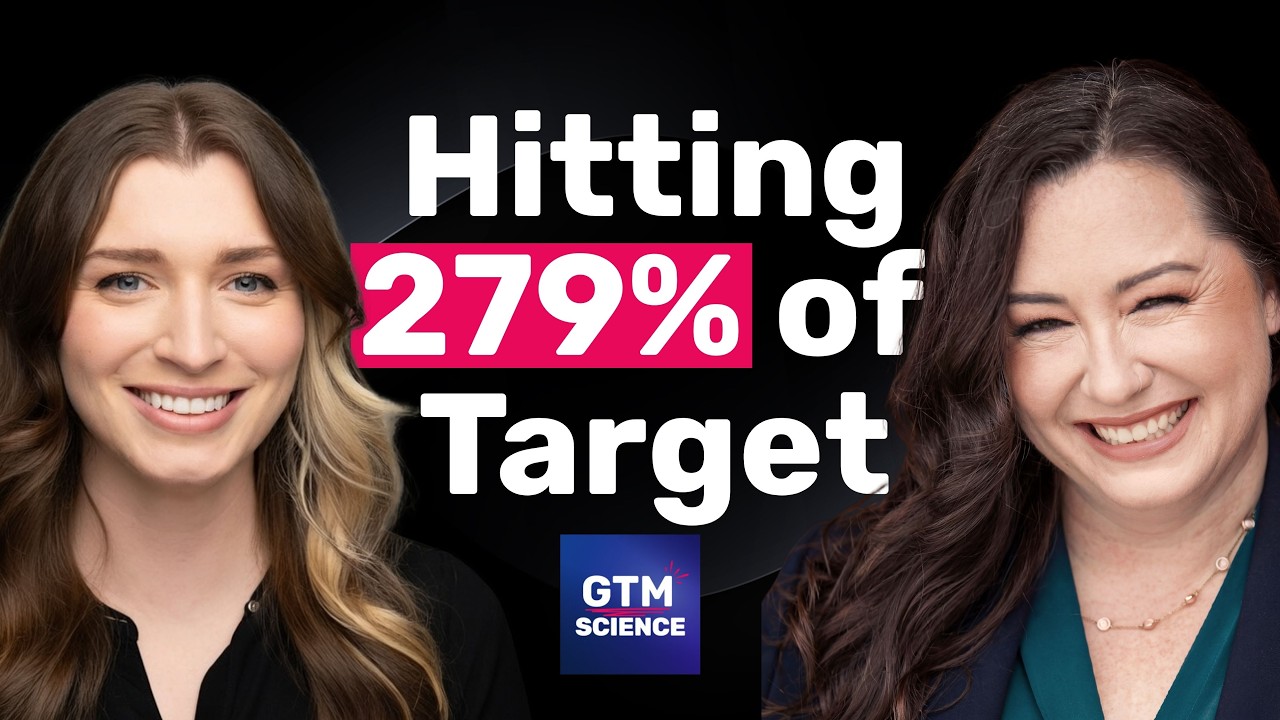
RACHAEL24:29So let's go back in time for a second. Talking about Q4 2019. I know now it's like kind of a long time ago. So your team hit 279% of their target in this quarter. Do you remember what happened that quarter? And you know, what could be replicated?
STEVIE24:47Yeah, the stuff that led to that quarter being so successful is foundational. And it's the same stuff that is leading my team today, man, to to success, which is breaking down those goals and having a hypothesis about how you're going to get there. And then just really emphasizing the repeatable activities at the base of that playbook. So there it was like, okay, we've got all this inbound opportunity.
STEVIE25:15We probably had enough inbound to be meeting our number, but we knew we needed to make this outbound transition. So we really started emphasizing, here are the basics of what we need to do. We need to be making X calls per day. We need to be sending Y number of emails per day. We need to be connecting with a certain number of prospects on a weekly basis and generating a certain number of opportunities.
STEVIE25:36And so we started driving that knowing we didn't have to have all that outbound pipeline to hit the target, but that it was a part of this grander, longer transition. We were going to try to make. But by driving that behavior and making it a repeatable part of our playbook, we ended up with so much more opportunity, and it really blew the lid off of what was possible.
STEVIE26:00I think a lot of people and revenue leaders, they're managing to 100% of the target, but the target might be wrong.
STEVIE26:08You know, I like to manage something higher than that, something bigger than that. It's sort of like, how much bigger can we go? Because when you aim beyond, you start to think about things differently and you change the structure of how you organize your work, and that's how you get to that.
STEVIE26:24Like 200%. Plus,
STEVIE26:26you don't get to 200% plus by just aiming for that 100% and target.
RACHAEL26:30Okay. And you think if, if you were just kind of focusing in on that 100% target, do you think you wouldn't have hit that, that percentage over to over that on that quarter?
STEVIE26:41Yeah. No, I don't think we would have I think that when you aim for 100% and that is good enough, you get 100%, hopefully like that's your best case scenario. You know, you're if you miss by a little bit, you're you're under. And you know when you shift the frame and you think about what is the maximum that is possible and what do I have under my control?
STEVIE27:02And I talk a lot with my team about controlling the controllables. If you really focus on controlling those controllables and you aim for the maximum possible outcome, if you miss by a bit, you're still probably going to be over 100%. So instead of like constraining yourself to the target, I really like to aim much higher than that and really aim for what is like the maximum possible outcome.
RACHAEL27:26I love that, yeah, it reminds me of this book that our CEO, Eddie, has been reading and telling us about. I'm going to butcher the title of it, but it's something like,
RACHAEL27:34going from two x to ten x or, you know, it's easier to think about how do I ten x something rather than how do I2X something?
RACHAEL27:41Because you're not going to get to ten x by just doing more of what you're doing now. Like you could maybe you could two x whatever you're doing by doing more of it. But a ten x, you have to have a completely different mindset and approach it in a completely different way in order to get there. So it just even if you don't get ten x, the way you're thinking about it is going to make you get way, way, way higher than just to X.
STEVIE28:02I love this line of thinking, and this is actually one of the questions that I will ask my team and my leaders pretty frequently is, you know, when we're stuck in that, like, it feels like a real grind to say it like hit the target or it's like, make change. This will be one of the questions I will ask them is like, well, what would it take to like five x or ten x what we're doing?
STEVIE28:21Like what would have to fundamentally be different? And I do find when you think in that way you get a different result. So sometimes it's about like blowing apart the the entire frame for how you're thinking about that growth and the targets and, and just doing it differently. I think now is such a natural time to do that, too.
STEVIE28:39In the advent of AI, all this AI powered tooling, you
STEVIE28:43know, you've got teams out there making millions, hundreds of millions of dollars with very small go to market teams. So it is possible. So challenging the thinking and trying to do things differently is is really important. If you want to just crush targets.
RACHAEL28:57And you said a lot of the changes that were made for that quarter were like just foundational things that like built up over time. But do you remember any like one really big like process change or, coaching pivot or something that you think just exploded that quarter?
STEVIE29:12Yeah. One of the biggest shifts on that team at that time was Twilio had always been this, like bottoms up, API centric developer platform. It was at the heart of everything we did. Our CTO talked about it, it was all developers. And so there had been this mindset, even though we were selling in the enterprise, that if we were outbound, we should be outbound to software engineers.
STEVIE29:37And so we were doing that. But I actually developed this methodology. I called the Twilio Sand, which was what if you could marry this bottoms up approach of going out to, the technical folks who would actually be using the platform and at the same time coming top down and marrying that with really great classic enterprise, selling to VP plus or C-suite stakeholders, that that was the magic combo.
STEVIE30:06And that magic combo is what really started working. And we did a really unique place in that time frame, like we were doing these enterprise hackathons. And what that looked like was we would organize a hackathon for, like a classic enterprise company. One of the best ones we did was actually at U-Haul, which was great. We showed up on site, we said, hey, we're going to run a hackathon for the day for your technical team, and it'll be a fun event for them.
STEVIE30:32We'll do prizes. We'll like teach them to use our technology. And then what we did was we set the executives up as the judges of the hackathon, and we owned the team to build use cases that had value to their business. So basically, we had a whole day of getting these folks into the platform building with the tech, and then to the end of the day, showing how in one day they built these really material use cases, and then demonstrating that to executive buyers.
STEVIE31:00And that was just like it just exploded because like the VP's and the buyers would just they were just blown away that you could build something so fast. And it made it very real. And it was unique to their business. And so it was just perfect storm of when you got that top down and the bottoms up. And they all saw what was possible.
STEVIE31:21It just took off.
RACHAEL31:22I love that that's such a creative and unique idea. So there, there were you said there were judges. It was like a competition. I'm not super familiar with, like a hackathon and what that means.
STEVIE31:31Yeah, basically what they did is we would get, we would break the room into teams. So in the case of the U-Haul hackathon, we had like 40 developers in the room. So I want to say we had like 6 or 7 different teams. Each team had their own use case, and they had the day and we would sit with them.
STEVIE31:45We would bring in, folks from our, dev angels team, and we sat with them and help them build. But at the end of the day, everybody would demo what they built. So each team would get up in front of the room, they would present the solution, why they built it and what they built, and then they would demo it.
STEVIE32:02And the judges were picking like, what was the best solution? And generally it was based on the demo, but also business impact. So, you know, and everybody was all just for fun, but everybody got like these little prizes and trophies and it just, you know, for the company, it was a moment where they were offering a cool, innovation focused experience to their technical folks.
STEVIE32:24And it was like a retention event almost. And for us, obviously, we were thrilled to get these use cases in front of the buyers. And what we saw to the team that we did this with was it either closed deals faster or it dramatically expanded the size of the deal because they're like, oh my gosh, these five other use cases we just saw demoed are incredible.
STEVIE32:43We want to do that too. So it was just like the art of the possible made real by their own people.
RACHAEL32:50That's so cool. And so these are people that you already were working with.
STEVIE32:55Sometimes, not always know. Sometimes we were doing this as like an expansion opportunity. Like we had a contract in place, but we would show up and say, here are these, you know, a dozen more use cases you should explore. In some cases, though, it was prospects and it was like this was an offering will come in no commitment from you and run this hackathon, this innovation day.
STEVIE33:15And they were so excited because this is very, you know, exciting up and coming company, exciting technology. It was a chance to get their staff in there and see what's possible. So we were doing this as well.
RACHAEL33:25That's cool because and for them it's like almost like a team building like a fun you know. Yeah. That's such a such a smart idea. Yeah. You remember that.
STEVIE33:35If I, you know, I it was somebody I heard of a developer angels team, which was like a team at of marketing that. Yeah. Originally was working often with students like their focus was on early in career developers. And this was like an expansion of the concept of what they were doing that we brought together as a program.
STEVIE33:53And it's still sticks with me as one of the most effective plays I've ever seen run in the enterprise.
RACHAEL33:59And you said, that was kind of before that, that Q4.
STEVIE34:04Yes. Yeah. That was one of those plays that led to just like outsized opportunities and really like it field selling always. You know, we talk about this a lot now we're post-pandemic. You know I think everybody is so used to being on zoom and selling remotely. Like there's this hesitation to get in front of people. I think that was the other magic ingredient was we were on site in person, and I am finding that that was so effective then.
STEVIE34:34It's even more effective now when you can get people to meet in person and see hands on how things work. You know, we just did that recently. We run in a yearly event called, Van to Con advanta. And similarly we, like, bring people on site and we have them get engaged with the technology and get hands on and, you know, be in the weeds with us in the product.
STEVIE34:57And people get really excited about that. It's, it's always been a good play. But I feel like post-pandemic, it's even if,
RACHAEL35:06And not just post-pandemic, but like in the, in the grips of the AI world right now, where everything just has lost its authenticity online, you never really know what you're looking at. If it's real, if you're talking to you, if it's real, you know? So yeah, I think human in-person events is going to be a big, big, big player.
RACHAEL35:24Coming up.
STEVIE35:25I think so too. I think that there's a real there's real, real alpha to be found here for anybody investing in like, real human activity. This is we've made a big bet advance to this year on our sales development team. We we grew that team from here. We had about a dozen people a year ago. We now have over 100 stores.
STEVIE35:46And what we're finding most effective with these human stars is that they are picking up the phone and calling people and having human conversations, and this is what we have. We have five. Next are outbound pipeline. Oh, wow. Yeah, that's kind of a big part of it was getting in humans to make calls to other humans. Yeah. It's like such an old school thing.
STEVIE36:06But it works because, you know, everybody's inboxes full of AI slop. And yeah, you tell what's real and you've got all this AI slop in your inbox. A human picking up the phone and speaking to you is is more impactful than ever before. So it's kind of counterintuitive, but we're finding it really works.
EDDIE36:23Quick pause. If you're getting value from this episode, I want to ask you a small favor. Take 30s right now. Open up the app you're listening to this on. You can give us a five star rating. It sounds small, but it's the single biggest thing you can do to help us get conversations like this in front of more revenue leaders.
EDDIE36:38While you're there, hit follow so you never miss an episode. Okay, let's get back into it.
RACHAEL36:42So tell me a little bit more about that. And I'm glad that we're like pivoting it. I was just about to pivot event. So thank you for that. Yeah. So your pipeline gen I guess your different ideas and plays that you've been running, when you, when you came in, as Ciara, did, you notice that Pipe Gen was lagging behind or if that was like your big bottleneck?
STEVIE37:03Not yet when I joined. So when I joined, we were a 100% inbound org, so we were just sticking inbound. There was no outbound. And then, you know, there had been this like they had created this kind of automated outbound that ran for a bit that was effective at that time. This is pre gen AI. So there was this outbound engine that would send outbound emails and that for a minute was fairly effective.
STEVIE37:29But then that kind of fell off. It was like pretty. It was pretty spammy. It was pretty basic in its capabilities. So really we were back to square one of like an organization that was just 100% inbound and that was working at the time. You know, we were crushing targets and that was great. But I got brought there to like, rapidly grow revenue.
STEVIE37:51And I knew that the way we were doing that, the way we are generating pipeline had limits in terms of how far it would scale. You know, the vast majority of our inbound was coming from search engine marketing. And, you know, it's clearly there's growth there, but you can't you can't tell a business on that. Yeah. So a lot of what I had to start from was, okay, how do we start to build an outbound motion?
STEVIE38:16And it took us a while. We had an SDR team that, you know, we really had to start like from the basics and square one with and started doing that outbound. But it took us about two years to get to the point where we really poured gas on that fire and went really big on human stars, because that foundation had to be laid first.
RACHAEL38:36Yeah. And what kind of foundations were you trying to lay with that first team?
STEVIE38:40You know, it was really basics, like how do we talk about the value of this product? It sounds really obvious, but you know, we had to have wild product market fit and we were getting all this inbound. And you know, we had one call closes. It was incredible. And in those days it was obvious that people needed this product because it was solving a very painful problem.
STEVIE39:03So we were helping in particular startup founders to, get Soc2 compliant for the first time. And the reality was that they needed that sort to audit report, to unlock their own ability to sell their software and grow their companies. So it was like this revenue blocking thing. And so we started out even like, like, obviously we built something good.
STEVIE39:28We know it has value, but we didn't even really know how to articulate what the value was. And so we had to go through a process of defining why do people buy this? How do we describe it, how do we talk about what it does for your business? And then once we defined those talk tracks, we had to go through a process to of learning, like who are our buyers?
STEVIE39:49You know, we we know we're selling to founders. We know there's something there. But it seems there's more to it than that. So it was really an entire market and message mapping exercise to begin before we could even really get effective at that idea at all.
RACHAEL40:04Yeah, that's a huge thing that I've been hearing a lot about recently, like ICP. So, so, so important and so many companies and, you know, revenue leaders and even salespeople think like, oh, let's just look at, you know, the types of people that we're reclosing we're winning. And that's our ICP. Obviously. But you don't realize, the people that you're missing could very well be ICP, but you're just missing them because your messaging isn't the right thing they need to hear or, you know, you're not focusing enough on them and their pain, or even just your speech leader's copy.
RACHAEL40:35And you're like, getting the best enough.
STEVIE40:37Right? And you're not working those opportunities in the right way. You don't know how to speak to them. And that ended up being the case for our business. We had and had this incredible business down market where our ICP was really like startup founders of B2B software companies.
STEVIE40:54we really leaned into that. And that remains a huge growth engine for us.
STEVIE40:58But what we started to see was that there were these other folks in pipeline that were interested in phantom what we were doing, and we would occasionally see, like security professionals, or we would see these chief information security officers or their teams. And I think for a while we were sort of resistant to the idea. We were like, we're an automated compliance platform.
STEVIE41:21We're not like there was a whole space up market for GRC governance, risk and compliance. We're like, oh, we're not GRC. We're not that we're we're this thing for founders. And what we realized over time was there's a huge opportunity for us, and we were actually a nascent GRC platform. And as we leaned into that, we've come to realize that we've got several distinct buyer personas.
STEVIE41:45Founders are one of them. We, also sell to these, like first time kind of the first security hire at a company who is establishing their program and building that. And they can now build that on Banta and then of market. We now sell to the office of the CSO. And they are really using us like a risk observability platform.
STEVIE42:04So, you know, we now call ourselves an agenda trust platform, but it's become this much broader thing. And it's kind of comical to look back because I think a lot of early investors passed on Banta because they saw this, what they thought was a very small opportunity to like, help people get Soc2 compliant. And what they didn't see was this massive Tam that we were just starting to eat into.
STEVIE42:30And so I think underestimating that initial market was easy to do, but we didn't see it yet either.
RACHAEL42:37Yeah. What was the like the one big unlock that took you from kind of noticing a little bit of interest from this other market to being like, no, we've got to like actually pursue this and change some of our messaging and processes to, to do this, like what, made you realize and the board realized that there should be investment made here to pursue this other while.
STEVIE42:57Yeah, I mean, we we first saw that there were some interesting enterprise logos in the pipeline and that we were actually closing them occasionally. And, you know, you would see these like huge enterprise logos and in some cases, even public companies who would come to be attached. And, you know, when we talk to them often, it was like an individual business unit building a piece of software.
STEVIE43:22And they wanted, they needed to be compliant and they did not want to use the legacy software the larger business was using because it was so bad, and they wanted something more modern. So we started seeing this pattern develop and it's like, oh, there's something here. So then we built a team to go after that opportunity. Because one thing I've learned in business is if you ask your team to do too many things and you know they will always focus on what is the easier thing to execute on, and it was much easier to just go sell the founders because we knew that it was fast, it was easy.
STEVIE43:52So nobody was trying to sell to these larger companies. So we built a team to go look at that. And it took a while to get traction because selling in the enterprise is obviously very different. So we almost had to get that team far enough away from the very successful startup business to give it the space to operate.
STEVIE44:14And once we did that and we started to build a team of experienced enterprise sellers, they actually started to close deals. And it's like, okay, there's a there there, there is something happening here. And these we we started to really, get thoughtful about our discovery. We were bringing back learnings to our product team and saying, here's what the opportunity is starting to look like.
STEVIE44:37Here's what we're hearing from these buyers. And it was so clear that there was an opportunity here that we went back and actually there was a specific, leadership team meeting. And now about two and a half years ago where I went in with a partner from our engineering and product development team, and we made the case that we needed to make a real enterprise investment.
STEVIE45:01And first we made that case to the leadership team. Then we made it to the board, and we mapped out what that could look like and how we thought we should start. And everybody gave us the thumbs up. And that was really the beginning of that true investment in the enterprise.
RACHAEL45:15And what else, made that case for you other than like, you know, sometimes we close some of these enterprise clients and we think there's interest here. Was there anything else really big that you had as evidence to get that approval.
STEVIE45:26Yeah I think the biggest thing that we really had to show was that there was an addressable market there, and that we understood it sufficiently to know where we could play and where we could not yet, but could later. So we really mapped the competitive landscape. You know, part of the story we told at that time was not just that we were winning logos, but that in some cases, we were winning in the enterprise against these like old legacy platforms.
STEVIE45:54And legacy pieces of technology. And when we could tell the story of why we were winning and we could talk about how big that market was, it was like, okay, everybody could then see what was going to be possible here. And then we started to talk about all these adjacencies for our platform and where it could eventually grow into.
STEVIE46:17And that's when it became clear that it's like, okay, we've been looking, kind of myopically at this opportunity with founders and startups, and that remains huge. And we should continue doing that. And I think we can also do this because they are so tightly related. And it wasn't like a completely new product. We were able to tell a story that what we were going to build for the enterprise was also going to benefit founders.
STEVIE46:43So it wasn't like, oh, let's go try to do two completely separate things at the same time. It was this virtuous cycle of, you know, if we win in the enterprise, here's how it benefits our current focus part of the business as well. And that's where everybody got comfortable that like, oh, this isn't just us forcing into some new secondary opportunity.
STEVIE47:03Like these things are deeply tied together and one thing does benefit the other.
RACHAEL47:07Probably like it felt like an easy risk, like two way door kind of thing. Like if we do this we invest money into it and it doesn't work out with this new audience. Like we're still improving our main product.
STEVIE47:19Yeah, exactly. It was that tightly related. And we knew that that work would not go to waste. And whatever we learned there could continue to benefit our startups, our, you know, our mid-market customers. So it was like there was this nice, safe fallback position if we couldn't quite make enterprise work.
RACHAEL47:36And so once you guys made this decision and you made the tweaks to product and everything, when it came time for marketing and sales to do their part, did you need to, like, develop new teams, like whole new marketing and sales teams, or did you just kind of like train people that you had currently?
STEVIE47:53We did build new teams, and so in some cases, we were able to bring, people who had been in the business for a long time over to those teams. But we actually did hire an experienced enterprise leader, and she started to build a sales team, and we won sales first instead of like, going out to the market and, you know, building a marketing team out of the gate and saying, hey, we've got an enterprise solution.
STEVIE48:15We actually use sales as the tip of the spear. And we asked them to really focus on being an outbound team, primarily because we hadn't yet established ourselves with those buyers. So sales went first and they really proved the market out. We hired and experienced, enterprise sellers, and we optimized for people who had built businesses before, like been early hires on a sales team in their past.
STEVIE48:40And that team, we started small. We started with just three, but they started proving success. And then we added a little bit more and a little bit more and then, you know, you look up two years later and we now have a function that is showing repeatable success and true scale.
RACHAEL48:55How different did that sales process have to be from what you were currently running.
STEVIE48:59Extremely it was extremely different you know, and we really know how bifurcated the business. So we run separate rhythms. We have our down market business. And there we focus on startup founders and SMEs, where we will often see like a first security hire. We run that almost as a separate unit from our upmarket business, where we're focused on the mid-market and enterprise and, you know, the motions.
STEVIE49:24Look very different, but the platform remains one platform. And that original hypothesis that if we built a great enterprise product, it would benefit those SMB and startup buyers, has proven to be true. You know, we just it's meant more data into the platform. It's meant more insight into vendor risk and it's benefiting the entire ecosystem. So, you know, we've been able to build these very different motions and to extremely different go to market teams.
STEVIE49:54But they are all sort of benefiting the core of that, a genetic trust platform.
RACHAEL49:59When you're building out this new like enterprise sales process, were there were there times where it like really broke and you had to workshop it and like, figure it out or walk me through that? What kind of what kind of broke down that you had to figure out? Yeah.
STEVIE50:15Lots along the way. I mean, there was just so much we had to learn. We had to start with all hypotheses of of who buyer was and what would resonate and what we were capable of. Like, we, you know, we had to spend a lot of time and energy really discovering what their requirements even were. So in those early days, you know, one of the first things that broke or that we got wrong was like quotas.
STEVIE50:36You know, we started out and, you know, very optimistically saying, okay, there's an enterprise team. We give them enterprise quotas. And what we found early days is that we really needed to give them a ramp because we were asking them to not just sell, but to truly do market discovery. So then we backed up. We gave them a more reasonable, quota.
STEVIE50:56And then we asked them to help us really create this great feedback loop to product. That was the second thing that really broke was, you know, we had this theory of what we were going to go sell to these enterprise buyers. But in practice, you know, we were discovering the entire way what they actually needed. So we had to really build a much deeper feedback loop.
STEVIE51:16We actually ended up moving the go to market team under a general manager who was a product manager, and they owned both the engineering and product development team and the go to market team for a year. And we did that because it brought the team so close together that the feedback loop to product was much tighter. So we did that for a year, and then once we got the repeatable success, then we brought go to market market back into my team.
STEVIE51:41But having those two close together was one of the most important things we did.
RACHAEL51:45Yeah. So I'm guessing you had to like constantly be iterating the product based on what you're hearing in these enterprise calls like, can I do this? Well not yet. And they're like, okay, you lost the deal. So you go back to product and you're like, we need this right now.
STEVIE51:58Yes. Yeah. And like the team got really good at that stack. Rank of features that was going to unlock opportunity. And we also had to be mindful because we didn't want to just, you know, kind of run after every shiny object. We wanted to be thoughtful about the strategy of what we were building. So we were taking all that feedback with a grain of salt.
STEVIE52:16But, you know, our team was really contextualizing it. The go to market team specifically was contextualizing and stack ranking. Here's what we think needs to be built next and why. And that was then feeding back into our product organization. And through that we developed this great cross-functional partnership and a theory of the case on the market of how we could really capture the opportunity.
RACHAEL52:38And how do that transition or translate into, how you worked with customers after the sale. So like your post customer follow up and customer success and stuff like that, because at this point, you know, you're seeing the product is kind of built by the customers in a way. So, yeah.
STEVIE52:55Yeah, I mean, it's it's definitely taking the same amount, if not more revolution in how we serve customers. So just like we had to build it up, market sales team, we had to build an upmarket team in Post-sales. So customer success and account management, we have started to build out like, solutions engineering and solution architect function, a nascent like professional services team.
STEVIE53:19And, you know, we have really had to build because the notion of onboarding, startup is very clear and very simple. And we knew what that was. The motion of onboarding an enterprise looks very different. There's an entire implementation project to be run. So we have built an organization and a partner ecosystem to support that. But you know that took different partners.
STEVIE53:40It took, you know, a little bit of everything new. So our entire post-sales experience to get customer successful was really architected from scratch to support these larger customers.
RACHAEL53:52And did you what kind of like qualitative or quantitative results did you see once you started implementing these new post-sales processes.
STEVIE54:02Yeah. The biggest thing has been I mean one we had to figure out like what is successful implementation, how do you define it. So we started from scratch and we actually created and what we call our IHS and implementation health score. And what we had to do was break down end to end for an enterprise customer. What is every step in that implementation journey?
STEVIE54:24And the foundational understanding we developed was for every one of these customers, they're already starting with an existing program. So we have to treat every one of these like it's a migration. And they might be migrating from another tool, but they also might be migrating from their own internal manual processes. But so we treated like a migration. We developed this score that shows the health of the integration.
STEVIE54:47And is it on track on time. And then we built a team to support every step of that process and what we saw was, just a radical improvement in that implementation health score over the course of about six months. So we went from a place where, wow, implementation is actually our biggest, problem and bottleneck because we're leaving our customers to their own devices to figure it out to a world where now we've got this very structured way to get them successful, and we know exactly what the map is.
STEVIE55:17We give it to them, we support them through it. And that implementation health score just skyrocketed.
RACHAEL55:22Nice. That's awesome. And so how are you using that feedback now to like bring it back full circle around to sales and marketing.
STEVIE55:32Yeah. So now we're at the phase where this is not just an experiment. We're in the scale phase now. So we're scaling all those teams. And what it has now meant is we've gone back and we've had to add an upmarket and enterprise function to every part of our org. So we had to build, an enterprise SDR team, a solutions engineering team.
STEVIE55:52And we do now have dedicated marketing resources on this up market message. So now that we've got scaling success, the biggest, focus for us is educating the market that we're even here. You know, part of the the golden handcuffs of success with a first use cases. People start to really associate you with that. So a lot of people still associate us with that SoC two for founders use case.
STEVIE56:18And we still do, you know thousands of those a year. But that education and awareness in the enterprise market that we are truly an enterprise grade trust platform that can serve your full GRC needs, like there's a whole, push to educate the market that that is now who we are as well. And so we're building all of the functions to let the world know that we're there.
RACHAEL56:43That's awesome. And I find it really interesting that you guys chose to do, like, make sales spearhead this experimentation, specifically outbound to like, really validate this theory that you had. And so not only is the experience validated, but you also have these like logos that you can now use in your marketing. And you have use cases and case studies and things like that that you can use in this marketing push.
RACHAEL57:05So you're not just like going dry right out in the marketing scene trying to like test messaging.
STEVIE57:11Yeah, I think it allowed us to learn a lot faster that way because we had humans in the conversation. We had a hypothesis, but they were out there to test and listen. And, you know, they signed up those design partners and grew us from there. And I think that, you know, it's not always going to work to have sales lead, your effort into a new market in that way.
STEVIE57:32But I think for us, it was, it was a winning combination.
RACHAEL57:35Yeah. Especially because product had such a we're played such a big role in it. I think if you guys tried, you know, message testing and marketing first before you did this, you know, sales experiment, you wouldn't have had all those product innovations to work off of. So it might have even just failed because you didn't know that the product needed to have these certain things.
RACHAEL57:54So I think that was such a good call. Was there like a reason why you guys chose to, to spearhead it with sales and sort of marketing? Like, do you kind of intuit that or was it just luck?
STEVIE58:04You know, I think honestly, it had to do with the fact that I had a lot of belief in the opportunity, and marketing did not report to me, but sales did. So like I felt it was an important that to me. And I took the resources I had, and I tried to make that bet in a way I could control to start.
STEVIE58:23Yeah. And I it was really as idiosyncratic as that. Like, I think it just was a matter of belief. And I think you're right that if we had just gone about it in a more traditional way of like marketing message testing, we may not have ever made that because I don't think we even knew enough to test at that point.
STEVIE58:42It took putting humans into conversations for us to figure out where to go next.
RACHAEL58:48other than, you know, getting into this enterprise market, what was that the other, like, biggest, win that you're directly involved in? Advanta.
STEVIE58:56Yeah, I'd say one of the other huge wins has been, a real investment in retention, and it leads to the enterprise investment. But we just when we started out, you know, we had, all the success with founders and startups, as you can imagine, the smaller companies, they have their own cycles. They often don't stay in business as long.
STEVIE59:19You end up with retention. When you have a down market business that is lower than you want it to be. One of the other things we uncovered is that when we saw customers not stick with us, in most cases it was because they didn't onboard successfully. So we ended up putting a huge amount of effort into rebuilding the way we did post-sales.
STEVIE59:41So we took our customer success team at the time and we broke it into two functions customer success and account management. We defined those are, those, responsibilities really cleanly. We made our customer success team responsible for onboarding and adoption, and ultimately the outcome of that being gross retention. And over the course of, a couple of years, we were able to raise net retention by more than 18 points.
STEVIE60:07And like it was, it was a thousand small things that got us there. But ultimately, at the heart of it, the work was about understanding the value our customers were trying to achieve from the platform, and then helping them realize that that looked very different for startups than it did for enterprises. But we have gotten much better at both of those things.
STEVIE60:28And what we found is when we can help our customers get onboarded, get live on the platform, and then realize the value. Our retention results are just radically different so that journey has been a hard one. I've got an incredible Post-sales leader, Kelly Bray, who has led a lot of that effort. And, it looks very different than it did, but that's what we're particularly proud of.
RACHAEL60:50That's awesome. And think retention is so, so incredibly important, especially in like a recurring revenue business. The revenue needs to recur. So like retention is important. And I don't think enough companies, crows give the amount of love that they should be giving to their, customer success department and everything that can be done with.
STEVIE61:09Lineage or the value. Yeah. I mean, this is and this was another kind of counter, counterintuitive bet that we made on customer success at a time when a lot of companies were cutting it. Mercy is foundational to our success. You know, they are a huge part of why we continue to grow. To your point, as as the revenue targets get bigger, you need your customers to be successful.
STEVIE61:31And staying with the platform. If they're not, it becomes very hard to grow past a certain point. So you know, our customer success team, our account management team, they've done an incredible job getting our customer successful, realizing value and, keeping them with us over the long haul and just making sure they can achieve all their security compliance goals.
STEVIE61:51So we grow with them. And those, our team has been, a big part of the, of how we've done that so successfully.
RACHAEL61:59Awesome. That is so great. And, I know you got to run. So thank you so much, Stevie. This has been a wicked conversation. Yeah. Pleasure business. I really want to hear it for me. Thanks.
EDDIE62:12Thanks for listening to the episode. If this resonated. Please give us a five star rating and a follow. It helps us reach more people, and you get our latest and greatest content without having to search for it. And if you're looking for hands on help and go to market strategy and or rev ops, please reach out to us.
EDDIE62:26We help our clients with everything from annual planning to improving processes and go to market, implementing systems to support those processes and go to market AI. We're always happy to offer a free consultation to help you identify the best opportunities to improve your go to market engine, with or without our help. You can find us at Union Square consulting.com and the info will be in our show notes.