ANDREA0:00If you follow
ANDREA0:01the money from lending partner to venture capital to CEO,
ANDREA0:05they're giving people like me the money
ANDREA0:06and they're saying you have to allocate this capital like a hedge fund manager.
ANDREA0:10You
ANDREA0:10got to put it in the backs that are going to make the company more money, more enterprise value.
ANDREA0:14you have to get very good at being able to
ANDREA0:16advocate and then allocate the capital.
ANDREA0:18I think that's like two very critical, you know, very important chief level responsibilities.
ANDREA0:23you have to be an expert at telling the story using like the data and the dollars to show why this plan is going to create more enterprise value.
RACHAEL0:31how are you using this data
RACHAEL0:33to plead your case?
ANDREA0:35once you get the marketing budget, both in terms of like non comp spend and comp spend for
ANDREA0:39people and programs,
ANDREA0:40all
ANDREA0:41coming at the problem from the same place, which is like, okay, well we already determined marketing has a number.
ANDREA0:45Now that marketing has a number, we already determined how marketing budget is
ANDREA0:49being produced. Now we have the budget. Let's go deploy that
ANDREA0:52The deployment of that is all nuanced
ANDREA0:55to the business.
EDDIE1:03Welcome to Go to Market Science, the podcast for crows and revenue leaders scaling mature B2B companies. There's an art and there's a science to go to market, and we're obsessed with the science. In this podcast, we share tangible, actionable playbooks from the trenches, from what we're learning, working as go to market strategy and rev ops consultants for our clients here at Union Square Consulting and candid conversations with revenue leaders in the market that have been there.
EDDIE1:22If this podcast delivers value. We'd love a five star rating and a follow. Now let's get into it.
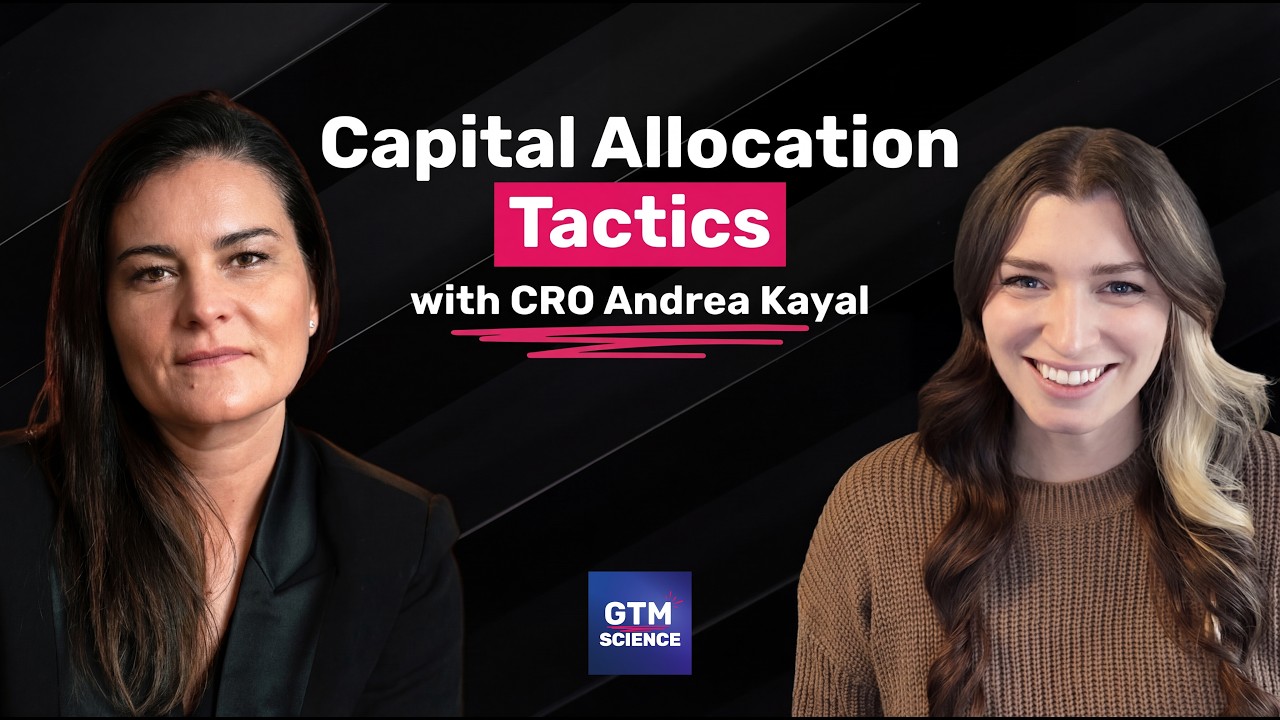
RACHAEL1:31Welcome back to another episode of Sierra Stories. My name is Rachel Baker. I'm your host and today I am speaking with Andrea Kail, Chief Revenue officer at Help Scout. Andrea, thanks so much for joining us.
ANDREA1:44Thank you for having me.
RACHAEL1:45Awesome. So for folks who might not be very familiar with help Scout, can you give us a quick overview? What help Scout does and what your revenue organization looks like?
ANDREA1:55Absolutely. So Help Scout is a customer support platform. We serve small and medium sized businesses, and we have, recently just launched a whole slew of incredible AI products because as customer support becomes more and more important, organizations from a growth and brand perspective. Helping them support customers as efficiently as possible is going to be key in the future.
ANDREA2:18So, we have some exciting things on the roadmap, and we are, we're over $35 million business.
RACHAEL2:24Nice. Awesome. And are you guys mostly like, product lead or sales lead?
ANDREA2:295050. 50. 50% of the new air comes in from, product lead. And that's typically from a company size from, like 1 to 10 employees. Over ten employees. You typically need sales to help you make sure you understand, like, all the features and functionality. So that's how we kind of split that up. And it's 5050.
RACHAEL2:47Awesome. So Andrea, you had a really interesting career path. You started out as a CMO and then gradually, worked into the role of CRO. And that's not typically, you know, a route that we see a lot into the chief revenue officer seat. So what prompted that transition for you?
ANDREA3:03Sure. Well, I, I, I agree with you. I don't think it's very, it's not common, but I don't know why. Because when I was in the chief marketing officer role, I found that my job primarily was to figure out how we were going to grow, to each next stage. Primarily through marketing functions, of which there's like 12 disciplines.
ANDREA3:21You know, that's content marketing, product marketing, PR, performance marketing, I mean, you name it. But I always found that, when the CEO had to, kind of like, make, like had to deliberate between, chief sales, chief marketing, chief customer, chief product. There were like, four roles who were kind of contributing to the revenue strategy.
ANDREA3:42And then the CEO needs to, like, make sense of that. And I'm like, well, I think I'd be better suited in the CRO role where I can, like, work with each of those teams and come up with one strategy. So I just found that I was doing that work anyway, and I found that for the CEO provides a lot of leverage when there's just one person that they can go to and say like, hey, how are we going to get to the next growth milestone?
ANDREA4:01So that's kind of like, what what prompted that?
RACHAEL4:03That's interesting. What, what made you at that time as the CMO feel like, that you like,
RACHAEL4:09let's say, more so than the chief sales officer, for example. Why were you the one looking at all these things, all these different departments?
ANDREA4:18Interestingly enough, I think we were both doing it. It's just that if I had a different idea than the chief sales officer, how does one make sense of that? The CEO has to kind of like review two strategies. And so, when I was at Team Pay, sorry, when I was at electric, this was this was like an, that obvious area of opportunity for the CEO.
ANDREA4:37And I went to the CEO and I said, hey, make me the CFO because I think I can, you know, help navigate our course from 50 million to 100 million. It turns out, like most companies, he's like, okay, I agree with you. I think I need a CRO, but I want one that's done the journey 50 to 100.
ANDREA4:53I was like, that sounds awesome, but I want to go somewhere where I can do it. And that's how I made the move from, electric to team pay. And by the way, I understand that entrusting one person with the revenue growth story from 50 to 100 million is, it would be a risk for the CEO to put somebody who hasn't done that, perhaps, you know, in that seat.
ANDREA5:13So, it was totally like an amicable change. But I was like, you know what? I think I can do this. And so I moved to Tempe, where I was able to kind of oversee the the whole function.
RACHAEL5:22That's awesome. And you have to start somewhere, right? Like. Yeah. Yeah, absolutely. Like, even with me at USC, like, I started off being just like their copywriter and grew into the marketing manager role.
ANDREA5:34Exactly, exactly. Like, you know, like every, every function. I would also say, Rachel, like,
ANDREA5:40the best chief Axios whatever. That middle initial r m p c it's always just about are you good at identifying the person who's better you than the job you need done? And so, even as well, that helps out. Will I help direct the revenue strategy?
ANDREA6:01I have a great head of sales. I have a great head of marketing. You know, like, you still need heads of functional experts who are exceptional. It's just that the revenue strategy being done by one person, I find to be, like, very beneficial in terms of leverage for the CEO.
RACHAEL6:15So throughout all these different roles that you've done with a CMO or CMO at Help Scout Team Pay, the other different companies you've worked with, what's been like the through line in the types of operational challenges you faced across all of them?
ANDREA6:30I would say at the highest level, I think that there's still a gap in how planning is done at organizations. And thinking about the business you have today and then the business you want in the future. One of the models or frameworks that I use at organizations, when I joined to help companies like fill that gap is it's basically, this framework called the enterprise five by iconic.
ANDREA6:57Iconic is, a very, very popular portfolio company. They have some of the top portfolio companies on the planet. They have this basically this matrix that looks at five metrics. That's why they call it the iconic enterprise five. And it's like year over year growth. Rule of 40. Magic number. That's like your sales and marketing efficiency.
ANDREA7:17That's IRR per ft. There's like five metrics that they have. And then what they did was they basically said based on your size, revenue, size of company, what metrics should you be? These are the metrics that have highest valuations for the companies in our portfolio and the median and top decile of metrics. So for example, the median median portfolio company 25 to 100 million has a growth rate of 65% or more IRR.
ANDREA7:44That means these are some of the highest valuations of these companies, because they have a growth rate of 65% or more. And then if you go down the list, you can just look at all the metrics by each of the revenue stages. And so you can use whatever framework you want. But one of the practical things I do is to take that matrix, and I talk to the CEO and the CFO about that and the financial planning team and say, we're a $25 million company.
ANDREA8:08We want to be 100. Which match what metrics do we need to meet? And even if it's not the same as within the iconic enterprise five like metrics rubric, it's a conversation starter. So even having the conversation about the type of company you want to be helps you back into that, right? Like we are in a very competitive market, it helps Scout.
ANDREA8:27I don't think we're we I don't think in the next year we're going to be at a 65% growth rate. But we have to we have to say, what is it possible that we're going to be that in three years? If not if if the answer is no, well, we have to nail the other four metrics for example.
ANDREA8:41So anyway, I know that was kind of a long winded answer, but I think the framework picking a framework by which you can say this is the these are the five metrics, 3 or 5, 3 to 5 metrics that make would make us an exceptional value, exceptionally high valued company in three years, I think. Is it just a great thought starter?
ANDREA8:59Because that's the job of the CRO. When you hire me, you're hiring me to create more enterprise value for the company. Well, how will we know if we did that? We need like, you know, numbers, even if it's on paper. It's just so like I think a great thought exercise.
RACHAEL9:12Yeah, absolutely. And like like you said like being the CRO, you're supposed to be the one who's able to like kind of see around the, the corners on revenue and the future of where the company is going.
ANDREA9:22Absolutely.
RACHAEL9:23So you use this like in your annual planning, for example, as well, I'm guessing.
ANDREA9:26Exactly. Right. Yeah. Each year we, you know, we check in on it and, and we check that with the board. We, we are like these. This is our view of what a great business looks like. Do you agree. Because we're, we're beholden to to our investors to create more enterprise value. And, and sometimes the market's changed, like I said, year over year.
ANDREA9:48Our growth has been difficult for a lot of companies in this market. Obviously with the advent of AI and like, you know, incumbents being attacked and those kinds of things, it's like, well, we have to be realistic about what we can achieve. Is this still okay? Do we need more investment in a certain area in order to like beat that number that we have on paper?
ANDREA10:05But like I said it, it's still just like a if I can communicate one thing, it's mostly just like you need a starting point for this conversation to talk about what enterprise value means by numbers, not just like, you know, this conceptual idea of like growth. It's it's more than just growth. It's it's a few things.
RACHAEL10:24So, has there ever been a situation where you kind of knew what was coming using these numbers and indicators, but you had trouble getting others to see it from your point of view?
ANDREA10:34Well, less so about the consensus of what the numbers needed to be, more about making sure we had a balanced reality of whether or not it was possible. Planning can happen on paper, and it can be like the most beautiful company you've seen in terms of like its financials, but you need somebody who has operated for many years to give you the check on that thing.
ANDREA11:01I can tell you right now, in a competitive market, if you are not spending an outsized amount in sales and marketing where you care less about rule of 40 and you are hellbent on growth, you may need to reconsider that a little bit because thinking you're going to grow in a competitive market with the same or less spend year over year, it sounds nice, it's difficult.
ANDREA11:28And I think have being an an operator who can confidently say that and show the numbers as to why I think that's the job. As hard as that may feel, being realistic, I think with your shareholders is like, you know, your fiduciary responsibility.
RACHAEL11:42Have you ever had, like, a specific situation come to mind where you're using these numbers to create, you know, decisions for, whatever department in the revenue organization to change or reallocate resources or something like that to, like, reach these goals that you have for the company.
ANDREA11:58All the time. This is the job. Yeah. It's like it's what I do for a living. It's really negotiating. And I'll give you an example, where product led growth company.
ANDREA12:09I'm negotiating all the time with our CPO chief product officer. So there's three of us on each team. There's a CFO, SEO, chief product officer who runs our experience organization. That's that's, you know, that's product and engineering. And then there's me. I run the commercial team so that sales, marketing, partnerships, account management, etc.. I'm only spending, you know, 15% of revenue on sales and marketing, and he's spending 60% on sales, on, revenue, on R&D.
ANDREA12:37And so I'm, you know, we're challenging each other because I'm like, you have the lion's share of the budget. There should be an outsized requirement for product and engineering to deliver revenue because of that. And if not, is there a renegotiation we need to have in terms of budgets? Maybe we need to drive more demand, maybe we need a bigger sales team, those kinds of things.
ANDREA12:57So it's a constant negotiation of how how we allocate capital. But I think that's the other big role I have, which is capital allocation. If you follow the money from lending partner to venture capital to CEO, I mean, they they're giving they're giving people like me the money and they're saying you have to allocate this capital like a hedge fund manager.
ANDREA13:19You got to put it in the backs that are going to make the company more money, more enterprise value. So so you have to get very good at that. And that's kind of like one of the notes I think I sent you before. You know, we have this chat, which is you have to get very good at being able to allocate, advocate and then allocate the capital.
ANDREA13:38I think that's like two very critical, you know, very important chief level responsibilities.
RACHAEL13:43So on that line of, you know, capital allocation, being able to like negotiate and stand up for, you know, the numbers that you're putting forward,
RACHAEL13:53what, where or how does this manifest in like real life, discussions and negotiations like, absolutely. How do you how are you using this data to plead your case?
ANDREA14:07It's it's a great question. I, I, I mentor a lot of CMO about this because I hear from a lot of CMO is that the CEO and the CFO isn't willing to kind of like fork over budget. That's actually a problem with the plan. It's I don't think it's like I think it's, commonly misunderstood problem and that the CEOs and the CFOs don't want to, like, invest in marketing.
ANDREA14:31It's like, actually, I think that they don't they want to do nothing more than invest in marketing. But you have to be an expert at telling the story using like the data and the dollars to show why this plan is going to create more enterprise value. If they're giving you money, show them exactly how those dollars are going to be allocated to drive more growth.
ANDREA14:53And I can give you an example of this. First, any budget that I've ever been given, just right off the bat, 80% of it I typically put in like performance, demand capture, demand creation, marketing mix programs. I can talk through some of those. The other 20% is typically in like brand building activities where we're going to maybe like spend money on an agency to help us with a campaign or invest in campaign level TV where we're just showing ads, video ads and those kinds of things where maybe we don't expect a direct return on that right away.
ANDREA15:23But you want to basically create this picture for the company, which shows how those investments are being allocated. Okay. This is our marketing mix. We're going to invest in events, webinars, podcasts, affiliate marketing, PR, brand campaigns, performance marketing, search, LinkedIn, Spotify, Reddit, whatever. You know, you just you, you share your whole list of where the investments are going.
ANDREA15:50You show that some are a demand capture. You're like paid search. This is going to drive direct signups to our company. But some of these other things we don't know, I'm going to put kind of placeholders here for the demand. I think we can create. And you just show the mix. And I think the second piece of that is getting good at forecasting and and showing actuals against that plan, saying like, well, here's how each of them performed.
ANDREA16:11We're going to cut this out and we're going to move money over here and double down on it. I just think the more transparency you can create around what the capital is being used for and your forecasts and then actuals, like closing the loop with the teams on, like why you did what you did and what you're going to cut or reinvest in.
ANDREA16:29That's part of how you, I think, bring people along for the excitement they should feel and investing in your plan versus like, I don't know what marketing does. Yeah. So be clear. If you're clear and you're like, I don't know if it's going to work, but we're going to try it, okay. Let's, you know, let's try it.
ANDREA16:50We're we're trying to build, you know, momentum and brand here. So you know let's kind of put some dollars behind it. I have yet to have a CFO or CEO who's like, I don't want to spend, you know, it's because it's clear. And again, it's not all going to work. That's the art in marketing. But I think you have to be very good.
ANDREA17:08Just like sales is at forecasting their number. You have to be good at forecasting your opportunities or your, you know, your signups if you're plg.
RACHAEL17:15So yeah. And I and I face this problem as well, like trying to figure out, you know, budget allocation for different types of marketing experiments, different channels are trying to export and stuff like that. And an issue that, seems pretty common, I think, with any marketing department is having, you know, accurate enough data to support all these claims.
RACHAEL17:41And a big part of that is attribution. It's like the big scary word attribution. Absolutely no one has perfect attribution. Right. So how how have you approached that and how have you, dealt with, you know, the big attribution issue in creating clean and accurate enough data to like, you know, create these cases for years.
ANDREA18:00It's so good. It's it's such a good question because it's like a black box. However, I show the plan and I like, let me just give you an example. If I say paid search is going to increase signups by 25% based on 25% increase in spend, that channel, when we look at it directly, is like, maybe it got us like ten more leads.
ANDREA18:24But if you look at the whole bucket on the bottom right, that's up, that's a 25%, which is like, well, that comes from organic, that comes from direct. Now, it's not going to be in those buckets because we just lost the attribution, but it is going to show up in the bottom right. So I, I make note of that in the plan.
ANDREA18:43Like look, the attribution is wonky. We're going to do our best when we can capture it. We're going to show you. But the thing that I need you to focus on is whether or not the overall number we are trying to impact again for our company, which is like sign ups of a quality score of 30% or more has gone up.
ANDREA18:59So the mix is working. What we're going to continue to do, though, is turn some up and turn some down based on signals we're getting for the overall number. So I can tell you that if I turn up LinkedIn, that number is not going to change at all. So we're not going to keep LinkedIn on, for example. I mean, that's not the case with every organization.
ANDREA19:17It works great for some. I do know that when I turn paid search up organic and direct also goes up by the same amount of our spend. So like, did it are we able to show that in the number, like the exact attribution? No. But the bottom right, all of it working together went up. So it's it's tough.
ANDREA19:36I mean, I've been doing marketing for 20 years and every, every day somebody is asking me about attribution and I'm like, don't worry about it.
RACHAEL19:45Like, just don't think about it, okay?
ANDREA19:46Don't think about it.
RACHAEL19:47It's fine.
ANDREA19:49Exactly, exactly. I'm like, is are we increasing revenue? That's that's the, the, the thing we should be focused on. And the mix is going to be a little bit wonky in terms of it's like exact but the lines but no, it's dotted and all of it's working together.
RACHAEL20:07What. So what happens then if you, you're pulling multiple levers? Kind of. Yeah. At the same time. So like, you're raising, budgets on, on SEO or paid, search and stuff like that, but then you've also changed some copy on your website or you've changed your messaging a bit, or, you know, a little campaign went out with like an influencer, for example.
RACHAEL20:31And then revenue went up. But you're looking at that period of time totally. And you're like, I'm not sure. We can't really say what made that revenue went up, go up, and also take into account, like the sales cycle in the leg. So, like, how long do we wait to see that revenue go up to be able to attribute that to like this change that we made three months ago?
ANDREA20:54love these questions. I would say first, I do try to turn as few levers as possible so that on the always they're always on levers like search and social that you can just keep on. Then there campaigns like an email where like if we blast out. So we just did we did a Black Friday email and our signups were up 30% on that day.
ANDREA21:15And I'm like, okay, well, the only thing we did on that day was the email I got. Maybe, maybe it was a surge like, SEO surge, I don't know, but I doubt it because it's always on. So there are these loose things that we and by the way, email can't hurt. So I'm like, we're just going to keep doing that.
ANDREA21:33Assuming our unsubscribes are low and the interaction is high, that means, okay, this is valuable to some people. And to address your sales cycle, question our sales cycles 30 days. So we have almost instantaneous, almost instantaneous feedback loop. But I would say that it's probably the same feedback loop. A team pay our sales cycle was, three months.
ANDREA21:58It's still almost the same instantaneous timeframe. If I turn up or down something based on demos requested or sign ups. So we really looking at the top of the funnel when we're like making adjustments on that, because that probably will happen pretty quickly. It may not follow all the way through to deal, you know. Yeah, but you will know you will get a signal if you have it on for like two weeks.
ANDREA22:23You're like, okay, we've been up 10% every day since. This always on campaign has been like going. And so this a pretty safe bet.
RACHAEL22:30That's awesome. Is a little bit annoying for people with like 90 day sales cycles. Like you got to wait a little bit longer. Yeah. Running experiments like this I'm sure like depending it's always on a case by case basis. I don't think there's any like one solid playbook for every company, but, I'm sure there's, like, other leading indicators to, like, see if something is kind of working before you see that revenue number come in.
ANDREA22:53Absolutely. Like sign ups or demos like you'll you're going to know in two weeks you don't wait 90 day, you don't need 90 days or even six months. You're like, okay, well we did this. And again, you're looking for like small signals. You're like, what? Was there a 10% increase? We raised the budget. 10% was a requisite 10% increase in the last two weeks.
ANDREA23:12And demos or sign ups. Great. Let's assume the win rate holds on all these additional channels, because that's the other thing you're going to need to value. But you'll need 90 days. But these are the conversations with a good plan that you'll talk through. And one of the documents that I have I don't know if you're sharing this out, Rachel, later, but I actually have a spreadsheet that I've shared with, companies before in the past, which is like three tabs.
ANDREA23:36The first tab is determining marketing's contribution to revenue once you get that number. So like you, you determine if it's coming from marketing, sales strategy, BD, M&A, wherever the revenue is kind of associated, you determine marketing spend on the first tab. Once you have that number, the second tab is the budget. That's how marketing has negotiation should have negotiation with the CEO, CFO to say, look, we're going to call this the marketing budget.
ANDREA24:03But just to be clear, this is the business's budget. It's not my budget. It's not the marketing teams. Budget is a business's marketing budget. Because that helps. Like disassociate. I think sometimes the like idea that it's just like the marketers idea of what the budget should be. It's like a very factual like, like sort of like a logical way to talk through things like, well, this is what our win rate is.
ANDREA24:26This is our opportunity cost. This is the ACV. It's more like these are the facts of the business that help us generate the marketing budget. And once you get the marketing budget, both in terms of like non comp spend and comp spend for people and people and programs, you're all like coming at the problem from the same place, which is like, okay, well we already determined marketing has a number.
ANDREA24:49Now that marketing has a number, we already determined how marketing budget is is being produced. Now we have the budget. Let's go deploy that and use that in the deployment. Again, this is the point you were making. I'm like, there's no playbook. It's nuanced. The deployment of that is all nuanced to the business. Maybe you wouldn't do events because you're only small.
ANDREA25:10Is selling to, you know, 1 to 10 employees. You know, maybe it's it's too small for you to have an event strategy. So you knock that off, but you want to allocate some to pay. Do you want to allocate some to LinkedIn? Again that spreadsheet is just a good alignment place. Along the three most important components, which is marketing's number marketing's budget and then marketing tactics.
ANDREA25:32Then you're like, okay, do we all agree this is a good place to start, feels more collaborative. It's based on facts about the business. Like, again, I'll, I'll stop here because I've been like kind of rambling on this. But the two, the two most important things I think that sometimes are not clear. The marketing budget is primarily determined by how much it costs to generate that opportunity or deal.
ANDREA25:56Whatever. I'm sorry. My thumbs up and this it is yellow thumbs up. And the second is win rate, because that's the point at which marketing has handed over the deal to sales. If win rate is low, marketing budget goes up. The higher the win rate, the lower the marketing budget. So it's like a team sport for the marketing budget.
ANDREA26:14You can't just say like marketing needs all these dollars. It's like, I would need less if our ACV was higher and if our win rate was higher. So so do we want to like model that in or are we going to keep it as is? If we keep it as it is? No problem. But this is why I'm requesting as much money as I am.
ANDREA26:31I'm going to do my best to bring it down or like bring it up, and optimize the budget. But like these are the facts of the business. So anyway, again, just going back to collaborating real time on this stuff. I think helps.
RACHAEL26:44Yeah. And in that vein, like how does that translate over to sales as well. So now is CRO. You're not just looking at the marketing, you're looking at sales. Yes. Everything else. Right. So when we're talking about like negotiating budgets and stuff and turning little knobs or levers, to see what works, how does that how does that work in sales?
RACHAEL27:03Like, we, we talk a lot about, changing certain sales processes, like increasing or decreasing your lead response times for example. You know, making sure your sales process is correctly implemented in the CRM, making sure your sales managers are like coaching to that process. And all this stuff, which might not necessarily be like budget that you're putting into sales through these things, but they're like those little knobs.
ANDREA27:27Little, totally.
RACHAEL27:29You're changing.
ANDREA27:31Well, I mean, you could certainly be the head of sales at any company based on all the things you talked about, because that those are all with levers. I would have been pulling. Between sales and marketing, I think there's a very important meeting that needs to happen, which is the SLA meeting. And that's to say I marketing has a number.
ANDREA27:50We're going to commit to giving you 100 opportunities at a 25% win rate so that you can hit you. You know, you say that you can hit the number, the meeting is about what qualifies the lead. Which again, may not be news based on your other guests or whatever, but I think it's a very important like, alignment point, because if we both agree that this is what quality means and you're going to agree to a 25% win rate, and I get you 100 opportunities, it's very clear then to not assign blame, but to hold the people accountable.
ANDREA28:25If marketing miss the 100 opportunities at that quality level. Marketing's problem, if sales got 100 opportunities at that quality level and close them five points lower than they said they would, sales problem. So I like the accountability of a meeting like that, because there's a million thing knobs you can turn in order to increase win rate or to get more opportunities.
ANDREA28:49But if you don't know who's problem it is to solve, that's when the finger pointing can happen.
RACHAEL28:54Yeah, and I love that collaboration between sales and marketing so much because, you know, a lot of companies, they, they just they have marketing quotas based off of like mobile volume and stuff like that. We really advocate for having marketing be at least somewhat responsible for, for total company revenue and like to some degree like win rates and stuff like that.
RACHAEL29:15Because if marketing isn't bringing in the type of quality leads, the sales can actually work with that. It doesn't matter how much you also bring in. So yeah, I like that like interconnectedness between sales and marketing and like everyone rowing in the same direction.
ANDREA29:27Yeah. I mean and you need and you need a document which clearly outlines, also again, another spreadsheet I have which is very clear about entrance and exit criteria for what makes something qualified. I think if you, you are splitting hairs with the chief sales officer as the head of marketing or whatever, you know, you're you're not clear about what quality means.
ANDREA29:51And that's why it's like painful to have that meeting and like belabor the point. But if you start to go down this path of, like opaqueness and what an opportunity is, again, I don't think you can hold the right teams accountable. So I think spending time on like, your sla's is such a good use of time.
EDDIE30:11Quick pause. If you're getting value from this episode, I want to ask you a small favor. Take 30s right now. Open up the app you're listening to this on. You can give us a five star rating. It sounds small, but it's the single biggest thing you can do to help us get conversations like this in front of more revenue leaders.
EDDIE30:25While you're there, hit follow so you never miss an episode. Okay, let's get back into it.
RACHAEL30:30when you first stepped into, you know, is your role at a team pay or even at, help Scout? Did you, did they have those, those interconnected tissues already together, or was it kind of like, super separated? You had to build that from the ground up
ANDREA30:43team pay. We needed to do more work there. I brought in a head of sales. He created an SLA, and then we were very clear what marketing needed to deliver, to built out, help Scout, was very interesting. We needed to do less like, technical building, like they had the routing in place.
ANDREA31:03They like, you know, we're very good about, you know, what criteria meets, you know, what we had installed, which is software that's like really gets rid of any junk. It's like it was like a much more sophisticated set of systems. We had different conversations at Help Scout mostly. When should sales be engaging if we have a plg motion.
ANDREA31:24So we we did more around that. Like when I first started, sales was touching every single opportunity, even the one to tens. And I'm like, why are we doing that? I don't think that this group needs more support from sales, and it's not a good use of time. And were our achieves are staying low because you're all involved in this, if we need sales, we should really be focused more up market.
ANDREA31:46And so we we drew the line there and I said sales not allowed to touch one to tens. And the HCV over time obviously for sales has been going up because we're spending more time on more meaningful deals. So it was more like strategic, questions and things to focus on. It helps out than it was like more technical, like at Team Pay where we're like, I don't even know what an opportunity is, you know.
ANDREA32:09Yeah. Yeah. So they will. Yeah. Right. Or it it's not that they don't know what it was. It's just that there was no real definition around it.
RACHAEL32:18And that I mean for a lot of teams can almost be the same thing because if you don't have like a written definition somewhere where somebody can like reference that, you know, if they're curious, then it's kind of like, an opportunity is whatever you think it is.
ANDREA32:31It's whatever you like each person. Yeah, exactly. And again, getting back to win rate, you don't know who's responsibility is. Is it crappy opportunities or is the sales rep just not doing a good job selling? And one of the things that you can do is just bake those requirements into Salesforce, make it make it a requirement so that the person who's moving it is has to answer like yes or no to some of the things that you agreed was a qualified opportunity.
RACHAEL32:57Absolutely. Yeah. And so you mentioned before, about ACB and I know before the call, we talked a little bit about pricing. I want to get into that a little bit.
RACHAEL33:08Yeah. On the topic of like ACB and like raising your ACB and changing your pricing, especially when it comes to something like what you guys do, where you have commodified, AI features, like, how are you figuring out how to price something like that?
ANDREA33:22Interesting. Okay. So interestingly enough, I think, I think customer support is, what I would consider maybe like a commodity industry in that I think, you know, you need a customer support platform to solve customer support issues. I don't think it's this like it's not a Nuvo software. I think everybody knows differentiating, features and functionality.
ANDREA33:46Now, beyond that is the name of the game. It's like, how do you make each person super charged so that every customer that they support is served faster, better than the last that they did? And so I has really like, you know, stormed in on this industry because I certainly can answer some customer support questions faster than a person just because some of them don't need a person.
ANDREA34:09Like reset. My password was like the first example of that.
RACHAEL34:12You know.
ANDREA34:13Ask a person to reset anymore, you know, so as I features have like come on to the scene, one of the things we were challenged with, it helps out is how to price it. So we went through a big pricing exercise with a company called motivate. So if any crows are thinking about, pricing exercise, highly recommend them.
ANDREA34:31Incredible organization. Really, really thorough. Helped us think about what pricing models made sense because now we have AI features that support our customer support agents. The original idea that our CEO had was to make it all consumption based. So just flip our pricing model instead of user based pricing. So 100% contacts helped. So every contact you help we charge you for versus how many people are using state licenses to charge them.
ANDREA35:01What we found, though, is that while AI is becoming more, the AI is becoming more of a known important feature. Sometimes some companies, those that serve B2B, for example, aren't interested in using it. And so, pricing everyone like this alienated some people who want it. So we went back to pricing and we added consumption based pricing as an add on.
ANDREA35:28So that's the pricing we have today. But that was a journey we yeah, to be first and market was something that was innovative. And I forward. But the market didn't necessarily meet us there yet. So we we we went back to something that was more palatable for them.
RACHAEL35:44So what was that like moment that made you realize that that was the best way to do it?
ANDREA35:50Lots of customer conversations. We we just realized that, basically the long and the short of it is the, the pricing for some customers was just wildly different. And if there's a plan that's work for all, it shouldn't be. It should be more centralized around like some people are going to get a small increase, some people are going to get a small decrease.
ANDREA36:12Not some people are going to get hundreds percent increase. And someone's like get 100% decrease. The span was too far. So ultimately we just said, look, that this needs to work for everyone all the time, not some people some of the time. And and that just that disparity and how we were like kind of like pricing and bringing it to market became our moment.
ANDREA36:32Like, okay, maybe we need to go back to something that feels a little bit closer to how the market is currently pricing and currently I think everyone in customer support is pricing the same way. There's seats, which is basically your platform fee. And then if you want I, you just add it on.
RACHAEL36:48And I know and this, this this question could be applicable for pricing or kind of anything else that you've dealt with and like customer feedback, I know this can be like a bit of an issue, especially with with SAS trying to get customer feedback with customers are like telling you one thing, but then they're doing another thing or their actions kind of like seem like they want a different thing.
RACHAEL37:08Have you experienced any of that?
ANDREA37:11Well, I think as far as like building product is concerns on customer feedback. I think, our CPO talks about this a lot, and I'm totally going to like, mess up the analogy he was using or the story about this, which is like, if Ford asked what kind of cars he should make, people would have said, make faster horses.
ANDREA37:30So I think getting customer feedback on innovative things that, you know, look a little bit beyond the scope of like somebody's day to day inside the product is, you know, that's the that's the that's the be all, end all of like product development. I on the other hand, we know everybody wants to some extent. But for example, if you are a B2B software company and you serve businesses, you don't want I talking to a $40,000 account.
ANDREA37:59You just want people talking to a $40,000 account. So, you know, when we were, thinking through, you know, product features and innovation, you know, we, so it was just it's just it's a fine balance between taking the customer feedback and looking to the future. Like what we think, you know, you know, people should, should be using.
ANDREA38:22So. But I leave that problem to the CPO. I have enough problems on the road.
RACHAEL38:28Yeah, absolutely. I'm just I'm interested in talking more about, like, how you're combining, you know, the customer success stuff, the feedback that you're getting with your, your sales and your marketing and how those feedback loops are working with each other.
ANDREA38:42You're working. Yeah, they're they're actually we have a monthly go to market alignment meeting. So it's all the PMS and then it's all the like heads of, of my teams, all the commercial teams. And we meet and basically they go we go through win loss reasons. And we're saying like, here's some why. Here are some questions like big customers are having here, some questions, some small customers are having.
ANDREA38:59Dylan sales is like, here are reasons why we lost this month. And we've been able to align in like such an incredible way better than any company I've ever worked at before. The CPO and I have such a great relationship, but, really just saying, can we prioritize this thing together? Like, product is off in a corner building something that I don't know about.
ANDREA39:21The collaboration is like one for one if I'm like, hey, we heard this in the market. He's like, awesome, where does it belong in terms of prioritization? And in the last year, we released five features that I'm like, we really needed to win the larger deals and now we have that big unlock. But that that requires a lot of, he's a very low ego chief product officer, which means he has a vision and he has ideas about where we should going, we should be going.
ANDREA39:49But he's also realistic to say the commercial teams need these things, so let me make sure they get prioritized also. So takes a very mature person to, like understand that concept I think. But I'm happy, you know, with with that I have him as a partner.
RACHAEL40:06That's awesome. And I want to go back to those those five features you mentioned. How how did you guys figure out that you needed those features, and what was the response from your customer base or even like revenue numbers or percentage increases?
ANDREA40:18definitely moved up win rate. Every point and win rate is material. So, we were at a 25% win rate. We're at like 29%, you know, at the moment. And I think that's three features specifically were unlocks for larger customers. That's group by company, round robin and SLA. Some some of our ideal customer profile.
ANDREA40:41We also we also make all decisions or prioritize all decisions within the ideal customer profile to mean like this is our ideal customer and they want these things. This is a high priority item and those three things are on the list. And so what we did was we basically put them in packages now. So like and plus and pro and our sales team knows to sell that.
ANDREA41:01Now we can basically check it off the list. We don't have it as a blocker. But the reason we we knew that this was a problem or blockers is because every time we lose a deal, we have to report it in Salesforce. And every single month I haven't bring the report that talks about how much revenue we did not make because we didn't have those things.
ANDREA41:17So it just makes the prioritization, efforts a little bit easier.
RACHAEL41:21I love that. So you had, like data documentation of why you lost those customers. Like, they, they wish they had this feature. They wish they could do this. And you had the the number alongside it. How much money was lost because you didn't have that features. And you're able to like take that
RACHAEL41:37dollar amount and like you can't you can't really deny the numbers.
RACHAEL41:40Right. You can put it that. What are you talking about.
ANDREA41:42Like how about we're not. This isn't like my idea of fun. Fun time. Yeah. One time, like, feature requests
ANDREA41:49is like, this is just a factual information. But again, it takes someone like Scott or CPO. To again, maybe it's a low ego thing. I don't know typically where that comes from. But like he's not like oh my idea is should Trump what the market is telling him.
ANDREA42:05Some cases, some ideas actually should trump what the market is telling us because maybe we have a better vision of where it's going, but it can't be all the time. So maybe allocate just like marketing where 80% is performance related and 20% is brand, there should be a similar mindset with product, which is like 80% knocks off all the features and 20% is like innovation, you know.
ANDREA42:25Yeah, but but and now we're like able to point to more revenue. So like that's fun you know.
RACHAEL42:32Yeah. Higher win rates and everything. Yeah. And like not just higher win rates but I'm guessing like you're able to land these bigger like enterprise accounts. Right. So I mean what was that a a 4% run rate increase. But like however percent revenue increase that's probably huge.
ANDREA42:50Because it's four points. It's actually like a 25% increase. Oh okay. Yeah. It's it's it's like we went from like 25 to like 29 or you know, four points I think. Yeah. Yeah. It's like a 25% increase. That's that's huge. You know we're and again great because then I could technically like need less marketing budget because it doesn't cost us as much to make it to make that revenue.
ANDREA43:15You know. And that's why I always say to marketing leaders, you have to talk about win rate when you're trying to get a budget together because you are constrained by that number, because it's the lowest point in the funnel, it's the highest levered number. It it makes a big difference when it's up.
RACHAEL43:29So yeah. And there's so much that goes in that win rate too that like marketing is a part of. So you know the amount of time that each sales rep is having to spend. Talking to a person or even for outbound, like, are they even able to get that first response in outbound? A lot of that can come down to not always, but can come down to, you know, your brand presence.
RACHAEL43:50And have they seen any marketing previously? Because then suddenly it's not a cold email. It's like a little bit of a lukewarm email where they kind of they recognize your name at least, and that helps quite a lot. And you don't see that in attribution data, right? You see like an increase in like outbound sales. But it's because a lot of it might be because, you know, marketing just put out this huge brand campaign and people are recognizing the brand when they have outbound outreach come to them.
ANDREA44:14Absolutely.
ANDREA44:15I say brand makes demand more efficient, like anytime you want to generate demand, but you've done brand building work. It makes all those other demand generating exercises just more efficient,
ANDREA44:25you know? And that's the reason to put 20% of your budget towards it. Even if you can't attribute. And by the way, when you allocate the 20%, be like, I don't want to talk about this.
ANDREA44:35Don't ever ask me about the 20% again. I don't know what it's going to do, but just trust me. Yeah, but those those are the early conversations you want to have, right? When you joined the company to make sure you have alignment, with the leaders about those things.
RACHAEL44:49Yeah, absolutely. And I love that you said, you mentioned, like, this meeting that you guys have, the, what you called it,
ANDREA44:56Go to market alignment.
RACHAEL44:57Go to market alignment. Yeah. We, we talk a lot about something very similar called Pipeline Council. We tell people like, have pipeline council meetings where, like the head of each revenue department, product sales, marketing, everybody can come together and talk about like, the issues that you're having in regards to your revenue. So it could be anything.
RACHAEL45:16And then like, it's not a meeting to just show numbers and pat each other on the back, but like, you're actually not withholding any punches or anything like that. You're talking about the issues. You're coming up with real solutions on the spot. Right? They're agreeing on like next steps before the meeting ends and like going forward with that.
RACHAEL45:33So
ANDREA45:34Yeah. I again, I think the theme is just about this like open communication about the facts of the business. It's you know, you're not doing anyone any favors if you don't call out the facts, whether that's HCV is a limitation. If we don't raise that, I'm going to need marketing budget, win rate. If it's low, I'm going to need more marketing budget.
ANDREA45:52Where is this business in three years? If this is what creates enterprise value, how are we going to get there? What are we going to do in order to set ourselves up? So yeah, it's just against the continued open dialog about, you know, the realities of the business.
RACHAEL46:06Yeah. And you need like the operational avenues to have that open dialog. Can we we see this all the time like siloed departments. You know, marketing has no way to talk to sales. Customer success has no way to talk to marketing. And they maybe don't even see reason to talk to marketing when in reality, like
RACHAEL46:23if you're in a recurring revenue business, and I've said this before, like that, revenue needs to occur.
RACHAEL46:27So whatever's happening in customer success, like that's so important for sales and marketing and product to know. Because first of all, they need to know, what types of customers are churning all the time or having issues with the product, and maybe they're not actually ICP and they need to be cut from that definition and which customers are like, you know, really able to expand, really enjoying the product.
RACHAEL46:52And then they need to be focused on more in marketing and sales attempts, like it should be this heat, this full like like water cycle, essentially of feedback going around and around and enforcing, you know, your definitions and your processes in the way you do everything.
ANDREA47:07I could not agree more. I actually, when I talk to people about joining the next company, the first question I ask them, I'm like, well, what's their gross retention? Because if gross retention is bad, like how much money they're keeping every, you know, year from their reoccurring revenue, if that's bad, the first place that people don't want to invest is in the top of the funnel, because they just don't want a leaky bucket.
ANDREA47:29So yeah, for sales and marketing leaders in particular, that's definitely like a very important part of the process. But also you you mentioned this and I just want to like, you know, double down on that.
ANDREA47:42the benefit of having a CRO in an organization. Again, it's not for every organization. And,
ANDREA47:47you know, maybe there's reasons why, they need to be, you know, separate functions.
ANDREA47:51But
ANDREA47:51the benefit of CRO is that actually I'm able to mitigate any lack of collaboration or any infighting on a particular thing because I'm one person who can deliberate that thing. I'm
ANDREA48:02like marketing, you know, sales like these are crappy leads and I'm like, qualify more and then I'm gonna go to marketing. I'm like, why are they crappy?
ANDREA48:09You know, like I'm going to see full cycle on all the problems. And I don't have like a favorite child. Yeah. I like need it all to work, you know. Yeah.
RACHAEL48:19Yeah. And there shouldn't be a favorite child. Absolutely. I think that ladies, especially. And I'm not like, you know, zeros who come from sales backgrounds are amazing. And we've talked to so many amazing ones. So this isn't like rag on them at all, but a lot of the times when you come from a sales background, you have that drive for, for new local business and to like that, you know, closing more and more deals on the front end of things.
RACHAEL48:42And it can be hard to, you know, think about, what happens after the sale and like, how you know that information needs to feed the front end and, like, recurring revenue, like, are you having issues with retaining your customers or do you have, like, huge blind spots in your expansion opportunities because that's also a sales thing or a sales and customer success thing.
RACHAEL49:04But now I know I'm rambling.
ANDREA49:07No, no, I, I just could not agree more with this. Yeah. And I don't know if you've seen, winning by Design ties that bow tie model. You know, I'm sure somebody brought that up, but to the point you're making actually, like, the right half of the bow tie, which is like the reoccurring part of the base that compounds.
ANDREA49:27So if you are not paying attention to that, which is like basically the money maker, it's a problem.
RACHAEL49:32It's, it's.
ANDREA49:33It's a really big lever. And you need to.
RACHAEL49:35Absolutely. We talk about this all the time too. We we're, we're going to be putting out like more customer success, success focused, content as well. And I know like a lot of, a lot of our audience, they, they don't really care too much about customer success. Not not everyone. But look at the numbers, you know, but we're we're going to put it out anyway because it's so, so important.
RACHAEL49:54And people need to, to care about it.
ANDREA49:56So especially a revenue leader like it's. Yeah, yeah. The orientation for new is so high because we're like logo is a new and you know, but then it goes to the base. It's actually the more productive use of our time, probably because it's like is that a compound. So I, I love that you're going to be putting more of that.
ANDREA50:16I will be tuning in to that content.
RACHAEL50:19And yeah. And I wanted to ask you, like what are what are the current like operational challenges you guys are facing right now? If you're able to share, like what are the, the goals and things that you're working on currently.
ANDREA50:30We have again, we keep talking about the, the commoditized, you know, market. I'm using that for lack of a better term. I'm just saying it's competitive. So, our, you know, our current challenge is accelerating new air, because we actually have a great base and recurring revenue is great. You know, customers actually love helps, but when they get on it, I just need more of them to get on it.
ANDREA50:52And so what I'm trying to solve now is how do we bring that up? The average contract value, because, you know, we're old and we sell into small businesses. So there's probably an elasticity there, right? Like they're not going to want to pay like million dollars for the thing. But how do we, like, continue to add more value?
ANDREA51:09The second thing is whether or not we should move upmarket. Now that we've been closing some of these gaps I just told you about. Yeah, we have like, so should I be hiring sales teams that are kind of up further up the funnel and go hunt there because we're like now a more sophisticated platform. You know, those are those are some things that we're thinking about.
ANDREA51:26And then the, the last thing I'm thinking about is, how much more time and investment do we put into brand because, I mean, like, I think people will be laughing if they heard me talking about this analogy, but, you know, like if you saw Mayo. I'm not like equating like our industry to, like the Mayo industry, but it's like, you know, if you continue to change the Mayo label, I don't think there's like there's not like an infinite number of dollars that are going to like increase, you know, your, your mayo by I think maybe it's a little bit more because you change the label, but I don't know like by
ANDREA52:07how much. And so I'm trying to decide like how much does brand move the volume of mayo bottles that we want to kind of produce? Or should I be increasing the channels like the distribution of mayo out to stores like, or in Whole Foods, like if we're in two stores, should we be in like 50, like the distribution, you know?
ANDREA52:26So I'm just trying to figure out like where time should be spent in terms of like brands related to some of these other opportunities for growth.
RACHAEL52:35Yeah. It's like what is your current problem? Is it like a scale distribution issue or is it like the quality of like the brand content issue that's coming out?
ANDREA52:47I don't think it's the latter. I actually don't think it that's the problem. Yeah, I think it's the channels. I but I don't know to what degree I want to like, how much should I be investing there or I don't want to take my eye off the ball, but like, yeah, yeah, well I so I'm just trying to, you know, balance and that's that capital allocation.
ANDREA53:04I'm like what's going to create the most enterprise value you know. So so those are the the challenges I'm like thinking about.
RACHAEL53:10And distribution is hard. Like that's a challenge that we're facing right now as well. You see like like you know we have great content. We have like a lot of stuff we're putting out. But like how do we put it out. More like how do we get more eyes on it and stuff. We've had tons of back from consultants and like, really smart people telling us the same thing.
RACHAEL53:26And we're like, okay, so we know what we got to do. But like, how do you do that?
ANDREA53:29Yeah, right. Well, the quality of your content is your product. The quality of our content isn't our product, our product is our product. And so
ANDREA53:39I content for us and helps and educate people about why the product is the best. But for you, I think the quality of content is increasingly more important.
RACHAEL53:50I don't know. Well because, because our product, like, we, you know, we help, go to market and revenue leaders execute on their strategies and the stuff they're trying to do, or we help people, like with strategy if they're struggling. So I wouldn't say, like our content is our product and and like in a way, I guess because a lot of the stuff we do is stuff, how about in our content?
RACHAEL54:13Yeah, yeah. But the content is more like like showing authority and like getting our name out there.
ANDREA54:18It's in service of your service. But yeah, you just. Yeah. Because because of the content. Great. Somebody is going to like agree that you.
RACHAEL54:26Are the.
ANDREA54:27Product that the expert. Yeah. And so you're right maybe like in a way it's like you know very very similar. But like you know, if we write a blog post about customer support, you know, we actually sell it. Technology.
RACHAEL54:37Yeah. But.
ANDREA54:39Not like, you know, service around it, but I, I agree, like, I think everybody struggles with the distribution question. It's like, to what extent are you. Yeah. Like the quality of the content versus like you're getting more eyeballs on it. But I value if you crack the code, please let me know.
RACHAEL54:55I absolutely will. Yeah. Or try and work like, you know, same same to you if you crack it also let us know. Yeah.
ANDREA55:00Oh you know.
RACHAEL55:01Yeah. That's awesome. Well, this has been great. We're coming up on time right away here. But, thank you so much, Andrea. And where can people find you if they want to follow more along with what you're doing? It helps. Go.
ANDREA55:12I think LinkedIn is best. Just my first name and the last name. You'll find me pretty quick.
RACHAEL55:16Awesome. And that's kale. It sounds like the vegetable kale, but it's CA y al. And we'll also have that link in the show notes as well. For you guys. You can just click that I think. Thank you so much Andrea.
ANDREA55:26Yeah. Thank you for having me.
EDDIE55:28Thanks for listening to the episode. If this resonated. Please give us a five star rating and a follow. It helps us reach more people, and you get our latest and greatest content without having to search for it. And if you're looking for hands on help and go to market strategy and or rev ops, please reach out to us.
EDDIE55:42We help our clients with everything from annual planning to improving processes and go to market, implementing systems to support those processes and go to market AI. We're always happy to offer a free consultation to help you identify the best opportunities to improve your go to market engine, with or without our help. You can find us at Union Square consulting.com and the info will be in our show notes.